請
See also: 请
| ||||||||
| ||||||||
Translingual
| Stroke order (Chinese) | |||
|---|---|---|---|
 | |||
| Stroke order (Japan) | |||
|---|---|---|---|
 | |||
Han character
請 (Kangxi radical 149, 言+8, 15 strokes, cangjie input 卜口手一月 (YRQMB), four-corner 05627, composition ⿰訁青 or ⿰訁靑)
Derived characters
- 𡃑
References
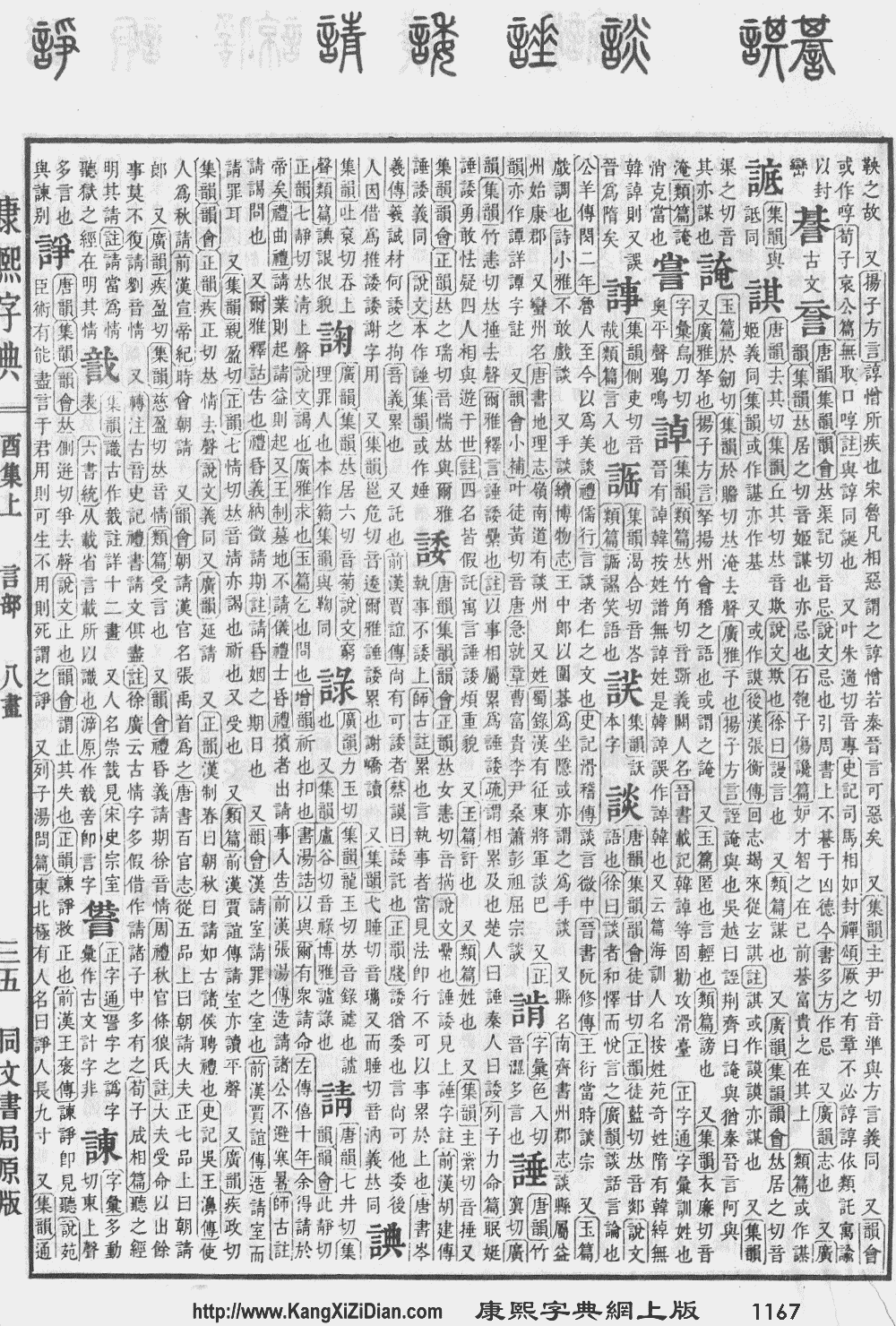
- Kangxi Dictionary: page 1167, character 18
- Dai Kanwa Jiten: character 35640
- Dae Jaweon: page 1632, character 28
- Hanyu Da Zidian (first edition): volume 6, page 3981, character 3
- Unihan data for U+8ACB
- Unihan data for U+FABB
Chinese
Glyph origin
| Historical forms of the character 請 | |
|---|---|
| Warring States | Shuowen Jiezi (compiled in Han) |
| Chu slip and silk script | Small seal script |
 |
 |
Characters in the same phonetic series (生) (Zhengzhang, 2003)
| Old Chinese | |
|---|---|
| 猜 | *sʰlɯː |
| 輤 | *sʰleːns |
| 綪 | *sʰleːns, *ʔsreːŋ |
| 倩 | *sʰleːns, *sʰleŋs |
| 棈 | *sʰleːns |
| 蒨 | *sʰeːns |
| 篟 | *sʰeːns |
| 生 | *sʰleːŋ, *sreŋs |
| 牲 | *sreŋ |
| 笙 | *sreŋ |
| 甥 | *sreŋ |
| 鉎 | *sreŋ, *sleːŋ |
| 珄 | *sreŋ |
| 鼪 | *sreŋ, *sreŋs |
| 猩 | *sreŋ, *seːŋ |
| 狌 | *sreŋ |
| 眚 | *sreŋʔ |
| 貹 | *sreŋs |
| 崝 | *zreːŋ |
| 精 | *ʔsleŋ, *ʔsleŋs |
| 菁 | *ʔsleŋ |
| 鶄 | *ʔsleŋ, *sʰleːŋ |
| 蜻 | *ʔsleŋ, *sʰleːŋ |
| 鼱 | *ʔsleŋ |
| 婧 | *ʔsleŋ, *zleŋs, *zleŋʔ |
| 睛 | *ʔsleŋ, *sʰleŋʔ |
| 箐 | *ʔsleŋ |
| 聙 | *ʔsleŋ |
| 旌 | *ʔsleŋ |
| 清 | *sʰleŋ |
| 圊 | *sʰleŋ |
| 請 | *sʰleŋʔ, *zleŋs, *zleŋ |
| 凊 | *sʰleŋs |
| 䝼 | *zleŋs, *zleŋ |
| 靚 | *zleŋs |
| 情 | *zleŋ |
| 晴 | *zleŋ |
| 夝 | *zleŋ |
| 靜 | *zleŋʔ |
| 靖 | *zleŋʔ |
| 睲 | *seŋʔ, *seːŋs |
| 惺 | *seŋʔ, *seːŋ |
| 性 | *sleŋs |
| 姓 | *sleŋs |
| 靗 | *l̥ʰeŋs |
| 鯖 | *ʔljeŋ, *sʰleːŋ |
| 青 | *sʰleːŋ |
| 靘 | *sʰleːŋ, *sʰleːŋs |
| 掅 | *sʰleːŋs |
| 胜 | *sleːŋ |
| 曐 | *sleːŋ |
| 星 | *sleːŋ |
| 鮏 | *sleːŋ |
| 腥 | *seːŋ, *seːŋs |
| 鯹 | *seːŋ |
| 醒 | *seːŋ, *seːŋʔ, *seːŋs |
| 篂 | *seːŋ |
Phono-semantic compound (形聲/形声, OC *sʰleŋʔ, *zleŋs, *zleŋ) : semantic 言 (“say”) + phonetic 青 (OC *sʰleːŋ).
Definitions
請
- to ask; to ask for; to request
- 羿請不死之藥於西王母,姮娥竊以奔月 [Classical Chinese, trad.]
- From: Huainanzi, 2nd century BCE
- Yì qǐng bùsǐ zhī yào yú Xīwángmǔ, Héngé qiè yǐ bēn yuè [Pinyin]
- Hou Yi asked for the medicine of immortality from the Queen Mother of the West, [and] Chang'e stole it in order to escape to the moon
羿请不死之药于西王母,姮娥窃以奔月 [Classical Chinese, simp.]
- kindly allow me to...
- 顏淵曰:「回雖不敏,請事斯語矣。」 [Classical Chinese, trad.]
- From: The Analects of Confucius, c. 475 – 221 BCE, translated based on James Legge's version
- Yán Yuān yuē: “Huí suī bù mǐn, qǐng shì sī yǔ yǐ.” [Pinyin]
- Yan Yuan then said, "Though I am deficient in intelligence and vigor, I will make it my business to practice this lesson."
颜渊曰:“回虽不敏,请事斯语矣。” [Classical Chinese, simp.]
- to ask
- to greet; to ask how someone is
- 陸生往請,直入坐,而陳丞相方深念,不時見陸生。 [Classical Chinese, trad.]
- From: The Records of the Grand Historian, by Sima Qian, c. 91 BCE
- Lù shēng wǎng qǐng, zhí rù zuò, ér Chén chéngxiàng fāng shēnniàn, bùshí jiàn Lù shēng. [Pinyin]
- (please add an English translation of this usage example)
陆生往请,直入坐,而陈丞相方深念,不时见陆生。 [Classical Chinese, simp.]
- to invite; to treat (to a meal, etc.)
- to hire
- to carry or bring (a sacred or respectable thing)
- please; kindly
- (Internet slang, interjection) Used to form a retort.
- (Can we add an example for this sense?)
- a surname
Synonyms
- (to ask for):
- 乞丐 (qǐgài) (archaic)
- 乞憐/乞怜 (qǐlián) (to beg for pity)
- 乞求 (qǐqiú)
- 哀告 (āigào)
- 哀求 (āiqiú)
- 央告 (yānggào)
- 央求 (yāngqiú)
- 憑/凭 (píng) (literary)
- 懇求/恳求 (kěnqiú)
- 懇請/恳请 (kěnqǐng)
- 求 (qiú)
- 沽情 (Min Nan)
- 煩請/烦请 (fánqǐng) (honorific, polite)
- 祈求 (qíqiú) (to pray for)
- 祈祝 (qízhù) (literary)
- 祝禱/祝祷 (zhùdǎo) (literary)
- 要求 (yāoqiú)
- 請求/请求 (qǐngqiú)
- (to invite):
- (to hire):
Compounds
- 三催四請/三催四请 (sāncuīsìqǐng)
- 三請四喚/三请四唤
- 不情之請/不情之请 (bùqíngzhīqǐng)
- 不請自來/不请自来 (bùqǐngzìlái)
- 乞請/乞请
- 促請/促请 (cùqǐng)
- 催請/催请
- 僱請/雇请
- 公請/公请
- 函請/函请
- 力請/力请
- 參請/参请
- 另請高明/另请高明 (lìngqǐnggāomíng)
- 吃請/吃请
- 呈請/呈请 (chéngqǐng)
- 咨請/咨请
- 回請/回请 (huíqǐng)
- 固請/固请
- 堅請/坚请
- 報請/报请 (bàoqǐng)
- 大請大受/大请大受
- 央請/央请
- 奉請/奉请
- 奏請/奏请 (zòuqǐng)
- 宴請/宴请 (yànqǐng)
- 干請/干请
- 延請/延请 (yánqǐng)
- 懇請/恳请 (kěnqǐng)
- 提請/提请 (tíqǐng)
- 搬請/搬请
- 擬請/拟请
- 擺請兒/摆请儿
- 啟請/启请
- 敦請/敦请 (dūnqǐng)
- 敬請/敬请 (jìngqǐng)
- 普請/普请
- 有請/有请 (yǒuqǐng)
- 束縕請火/束缊请火
- 為民請命/为民请命
- 煩請/烦请 (fánqǐng)
- 申請/申请 (shēnqǐng)
- 申請書/申请书
- 祈請/祈请
- 禮請/礼请
- 管請/管请
- 籲請/吁请 (yùqǐng)
- 約請/约请 (yuēqǐng)
- 終軍請纓/终军请缨
- 老黃請醫/老黄请医
- 聘請/聘请 (pìnqǐng)
- 聲請/声请 (shēngqǐng)
- 訴請/诉请
- 說參請/说参请
- 請事/请事
- 請人客/请人客 (chhiáⁿ-lâng-kheh) (Min Nan)
- 請仙/请仙
- 請伏/请伏
- 請便/请便 (qǐngbiàn)
- 請假/请假 (qǐngjià)
- 請功受賞/请功受赏
- 請告/请告
- 請君入甕/请君入瓮 (qǐngjūnrùwèng)
- 請命/请命 (qǐngmìng)
- 請和/请和
- 請問/请问 (qǐngwèn)
- 請喚/请唤
- 請安/请安 (qǐng'ān)
- 請客/请客 (qǐngkè)
- 請帖/请帖 (qǐngtiě)
- 請急/请急
- 請援/请援
- 請教/请教 (qǐngjiào)
- 請期/请期
- 請柬/请柬 (qǐngjiǎn)
- 請業/请业
- 請求/请求 (qǐngqiú)
- 請求乃論/请求乃论
- 請求權/请求权
- 請益/请益
- 請示/请示 (qǐngshì)
- 請纓/请缨 (qǐngyīng)
- 請罪/请罪 (qǐngzuì)
- 請職/请职
- 請脈/请脉
- 請自隗始/请自隗始
- 請見/请见 (qǐngjiàn)
- 請託/请托
- 請訓/请训
- 請謁/请谒
- 請賞/请赏 (qǐngshǎng)
- 請購單/请购单
- 請辭/请辞
- 請雨/请雨
- 請願/请愿 (qǐngyuàn)
- 請願權/请愿权
- 負荊請罪/负荆请罪 (fùjīngqǐngzuì)
- 遍請/遍请 (biànqǐng)
- 邀請/邀请 (yāoqǐng)
- 邀請賽/邀请赛
- 陳請/陈请
Definitions
請
- This term needs a translation to English. Please help out and add a translation, then remove the text
{{rfdef}}.
Compounds
- 請佃/请佃
- 請俸/请俸
- 請受/请受
- 請奉/请奉
- 請給/请给
Definitions
請
- This term needs a translation to English. Please help out and add a translation, then remove the text
{{rfdef}}.
Further reading
- “Entry #11414”, in 臺灣閩南語常用詞辭典 [Dictionary of Frequently-Used Taiwan Minnan] (in Chinese and Min Nan), Ministry of Education, R.O.C., 2023.
Japanese
| Shinjitai | 請 | |
| Kyūjitai [1][2][3] |
請󠄁 請+ 󠄁?(Adobe-Japan1) |
 |
| 請󠄃 請+ 󠄃?(Hanyo-Denshi) (Moji_Joho) | ||
| The displayed kanji may be different from the image due to your environment. See here for details. | ||
| Stroke order (Japan) | |||
|---|---|---|---|
 | |||
Kanji
請
Readings
From Middle Chinese 請 (MC tshjengX); compare Mandarin 請/请 (qǐng):
From Middle Chinese 請 (MC dzjeng); compare Mandarin 請/请 (qíng):
From native Japanese roots:
Compounds
- 請負 (ukeoi)
- 請安 (shōan)
- 請益 (shōyaku)
- 請来 (shōrai)
- 請仮 (shinka)
- 請謁 (seietsu)
- 請仮 (seika)
- 請願 (seigan)
- 請寄 (seiki)
- 請期 (seiki)
- 請寄 (seiki)
- 請求 (seikyū)
- 請訓 (seikun)
- 請罪 (seizai)
- 請室 (seishitsu)
- 請属 (seishoku), 請嘱 (seishoku)
- 請託 (seitaku), 請托 (seitaku)
- 請祷 (seitō), 請禱 (seitō)
- 請命 (seimei)
- 請問 (seimon)
- 請老 (seirō)
- 勧請 (kanjō)
- 懇請 (konsei)
- 召請 (shōsei)
- 普請 (fushin)
Usage notes
The stroke order in Japanese differs slightly from Chinese, as shown.
References
- “請”, in 漢字ぺディア (Kanjipedia) (in Japanese), 日本漢字能力検定協会, 2015–2024
- 1914, 漢和大辭書 (Kanwa Dai Jisho, “The Great Kanji-Japanese Dictionary”) (in Japanese), page 1979 (paper), page 1041 (digital), Tōkyō: 興文社 (Kōbunsha)
- 1927, 新漢和辭典 (Shin Kanwa Jiten, “The New Kanji-Japanese Dictionary”) (in Japanese), page 1128 (paper), page 577 (digital), Ōsaka: 松雲堂 (Shōundō)
- 2006, 大辞林 (Daijirin), Third Edition (in Japanese), Tōkyō: Sanseidō, →ISBN
Vietnamese
This article is issued from Wiktionary. The text is licensed under Creative Commons - Attribution - Sharealike. Additional terms may apply for the media files.