糞
| ||||||||
Translingual
Han character
糞 (Kangxi radical 119, 米+11, 17 strokes, cangjie input 火木田廿金 (FDWTC), four-corner 90801, composition ⿱米異)
References
- Kangxi Dictionary: page 912, character 26
- Dai Kanwa Jiten: character 27102
- Dae Jaweon: page 1339, character 20
- Hanyu Da Zidian (first edition): volume 5, page 3158, character 7
- Unihan data for U+7CDE
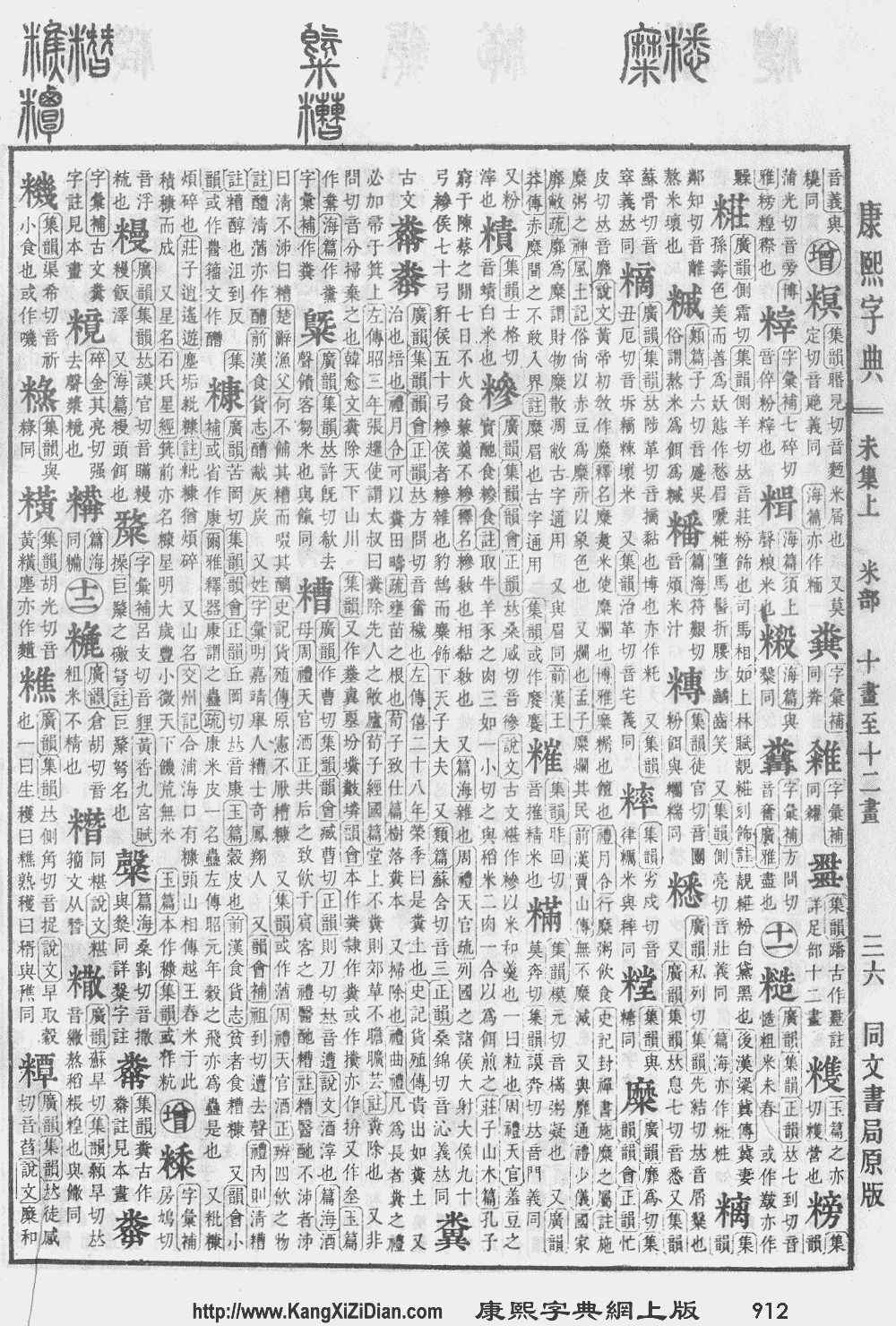
Chinese
| trad. | 糞 | |
|---|---|---|
| simp. | 粪 | |
| alternative forms | ||
Glyph origin
Oracle bone: pictogram (象形) : 3 dots + 𠀠 + 廾 + optional 帚 (zhǒu).
Small seal: pictogram (象形) : 釆 + 𠦒 + 廾.
The current glyph is from the small seal script.
Etymology
From Proto-Sino-Tibetan *brun (“excrement”) (STEDT). Cognate with Tibetan བྲུན (brun, “dung”).
Pronunciation
Definitions
糞
Synonyms
- (excrement):
- (to apply manure to):
See also
- 米田共 (mǐtiángòng)
Compounds
- 佛頭著糞/佛头著粪
- 化糞池/化粪池 (huàfènchí)
- 底糞/底粪
- 扒糞的/扒粪的
- 拾糞人/拾粪人
- 擔糞/担粪
- 朽木糞土/朽木粪土
- 朽木糞牆/朽木粪墙 (xiǔmùfènqiáng)
- 視如糞土/视如粪土
- 糞便/粪便 (fènbiàn)
- 糞土/粪土 (fèntǔ)
- 糞坑/粪坑 (fènkēng)
- 糞壤/粪壤
- 糞壤窟室/粪壤窟室
- 糞夫/粪夫
- 糞棋/粪棋
- 糞汁/粪汁 (fènzhī)
- 糞球/粪球
- 糞窖子/粪窖子
- 糞筐/粪筐
- 糞箕/粪箕 (fènjī)
- 糞箕子/粪箕子 (fènjīzi)
- 糞肥/粪肥 (fènféi)
- 糞門/粪门 (fènmén)
- 糞除/粪除
- 糞青/粪青 (fènqīng)
- 背槽拋糞/背槽抛粪
- 著糞佛頭/著粪佛头
- 葉落糞本/叶落粪本
- 蠅糞點玉/蝇粪点玉
- 血糞/血粪
- 賤如糞土/贱如粪土
- 馬糞/马粪 (mǎfèn)
- 馬糞紙/马粪纸 (mǎfènzhǐ)
- 驢糞毬/驴粪球
- 鳥糞層/鸟粪层
References
- Dictionary of Chinese Character Variants (教育部異體字字典), A03073
- “糞”, in 漢語多功能字庫 (Multi-function Chinese Character Database), 香港中文大學 (the Chinese University of Hong Kong), 2014–
Japanese
Etymology 1
| Kanji in this term |
|---|
| 糞 |
| くそ Hyōgaiji |
| kun’yomi |
| Alternative spelling |
|---|
| 屎 |
From Old Japanese,[1] in turn from Proto-Japonic *kuso.
Cognate with 臭い (kusai, “stinky, smelly”), 腐る (kusaru, “to rot, to become stinky”).[1]
Derived terms
Idioms
- 糞の役にも立たぬ (kuso no yaku ni mo tatanu): “not even good for shit” (see 役に立つ (yaku ni tatsu): “to be useful, to play a role”)
Usage notes
This is not considered as profane as the English glosses. For instance, a child of five using the Japanese interjection kuso would be unremarkable, whereas it would be very socially inappropriate for a child of five to use the English interjection shit.
Noun
糞 • (fun)
Usage notes
Etymology 3
| Kanji in this term |
|---|
| 糞 |
| ばば Hyōgaiji |
| kun’yomi |
| Alternative spelling |
|---|
| 屎 |
Appears to derive from baby talk.[1][2] Compare English poopoo and Mandarin 㞎㞎 (bǎba).