若
| ||||||||
 | ||||||||
| ||||||||
Translingual
| Stroke order | |||
Japanese | |||
Han character
若 (Kangxi radical 140, 艸+5, 9 strokes in traditional Chinese and Korean, 8 strokes in simplified Chinese and Japanese, cangjie input 廿大口 (TKR), four-corner 44604, composition ⿱艹右)
References
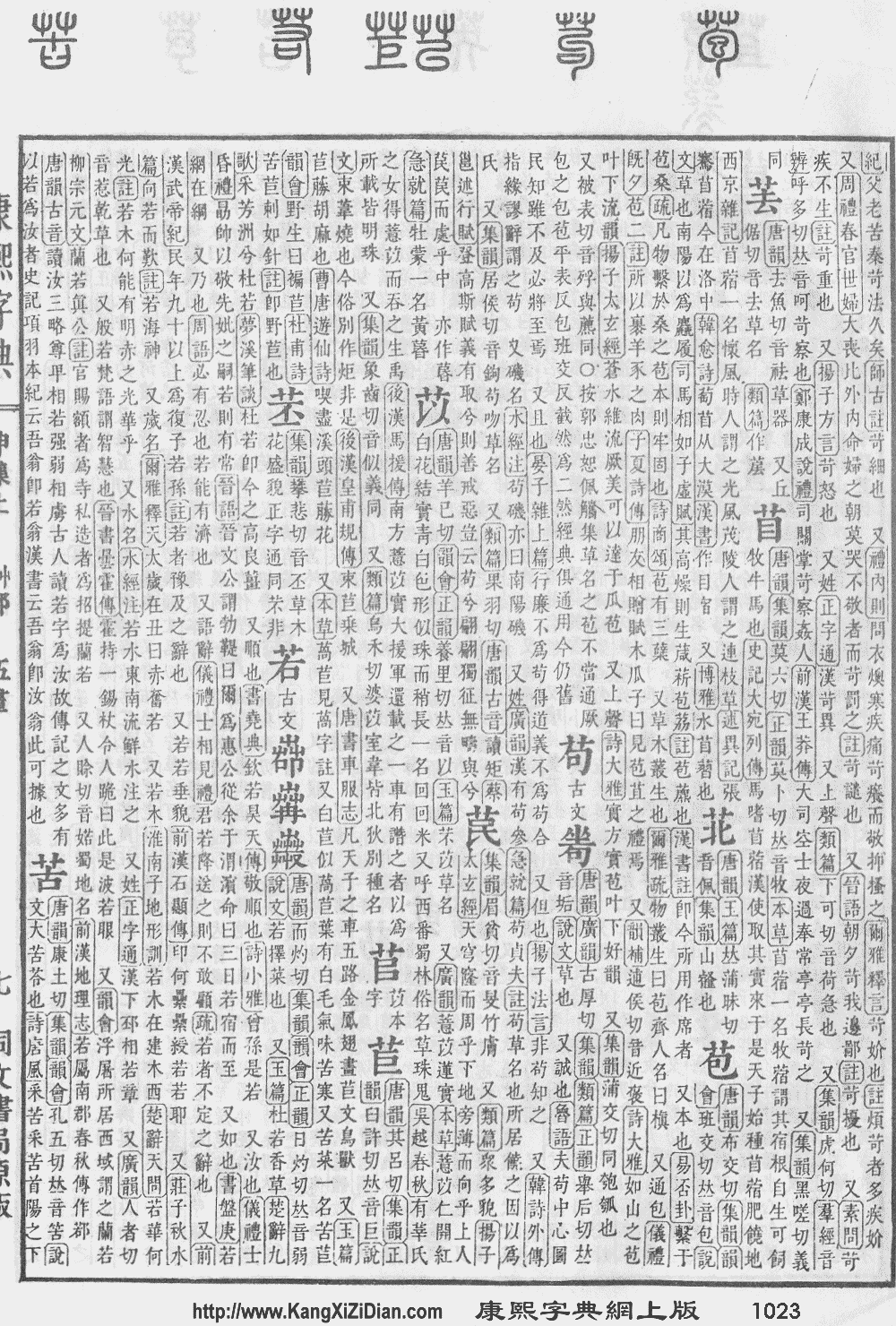
- Kangxi Dictionary: page 1023, character 12
- Dai Kanwa Jiten: character 30796
- Dae Jaweon: page 1482, character 11
- Hanyu Da Zidian (first edition): volume 5, page 3187, character 7
- Unihan data for U+82E5
- Unihan data for U+F974
- Unihan data for U+2F998
Chinese
Glyph origin
| Historical forms of the character 若 | ||||
|---|---|---|---|---|
| Shang | Western Zhou | Warring States | Shuowen Jiezi (compiled in Han) | Liushutong (compiled in Ming) |
| Oracle bone script | Bronze inscriptions | Chu slip and silk script | Small seal script | Transcribed ancient scripts |
 |
 |
 |
 |
 |
Characters in the same phonetic series (若) (Zhengzhang, 2003)
Pronunciation
Definitions
若
- † to be obedient to; compliant
- † to trim vegetables
- † to choose
- † you; your
- 既使我與若辯矣,若勝我,我不若勝,若果是也? [Classical Chinese, trad.]
- From: Zhuangzi, circa 3rd – 2nd centuries BCE
- Jì shǐ wǒ yǔ ruò biàn yǐ, ruò shèng wǒ, wǒ bù ruò shèng, ruò guǒ shì yě? [Pinyin]
- If you and I debate, you defeat me and I cannot defeat you, are you really correct?
既使我与若辩矣,若胜我,我不若胜,若果是也? [Classical Chinese, simp.]- 吾翁即若翁。 [Classical Chinese, trad. and simp.]
- From: The Records of the Grand Historian, by Sima Qian, c. 91 BCE
- Wú wēng jí ruò wēng. [Pinyin]
- My father is just the same as your father.
- † he; his
- like; as if
- 讀若闌。 [Classical Chinese, trad.]
- From: Shuowen Jiezi, circa 2nd century CE
- Dú ruò lán. [Pinyin]
- Read as "闌/阑 (lán)".
读若阑。 [Classical Chinese, simp.]
- if; supposing; assuming
- 天若有情天亦老。 ― Tiān ruò yǒu qíng tiān yì lǎo. ― If Heaven had feelings, Heaven too would grow old.
- in this way
- (Chinese mythology) Ruo, mythological divine being of the northern seas
- 於是焉河伯始旋其面目,望洋向若而歎。 [Classical Chinese, trad.]
- From: Zhuangzi, circa 3rd – 2nd centuries BCE, translated based on James Legge's version
- Yúshì yān Hé Bó shǐ xuán qí miànmù, wàng yáng xiàng Ruò ér tàn. [Pinyin]
- Then He Bo began to turn his face round, looked across the expanse, as if he were confronting Ruo, and sighed.
于是焉河伯始旋其面目,望洋向若而叹。 [Classical Chinese, simp.]- 使湘靈鼓瑟兮,令海若舞馮夷。 [Classical Chinese, trad.]
- From: The Verses of Chu, 4th century BCE – 2nd century CE
- Shǐ Xiāng líng gǔ sè xī, lìng hǎi Ruò wǔ Féng Yí. [Pinyin]
- I invite the Genius of River Xiang to play the se, and the oceanic Ruo to dance with Feng Yi of the Yellow River.
使湘灵鼓瑟兮,令海若舞冯夷。 [Classical Chinese, simp.]
- Pollia japonica
- a surname
Synonyms
- (like):
- 不啻 (bùchì) (literary)
- 似 (Classical Chinese, Cantonese)
- 似乎 (sìhū)
- 似如 (si4 y2) (Xiang)
- 像 (xiàng)
- 像係/像系 (Hakka)
- 像是 (xiàngshì)
- 儼如/俨如 (yǎnrú) (literary)
- 儼然/俨然 (yǎnrán)
- 儼若/俨若 (yǎnruò) (literary)
- 勝如/胜如 (5sen-zy) (Wu)
- 好似 (hǎosì)
- 好像 (hǎoxiàng)
- 如同 (rútóng)
- 好比 (hǎobǐ)
- 宛 (Classical Chinese, or compounds only)
- 宛如 (wǎnrú) (literary)
- 宛然 (wǎnrán) (literary)
- 宛若 (wǎnruò) (literary)
- 就像 (jiùxiàng)
- 彷彿/仿佛 (fǎngfú)
- 忽如 (hūrú) (literary)
- 恍若 (huǎngruò)
- 敢若 (Min Nan)
- 敢若是 (Min Nan)
- 𣍐輸/𫧃输 (bē-su) (Min Nan)
- 有如 (yǒurú) (formal)
- 猶似/犹似 (yóusì) (literary)
- 猶像/犹像 (yóuxiàng) (literary)
- 猶如/犹如 (yóurú) (formal)
- 甲像 (Min Nan)
- 甲像是 (Min Nan)
- 甲親像/甲亲像 (Min Nan)
- 看上去 (kàn shàngqù)
- 看似 (kànsì)
- 看來/看来 (kànlái)
- 看樣子/看样子 (kànyàngzi)
- 看起來/看起来 (kànqilai)
- 若像 (Min Nan)
- 若親像/若亲像 (Min Nan)
- 表面上 (biǎomiànshang)
- 親像/亲像 (Hakka, Min Nan)
- 象 (xiàng)
- 貌似 (màosì)
- 賽可/赛可 (Ningbo)
- 較像/较像 (Min Nan)
- 較像是/较像是 (Min Nan)
- 較親像/较亲像 (Min Nan)
- 顯得/显得 (xiǎnde)
Dialectal synonyms of 你 (“you (singular)”) [map]
Compounds
- 不絕若線/不绝若线
- 不若 (bùruò)
- 乃若
- 何若
- 便假若
- 倘若 (tǎngruò)
- 假若 (jiǎruò)
- 傍若無人/傍若无人 (pángruòwúrén)
- 傲睨自若
- 儻若/傥若
- 其應若響/其应若响
- 冷若冰霜
- 判若兩人/判若两人 (pànruòliǎngrén)
- 判若天淵/判若天渊
- 判若雲泥/判若云泥
- 判若鴻溝/判若鸿沟
- 勢若摧枯/势若摧枯
- 印纍綬若/印累绶若
- 危若朝露
- 受寵若驚/受宠若惊 (shòuchǒngruòjīng)
- 口若懸河/口若悬河 (kǒuruòxuánhé)
- 合契若神
- 呆若木雞/呆若木鸡 (dāiruòmùjī)
- 命若懸絲/命若悬丝
- 噤若寒蟬/噤若寒蝉 (jìnruòhánchán)
- 固若金湯/固若金汤 (gùruòjīntāng)
- 地若瓜分
- 夕惕若厲/夕惕若厉
- 大勇若怯
- 大喜若狂
- 大巧若拙
- 大智若愚 (dàzhìruòyú)
- 大直若屈
- 大辯若訥/大辩若讷
- 奉若神明 (fèngruòshénmíng)
- 契若金蘭/契若金兰
- 奚若
- 好若
- 始終若一/始终若一
- 嫉惡若仇/嫉恶若仇
- 嬌若春花/娇若春花
- 孰若
- 安之若命
- 安之若素 (ānzhīruòsù)
- 安若泰山
- 守身若玉
- 宛若 (wǎnruò)
- 宛若游龍/宛若游龙
- 寂若死灰
- 寂若無人/寂若无人
- 寥若晨星 (liáoruòchénxīng)
- 寵辱若驚/宠辱若惊
- 寸陰若歲/寸阴若岁
- 少成若性
- 巧若生成
- 幽若
- 幾若/几若 (kúi-nā)
- 從善若流/从善若流
- 從容自若/从容自若
- 心若死灰
- 必若
- 思若湧泉/思若涌泉
- 恍若 (huǎngruò)
- 恆若不足/恒若不足
- 恍若隔世
- 惘然若失 (wǎngránruòshī)
- 悵然若失/怅然若失 (chàngránruòshī)
- 情若手足
- 惘若有失
- 愛才若渴/爱才若渴
- 意氣自若/意气自若
- 慎終若始/慎终若始
- 憂心若醉/忧心若醉
- 懸若日月/悬若日月
- 指揮若定/指挥若定 (zhǐhuīruòdìng)
- 揚揚自若/扬扬自若
- 敬若神明
- 料敵若神/料敌若神
- 料遠若近/料远若近
- 旁若無人/旁若无人 (pángruòwúrén)
- 明若觀火/明若观火 (míngruòguānhuǒ)
- 昭然若揭 (zhāoránruòjiē)
- 曠若發矇/旷若发蒙
- 曠若發蒙/旷若发蒙
- 未若
- 杜若 (dùruò)
- 果若
- 棄若敝屣/弃若敝屣 (qìruòbìxǐ)
- 欣喜若狂 (xīnxǐruòkuáng)
- 歡喜若狂/欢喜若狂 (huānxǐruòkuáng)
- 歡欣若狂/欢欣若狂
- 歡若平生/欢若平生
- 歸之若水/归之若水
- 氣若游絲/气若游丝
- 求才若渴
- 求賢若渴/求贤若渴
- 泰山若厲/泰山若厉
- 泰然自若 (tàiránzìruò)
- 洞若觀火/洞若观火 (dòngruòguānhuǒ)
- 浮生若夢/浮生若梦 (fúshēngruòmèng)
- 浮生若寄
- 海若
- 深藏若虛/深藏若虚
- 瀟灑自若/潇洒自若
- 炳若日星
- 爛若披錦/烂若披锦
- 爽然若失 (shuǎngránruòshī)
- 狗彘不若 (gǒuzhìbùruò)
- 猶若/犹若
- 甘之若素
- 甘之若飴/甘之若饴
- 疾之若仇
- 疾惡若仇/疾恶若仇
- 目若懸珠/目若悬珠
- 目若朗星
- 目若無人/目若无人
- 相若 (xiāngruò)
- 眼若流星 (yǎnruòliúxīng)
- 眼若點漆/眼若点漆
- 瞭若指掌/了若指掌
- 矯若遊龍/矫若游龙
- 矯若驚龍/矫若惊龙
- 神態自若/神态自若
- 神色自若
- 視死若歸/视死若归
- 視若兒戲/视若儿戏
- 視若無物/视若无物
- 視若無睹/视若无睹 (shìruòwúdǔ)
- 視若草芥/视若草芥
- 視險若夷/视险若夷
- 粵若稽古/粤若稽古
- 紛若/纷若
- 置若罔聞/置若罔闻 (zhìruòwǎngwén)
- 翩若驚鴻/翩若惊鸿
- 背若芒刺
- 脣若塗硃/唇若涂朱
- 脣若塗脂/唇若涂脂 (chúnruòtúzhī)
- 脣若抹硃/唇若抹朱
- 脣若施脂/唇若施脂
- 自若 (zìruò)
- 至若 (zhìruò)
- 舉國若狂/举国若狂
- 舉重若輕/举重若轻 (jǔzhòngruòqīng)
- 色若死灰
- 芷若
- 若克雅 (Ruòkèyǎ)
- 若干 (ruògān)
- 若準/若准 (nā-chún)
- 若無/若无 (nā-bô)
- 若羌 (Ruòqiāng)
- 茫然若失 (mángránruòshī)
- 茫然若迷
- 茝若
- 莫若 (mòruò)
- 蕙若
- 虛懷若谷/虚怀若谷 (xūhuáiruògǔ)
- 蠢若木雞/蠢若木鸡
- 行若無事/行若无事 (xíngruòwúshì)
- 行若狗彘 (xíngruògǒuzhì)
- 被寵若驚/被宠若惊
- 言事若神
- 言笑自若
- 言若懸河/言若悬河
- 言行若一
- 設若/设若 (shèruò)
- 談笑自若/谈笑自若 (tánxiào zìruò)
- 讀若/读若 (dúruò)
- 越若
- 趨之若鶩/趋之若鹜 (qūzhīruòwù)
- 軒昂自若/轩昂自若
- 較若畫一/较若画一
- 邈若山河
- 門庭若市/门庭若市 (méntíngruòshì)
- 隱若敵國/隐若敌国
- 難若登天/难若登天
- 雨暘時若/雨旸时若
- 面若春花
- 顜若畫一/𱂴若画一
- 風雨時若/风雨时若
- 飄若神仙/飘若神仙
- 鬢若刀裁/鬓若刀裁
- 鬢若堆鴉/鬓若堆鸦
- 齒若編貝/齿若编贝
Pronunciation
Pronunciation
Pronunciation
Synonyms
Dialectal synonyms of 多麼 (“how; what; so; such”) [map]
| Variety | Location | Words |
|---|---|---|
| Classical Chinese | 何等, 何其, 一何, 何哉, 何等也, 何則 | |
| Formal (Written Standard Chinese) | 多麼, 何等, 何其 | |
| Mandarin | Beijing | 多麼, 多 |
| Taiwan | 多麼, 多 | |
| Jinan | 多麼, 多 | |
| Xi'an | 多 | |
| Wuhan | 幾, 幾樣, 好 | |
| Chengdu | 好, 多 | |
| Guilin | 好 | |
| Yangzhou | 多 | |
| Hefei | 好 | |
| Malaysia | 多 | |
| Singapore | 多麼, 多 | |
| Cantonese | Guangzhou | 幾, 幾咁 |
| Hong Kong | 幾, 幾咁 | |
| Yangjiang | 幾 | |
| Gan | Nanchang | 幾 |
| Hakka | Meixian | 幾 |
| Jin | Taiyuan | 多麼, 多來 |
| Min Bei | Jian'ou | 幾多 |
| Min Dong | Fuzhou | 若夥, 若 |
| Min Nan | Xiamen | 偌, 偌爾仔, 活, 活欲 |
| Quanzhou | 偌, 活, 活欲 | |
| Zhangzhou | 偌, 偌爾仔, 偌仔爾, 活, 活欲 | |
| Taipei | 偌爾, 偌仔爾 | |
| Kaohsiung | 偌爾, 偌仔爾 | |
| Penang (Hokkien) | 偌 | |
| Singapore (Hokkien) | 偌 | |
| Manila (Hokkien) | 偌 | |
| Chaozhou | 若 | |
| Singapore (Teochew) | 若 | |
| Zhongshan Min | Shaxi (Longdu) | 幾 |
| Wu | Shanghai | 多少, 幾化 |
| Suzhou | 幾化 | |
| Wenzhou | 幾倈, 幾恁 | |
| Xiang | Changsha | 幾, 幾多, 好 |
| Shuangfeng | 幾, 好 | |
Pronunciation
Further reading
- “Entry #5469”, in 臺灣閩南語常用詞辭典 [Dictionary of Frequently-Used Taiwan Minnan] (in Chinese and Min Nan), Ministry of Education, R.O.C., 2023.
Japanese
Readings
Korean
Etymology 1
From Middle Chinese 若 (MC nyak).
| Historical readings |
|---|
|
Pronunciation
- (SK Standard/Seoul) IPA(key): [ja̠k̚]
- Phonetic hangul: [약]
Compounds
Etymology 2
From Middle Chinese 若 (MC nyaeX).
| Historical readings |
|---|
|
Pronunciation
- (SK Standard/Seoul) IPA(key): [ja̠]
- Phonetic hangul: [야]
Vietnamese
This article is issued from Wiktionary. The text is licensed under Creative Commons - Attribution - Sharealike. Additional terms may apply for the media files.