拾
| ||||||||
| ||||||||
Translingual
_-_front.jpg.webp)
"𠄡拾錢"
Han character
拾 (Kangxi radical 64, 手+6, 9 strokes, cangjie input 手人一口 (QOMR), four-corner 58061, composition ⿰扌合)
Derived characters
- 湁 𫽰
References
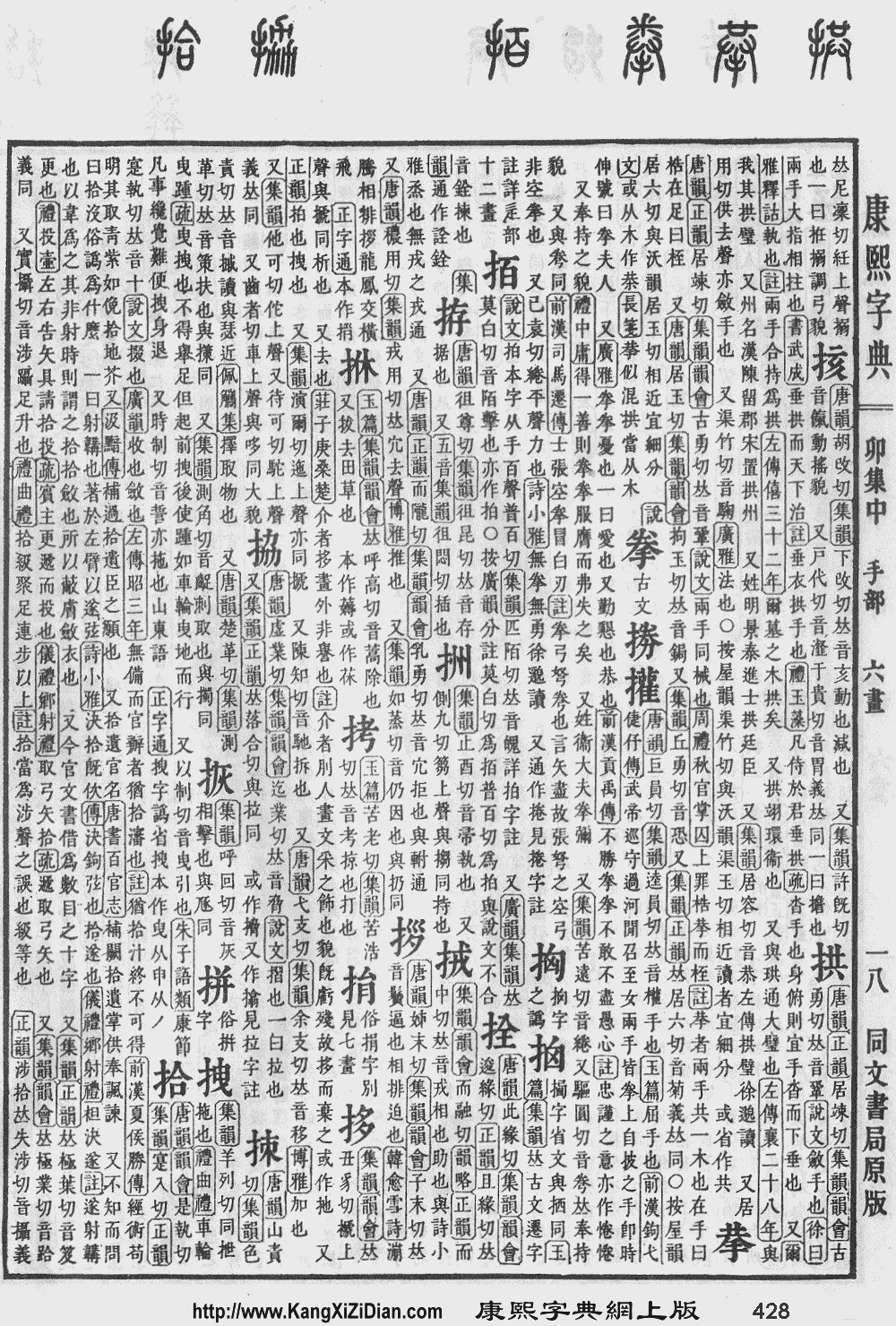
- Kangxi Dictionary: page 428, character 24
- Dai Kanwa Jiten: character 12014
- Dae Jaweon: page 777, character 18
- Hanyu Da Zidian (first edition): volume 3, page 1872, character 1
- Unihan data for U+62FE
- Unihan data for U+F973
Chinese
| simp. and trad. |
拾 | |
|---|---|---|
Glyph origin
| Historical forms of the character 拾 | |
|---|---|
| Shuowen Jiezi (compiled in Han) | Liushutong (compiled in Ming) |
| Small seal script | Transcribed ancient scripts |
 |
 |
Characters in the same phonetic series (合) (Zhengzhang, 2003)
| Old Chinese | |
|---|---|
| 龕 | *kʰuːm |
| 媕 | *quːm, *qromʔ, *qɯːm, *qramʔ, *qɯːb |
| 頜 | *ɡuːmʔ, *kuːb |
| 答 | *tkuːb |
| 畣 | *tkuːb |
| 荅 | *tkuːb |
| 嗒 | *tuːb, *tʰoːb |
| 褡 | *tuːb, *toːb |
| 撘 | *tuːb |
| 搭 | *tuːb, *tʰoːb |
| 榙 | *tkuːb, *ɡuːb |
| 佮 | *tkʰuːb, *kuːb, *quːb, *quːb |
| 蛤 | *kuːb |
| 鴿 | *kuːb |
| 合 | *kuːb, *ɡuːb |
| 郃 | *kuːb, *ɡuːb |
| 匌 | *kuːb, *kʰuːb |
| 鉿 | *kuːb |
| 閤 | *kuːb |
| 鞈 | *kuːb, *kruːb |
| 韐 | *kuːb, *kruːb |
| 鮯 | *kuːb |
| 哈 | *ŋɡuːb |
| 姶 | *quːb, *quːb |
| 欱 | *qʰuːb, *qʰruːb |
| 盒 | *ɡuːb |
| 耠 | *ɡuːb |
| 詥 | *ɡuːb |
| 塔 | *tʰuːb |
| 鞳 | *tʰoːb |
| 劄 | *rtuːb |
| 跲 | *kruːb, *kob, *ɡob |
| 袷 | *kruːb, *ŋkob |
| 餄 | *kruːb |
| 恰 | *kʰruːb |
| 帢 | *kʰruːb |
| 洽 | *ɡruːb |
| 祫 | *ɡruːb |
| 珨 | *ɡruːb |
| 烚 | *ɡruːb |
| 歙 | *qʰjob, *qʰrub |
| 湁 | *tkʰub |
| 拾 | *ɡjub |
| 給 | *krub |
| 翕 | *qʰrub |
| 噏 | *qʰrub |
| 潝 | *qʰrub |
| 熻 | *qʰrub |
| 嬆 | *qʰrub |
| 翖 | *qʰrub |
| 闟 | *qʰrub |
Phono-semantic compound (形聲/形声, OC *ɡjub) : semantic 扌 (“hand”) + phonetic 合 (OC *kuːb, *ɡuːb) – to pick up by hand.
Pronunciation 1
Definitions
拾
Compounds
- 不可收拾 (bùkě-shōushí)
- 不拾遺/不拾遗
- 仰取俯拾
- 仰拾俯取
- 俛拾仰取/俯拾仰取
- 俛拾地芥/俯拾地芥
- 俯拾
- 俯拾即是
- 俯拾皆是 (fǔshíjiēshì)
- 俯拾青紫
- 偶拾
- 刪拾/删拾
- 剟拾
- 剿拾
- 剽拾
- 執拾/执拾
- 塗不拾遺/涂不拾遗
- 墜歡重拾/坠欢重拾
- 如拾地芥
- 寒拾
- 左拾遺/左拾遗
- 引鍼拾芥/引针拾芥
- 打搊拾/打𫼝拾
- 抉拾
- 招拾
- 抱枝拾葉/抱枝拾叶
- 拾人唾涕
- 拾人唾餘/拾人唾余
- 拾人涕唾
- 拾人牙慧 (shírényáhuì)
- 拾取 (shíqǔ)
- 拾唾餘/拾唾余
- 拾地芥
- 拾塵/拾尘
- 拾奪/拾夺
- 拾帶重還/拾带重还
- 拾弄
- 拾得 (shídé)
- 拾才
- 拾投
- 拾括
- 拾掇 (shíduo)
- 拾揀/拾拣
- 拾摭
- 拾櫨/拾栌
- 拾沒/拾没
- 拾漏子
- 拾瀋/拾沈
- 拾煤
- 拾牙慧
- 拾物 (shíwù)
- 拾獲/拾获
- 拾玉鐲/拾玉镯
- 拾發/拾发
- 拾破爛/拾破烂
- 拾穗
- 拾糞人/拾粪人
- 拾紫
- 拾纂
- 拾翠
- 拾翠人
- 拾翠羽
- 拾翻
- 拾芥
- 拾荒 (shíhuāng)
- 拾菜
- 拾菜孃/拾菜娘
- 拾螢/拾萤
- 拾襲/拾袭
- 拾誦/拾诵
- 拾踊
- 拾遺/拾遗 (shíyí)
- 拾遺舉過/拾遗举过
- 拾遺補闕/拾遗补阙
- 拾遺記/拾遗记
- 拾金不昧 (shíjīnbùmèi)
- 拾陳蹈故/拾陈蹈故
- 拾集
- 拾零 (shílíng)
- 拾青
- 拾青紫
- 拾頭/拾头
- 拾頭打滾/拾头打滚
- 拾餘唾/拾余唾
- 拾骨
- 捃拾
- 掘拾
- 採拾/采拾 (cǎishí)
- 探拾
- 掇拾
- 掇青拾紫
- 援拾
- 搊拾/𫼝拾
- 摭拾
- 撮拾
- 撿拾/捡拾 (jiǎnshí)
- 收拾
- 整拾
- 易如拾芥
- 易於拾遺/易于拾遗
- 棄瓊拾礫/弃琼拾砾
- 樵拾
- 決拾/决拾
- 筌拾
- 糾拾/纠拾
- 綴拾/缀拾
- 緝拾/缉拾
- 芥拾
- 芥拾青紫
- 蒙拾
- 補缺拾遺/补缺拾遗
- 誦拾/诵拾
- 路不拾遺/路不拾遗 (lùbùshíyí)
- 路無拾遺/路无拾遗
- 蹈拾
- 道不拾遺/道不拾遗 (dàobùshíyí)
- 道無拾遺/道无拾遗
- 采拾 (cǎishí)
- 重拾舊歡/重拾旧欢
- 骨拾
See also
| Chinese numbers | |||||||||||||||||
|---|---|---|---|---|---|---|---|---|---|---|---|---|---|---|---|---|---|
| 0 | 1 | 2 | 3 | 4 | 5 | 6 | 7 | 8 | 9 | 10 | 102 | 103 | 104 | 106 | 108 | 1012 | |
| Normal (小寫/小写) |
〇, 零, 空 | 一, 蜀 | 二, 兩/两 | 三 | 四 | 五 | 六 | 七 | 八 | 九 | 十 | 百 | 千 | 萬/万, 十千 (Malaysia, Singapore) |
百萬/百万, 桶(Philippines), 面桶 (Philippines) |
億/亿 | 兆 (Taiwan) 萬億/万亿 (Mainland China) |
| Financial (大寫/大写) |
零 | 壹 | 貳/贰 | 參/叁 | 肆 | 伍 | 陸/陆 | 柒 | 捌 | 玖 | 拾 | 佰 | 仟 | ||||
Pronunciation 2
Pronunciation 3
Compounds
- 拾投
- 拾發/拾发
- 拾踊
Pronunciation 4
Japanese
Readings
Korean
Etymology 1
From Middle Chinese 拾 (MC dzyip). Recorded as Middle Korean 습 (sup) (Yale: sup) in Sinjeung Yuhap (新增類合 / 신증유합), 1576.
Pronunciation
- (SK Standard/Seoul) IPA(key): [sʰɯp̚]
- Phonetic hangul: [습]
Compounds
Etymology 2
From Middle Chinese 拾 (MC dzyip).
Etymology 3
Related to Middle Chinese 陟 / 涉 (MC dzyep).
Pronunciation
- (SK Standard/Seoul) IPA(key): [sʰʌ̹p̚]
- Phonetic hangul: [섭]
Vietnamese
This article is issued from Wiktionary. The text is licensed under Creative Commons - Attribution - Sharealike. Additional terms may apply for the media files.