汝
| ||||||||
Translingual
Han character
汝 (Kangxi radical 85, 水+3, 6 strokes, cangjie input 水女 (EV), four-corner 34140, composition ⿰氵女)
References
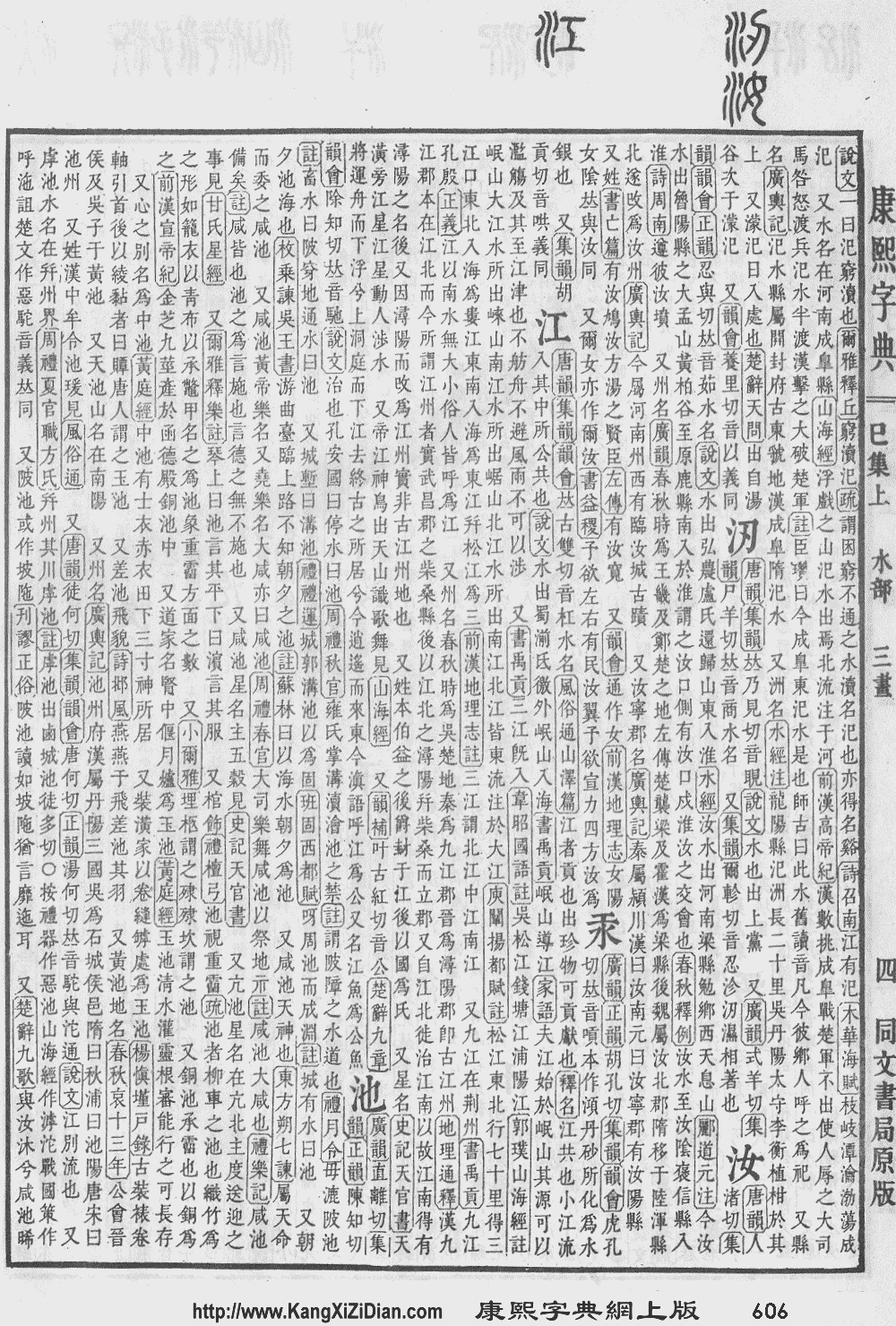
- Kangxi Dictionary: page 606, character 2
- Dai Kanwa Jiten: character 17138
- Dae Jaweon: page 999, character 11
- Hanyu Da Zidian (first edition): volume 3, page 1555, character 4
- Unihan data for U+6C5D
Chinese
Glyph origin
| Old Chinese | |
|---|---|
| 拿 | *rnaː |
| 拏 | *rnaː |
| 詉 | *rnaː |
| 蒘 | *rnaː, *na |
| 笯 | *rnaː, *naː, *naːs |
| 挐 | *rnaː, *na |
| 絮 | *rnaːs, *nas, *snas, *nas |
| 呶 | *rnaːw |
| 怓 | *rnaːw |
| 帑 | *n̥ʰaːŋʔ, *naː |
| 奴 | *naː |
| 砮 | *naː, *naːʔ |
| 駑 | *naː |
| 孥 | *naː |
| 努 | *naːʔ |
| 弩 | *naːʔ |
| 怒 | *naːʔ, *naːs |
| 袽 | *na |
| 帤 | *na |
| 女 | *naʔ, *nas |
| 籹 | *naʔ |
| 恕 | *hnjas |
| 如 | *nja, *njas |
| 茹 | *nja, *njaʔ, *njas |
| 洳 | *nja, *njas |
| 鴽 | *nja |
| 蕠 | *nja |
| 汝 | *njaʔ |
| 肗 | *njaʔ |
Phono-semantic compound (形聲/形声, OC *njaʔ) : semantic 水 (“river; water”) + phonetic 女 (OC *naʔ, *nas).
Etymology 1
Lua error in Module:utilities at line 142: attempt to perform arithmetic on local 'h' (a nil value) Probably related to Proto-Kam-Sui *Ɂnjaᴬ (“river”), whence Southern Kam nyal (“river”), Sui qnyal (Schuessler, 2007).
Pronunciation
Definitions
汝
Etymology 2
Lua error in Module:utilities at line 142: attempt to perform arithmetic on local 'h' (a nil value) From Proto-Sino-Tibetan *na-ŋ (“you”). Cognate with 你 (nǐ) and 爾/尔 (ěr).
Pronunciation
Definitions
汝
- (literary or coastal Min) thou; you (second-person pronoun)
- 子貢問曰:「賜也何如?」子曰:「女器也。」 [Classical Chinese, trad.]
- From: The Analects of Confucius, c. 475 – 221 BCE, translated based on James Legge's version
- Zǐgòng wèn yuē: “Cì yě hérú?” Zǐ yuē: “Rǔ qì yě.” [Pinyin]
- Zigong asked, "What do you say of Ci [Zigong's given name]?" The Master said, "You are a utensil."
子贡问曰:“赐也何如?”子曰:“女器也。” [Classical Chinese, simp.]- 子曰:「居!吾語汝。」 [Classical Chinese, trad.]
- From: The Book of Rites, c. 4th – 2nd century BCE
- Zǐ yuē: “Jū! Wú yù rǔ.” [Pinyin]
- The Master said, "Sit down, and I will tell you."
子曰:“居!吾语汝。” [Classical Chinese, simp.]
Synonyms
Lua error in Module:utilities at line 142: attempt to perform arithmetic on local 'h' (a nil value)
Japanese
Readings
Lua error in Module:utilities at line 142: attempt to perform arithmetic on local 'h' (a nil value)
Etymology 1
| Kanji in this term |
|---|
| 汝 |
| なんじ Jinmeiyō |
| kun’yomi |
| Alternative spellings |
|---|
| 爾 女 (rare, kanbun) 若 (rare, kanbun) |
/na mut͡ɕi/ → /namʉd͡ʑi/ → /nand͡ʑi/
Originally a compound of Lua error in Module:utilities at line 142: attempt to perform arithmetic on local 'h' (a nil value).[1][2]
Also written as なむぢ (namuji) in older texts, since the namuchi, namuji, and nanji readings likely existed in free variation until the development of the ん (n) grapheme.
Pronunciation
Quotations
For quotations using this term, see Citations:汝.
Derived terms
- 汝奴 (nanme)
- 今汝は画れり (ima nanji wa kagireri)
- 大汝小汝 (Ōnanji Konanji)
Idioms
- 艱難汝を玉にす (kannan nanji o tama ni su)
Proverbs
- 汝自身を知れ (nanji jishin o shire)
- 汝の敵を愛せよ (nanji no teki o aiseyo)
- 汝自らを知れ (nanji mizukara o shire)
- 弱き者よ汝の名は女なり (yowakimono yo nanji no na wa onna nari)
Etymology 2
| Kanji in this term |
|---|
| 汝 |
| なれ Jinmeiyō |
| kun’yomi |
From Old Japanese.
Derived from Lua error in Module:utilities at line 142: attempt to perform arithmetic on local 'h' (a nil value).
Quotations
For quotations using this term, see Citations:汝.
Etymology 3
| Kanji in this term |
|---|
| 汝 |
| な Jinmeiyō |
| irregular |
| Alternative spelling |
|---|
| 己 |
From Old Japanese.
Possibly cognate with second-person singular informal pronoun Korean 너 (neo).
Quotations
For quotations using this term, see Citations:汝.
Derived terms
Lua error: attempt to perform arithmetic on local 'h' (a nil value)
Etymology 4
| Kanji in this term |
|---|
| 汝 |
| うぬ Jinmeiyō |
| irregular |
| Alternative spelling |
|---|
| 己 |
Sound shift from reflexive pronoun 己 (ono), Old Japanese 己 (ono2).[2]
Pronunciation
- Pronunciation for pronoun senses unknown.
Pronoun
汝 • (unu)
- (vulgar or dialectal, Yamagata) second-person pronoun: you
- (derogatory) first- or third-person reflexive pronoun: me, myself, himself, herself, itself, oneself
- Synonym: 自分自身 (jibun-jishin)
Derived terms
- 汝等 (unura)
- うなうな (unauna)
Etymology 5
| Kanji in this term |
|---|
| 汝 |
| しゃ Jinmeiyō |
| irregular |
⟨si⟩ → /ɕi/ → /ɕa/
Shift from Lua error in Module:utilities at line 142: attempt to perform arithmetic on local 'h' (a nil value) of the same meaning.
Etymology 6
| Kanji in this term |
|---|
| 汝 |
| いまし Jinmeiyō |
| kun’yomi |
The nominalization of honorific verb 坐す (imasu, “to be”, honorific).[1]
Possibly also analyzable as a compound of Lua error in Module:utilities at line 142: attempt to perform arithmetic on local 'h' (a nil value).
See also
| a-/wa- “I, we” (first person) |
na-/-ma- “you, ye, thou” (second person) |
k- “this” (close to speaker) |
s- “that” (close to listener) |
a-/ka- “that over there” (far from both) |
i-/ta-/nani- “who, what, where, how, when” (interrogative) |
ono- “oneself” (reflexive) | |
|---|---|---|---|---|---|---|---|
| Person | あ (a) あれ (are) わ (wa) われ (ware) まろ (maro) |
Lua error in Module:utilities at line 142: attempt to perform arithmetic on local 'h' (a nil value) Lua error in Module:utilities at line 142: attempt to perform arithmetic on local 'h' (a nil value) Lua error in Module:utilities at line 142: attempt to perform arithmetic on local 'h' (a nil value) Lua error in Module:utilities at line 142: attempt to perform arithmetic on local 'h' (a nil value) Lua error in Module:utilities at line 142: attempt to perform arithmetic on local 'h' (a nil value) Lua error in Module:utilities at line 142: attempt to perform arithmetic on local 'h' (a nil value) きみ (kimi) |
こ (ko) これ (kore) |
そ (so) それ (sore) |
あ (a) あれ (are) か (ka) かれ (kare) |
た (ta) たれ (tare) なにがし (nanigashi) |
おの (ono) おのれ (onore) |
| Thing | こ (ko) これ (kore) |
そ (so) それ (sore) |
あ (a) あれ (are) か (ka) かれ (kare) |
いづれ (izure) なに (nani) |
|||
| Location | ここ (koko) | そこ (soko) | あしこ (ashiko) かしこ (kashiko) |
いづく (izuku) いづこ (izuko) いどこ (idoko) どこ (doko) |
|||
| Direction | こち (kochi) こなた (konata) |
そち (sochi) そなた (sonata) |
あち (achi) あなた (anata) かなた (kanata) |
いづち (izuchi) いづら (izura) いづかた (izukata) |
|||
| Manner | か (ka) かく (kaku) かくて (kakute) かう (kō) |
さ (sa) さて (sate) しか (shika) |
いか (ika) | ||||
| Time | いつ (itsu) |
References
- 1988, 国語大辞典(新装版) (Kokugo Dai Jiten, Revised Edition) (in Japanese), Tōkyō: Shogakukan
- 2006, 大辞林 (Daijirin), Third Edition (in Japanese), Tōkyō: Sanseidō, →ISBN
Korean
Hanja
汝 • (yeo) (hangeul 여, revised yeo, McCune–Reischauer yŏ, Yale ye)
References
- (please provide the title of the work), accessed 15 May 2020, archived from the original on 2021-04-09
Old Japanese
Etymology 1
Originally a first person pronoun. Later became a second person pronoun, as is often seen in Japanese. Compare Old Korean 나 (na). Also found in some instances as a self-reference, one, oneself. This sense is more commonly spelled 己 when used in isolation[1].
Pronoun
汝 (na) (kana な)
Quotations
For quotations using this term, see Citations:汝.
Derived terms
Descendants
- Lua error in Module:utilities at line 142: attempt to perform arithmetic on local 'h' (a nil value)
See also
- 劍太刀 (turugi1-tati, pillow word that can allude to na)
Etymology 2
From Lua error in Module:utilities at line 142: attempt to perform arithmetic on local 'h' (a nil value).
Quotations
For quotations using this term, see Citations:汝.
Descendants
- Lua error in Module:utilities at line 142: attempt to perform arithmetic on local 'h' (a nil value)
Etymology 3
Cognate with 其 (si, third-person pronoun) and 己 (si, reflexive pronoun). (Can this(+) etymology be sourced?)
Descendants
- Lua error in Module:utilities at line 142: attempt to perform arithmetic on local 'h' (a nil value)
Etymology 4
The nominalization of the 連用形 (ren'yōkei, “stem or continuative form”) of honorific verb 坐す (imasu, “to be”).
Alternatively, analyzable as a compound of Lua error in Module:utilities at line 142: attempt to perform arithmetic on local 'h' (a nil value).
Usage notes
More honorific than masi (see Etymology 5 below), but less honorific than mi1masi (see Etymology 6 below).
Quotations
For quotations using this term, see Citations:汝.
Descendants
- Lua error in Module:utilities at line 142: attempt to perform arithmetic on local 'h' (a nil value)
Etymology 5
The nominalization of the 連用形 (ren'yōkei, “stem or continuative form”) of honorific verb 坐す (masu, “to be”).[1]
Alternatively, a shortening of imasi (see Etymology 3 above).[1][2]
Usage notes
Less honorific than both imasi (see Etymology 4 above) and mi1masi (see Etymology 6 below).
Quotations
For quotations using this term, see Citations:汝.
Etymology 6
Compound of Lua error in Module:utilities at line 142: attempt to perform arithmetic on local 'h' (a nil value).[1]
Usage notes
More honorific than both imasi (see Etymology 4 above) and masi (see Etymology 5 above).
Quotations
For quotations using this term, see Citations:汝.
Etymology 7
Possibly a borrowing from Old Korean, compare modern Korean 이 (i, “this person”). (Can this(+) etymology be sourced?)
Quotations
For quotations using this term, see Citations:汝.
References
- 1988, 国語大辞典(新装版) (Kokugo Dai Jiten, Revised Edition) (in Japanese), Tōkyō: Shogakukan
- 2006, 大辞林 (Daijirin), Third Edition (in Japanese), Tōkyō: Sanseidō, →ISBN