鷹
| ||||||||
Translingual
Han character
鷹 (Kangxi radical 196, 鳥+13, 24 strokes, cangjie input 戈土竹日火 (IGHAF), four-corner 00227, composition ⿸䧹鳥)
References
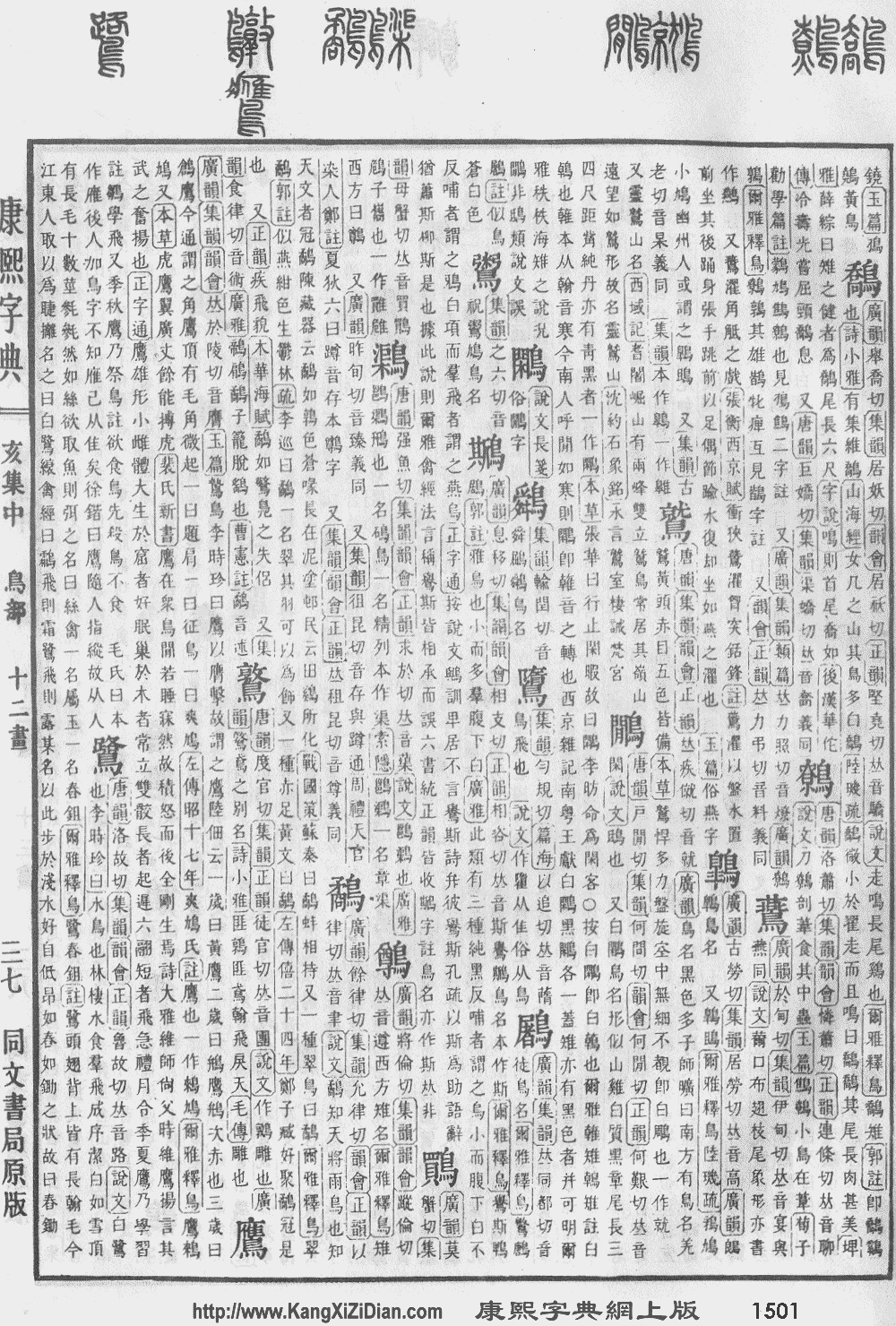
- Kangxi Dictionary: page 1501, character 18
- Dai Kanwa Jiten: character 47377
- Dae Jaweon: page 2031, character 26
- Hanyu Da Zidian (first edition): volume 7, page 4666, character 2
- Unihan data for U+9DF9
Chinese
| trad. | 鷹 | |
|---|---|---|
| simp. | 鹰 | |
| 2nd round simp. | ⿰应鸟 | |
| alternative forms | 䧹 | |
Glyph origin
Ideogrammic compound (會意/会意) and phono-semantic compound (形聲/形声, OC *qɯŋ) : phonetic 䧹 (OC *qɯŋ, “eagle; hawk”) + semantic 鳥 (“bird”).
Etymology
This word is possibly related to Proto-Sino-Tibetan *g-la(ŋ/k) (“bird of prey”), which is likely a loan from Proto-Mon-Khmer *laŋ ~ *laaŋ ~ *laiŋ (“large raptor”) > Proto-Bahnaric *klaːŋ (“hawk”), Proto-Palaungic *klaːŋ (“kite”), Mon လနေၚ် (“kite”), Khmer ខ្លែង (khlaeng, “kite”); within Tibeto-Burman, compare Tibetan གླག (glag, “eagle; vulture”), Burmese လင်းတ (lang:ta., “vulture”), Jingpho lang (“bird of the falcon family”) (Benedict, 1972; STEDT).
This word agrees better with Tibetan སྐྱིང་སེར (skying ser, “eagle; vulture”) if the Old Chinese is reconstructed as *s-ki̯əŋ (Benedict, 1990; Schuessler, 2007); Benedict (1976) reconstructs Proto-Sino-Tibetan *s-kiŋ for this, which Benedict (1990) suggests is the native Sino-Tibetan root.
Pronunciation
Definitions
鷹
- a bird of prey of Accipitriformes (eagles, hawks, kites, vultures), Falconiformes (falcons) or Strigiformes (owls)
Compounds
- 兀鷹/兀鹰 (wùyīng)
- 南鷂北鷹/南鹞北鹰
- 夜鷹/夜鹰 (yèyīng)
- 天鷹星座/天鹰星座
- 如鷹在籠/如鹰在笼
- 按鷹/按鹰
- 放鷹/放鹰 (fàngyīng)
- 放鷹逐犬/放鹰逐犬
- 熬鷹/熬鹰
- 犬牙鷹爪/犬牙鹰爪
- 獵鷹/猎鹰
- 禿鷹/秃鹰 (tūyīng)
- 老鷹/老鹰 (lǎoyīng)
- 蒼鷹/苍鹰 (cāngyīng)
- 虎嘯鷹揚/虎啸鹰扬
- 虎視鷹瞵/虎视鹰瞵
- 見兔放鷹/见兔放鹰
- 角鷹/角鹰
- 貓頭鷹/猫头鹰 (māotóuyīng)
- 雀鷹/雀鹰
- 韝上鷹/𫖕上鹰
- 飛鷹走犬/飞鹰走犬
- 飛鷹走狗/飞鹰走狗
- 飛鷹走馬/飞鹰走马
- 飢鷹餓虎/饥鹰饿虎
- 餓虎飢鷹/饿虎饥鹰
- 魚鷹/鱼鹰 (yúyīng)
- 鷂鷹/鹞鹰 (yàoyīng)
- 鷹勾鼻/鹰勾鼻
- 鷹師/鹰师
- 鷹式飛彈/鹰式飞弹
- 鷹抓燕雀/鹰抓燕雀
- 鷹揚/鹰扬 (yīngyáng)
- 鷹揚宴/鹰扬宴
- 鷹揚虎視/鹰扬虎视
- 鷹擊毛摯/鹰击毛挚
- 鷹架/鹰架
- 鷹洋/鹰洋 (yīngyáng)
- 鷹派/鹰派 (yīngpài)
- 鷹爪/鹰爪
- 鷹爪功/鹰爪功
- 鷹爪毛兒/鹰爪毛儿
- 鷹犬/鹰犬 (yīngquǎn)
- 鷹瞵鶚視/鹰瞵鹗视
- 鷹視/鹰视 (yīngshì)
- 鷹視狼步/鹰视狼步
- 鷹視狼顧/鹰视狼顾
- 鷹覷鶻望/鹰觑鹘望
- 鷹鸇/鹰鹯
- 鷹鼻鷂眼/鹰鼻鹞眼
References
- “鷹”, in 漢語多功能字庫 (Multi-function Chinese Character Database), 香港中文大學 (the Chinese University of Hong Kong), 2014–
Japanese
Etymology 1
| Kanji in this term |
|---|
| 鷹 |
| たか Jinmeiyō |
| kun’yomi |
From Old Japanese.[1] Compare Ainu タカ (taka, “hawk”).
Usage notes
As with many terms that name organisms, this term is often spelled in katakana, especially in biological contexts (where katakana is customary), as タカ.
Derived terms
- 鷹の爪 (takanotsume)
Etymology 2
| Kanji in this term |
|---|
| 鷹 |
| くち Jinmeiyō |
| kun’yomi |
| For pronunciation and definitions of 鷹 – see the following entry. | ||
| ||
| (This term, 鷹, is an alternative spelling of the above term.) |
References
- Frellesvig, Bjarke; Stephen Wright Horn; et al. (eds.) (2023), “Old Japanese taka”, in Oxford-NINJAL Corpus of Old Japanese