鷺
See also: 鹭
| ||||||||
| ||||||||
Translingual
Han character
鷺 (Kangxi radical 196, 鳥+12, 23 strokes, cangjie input 口口竹日火 (RRHAF), four-corner 67327, composition ⿱路鳥)
References
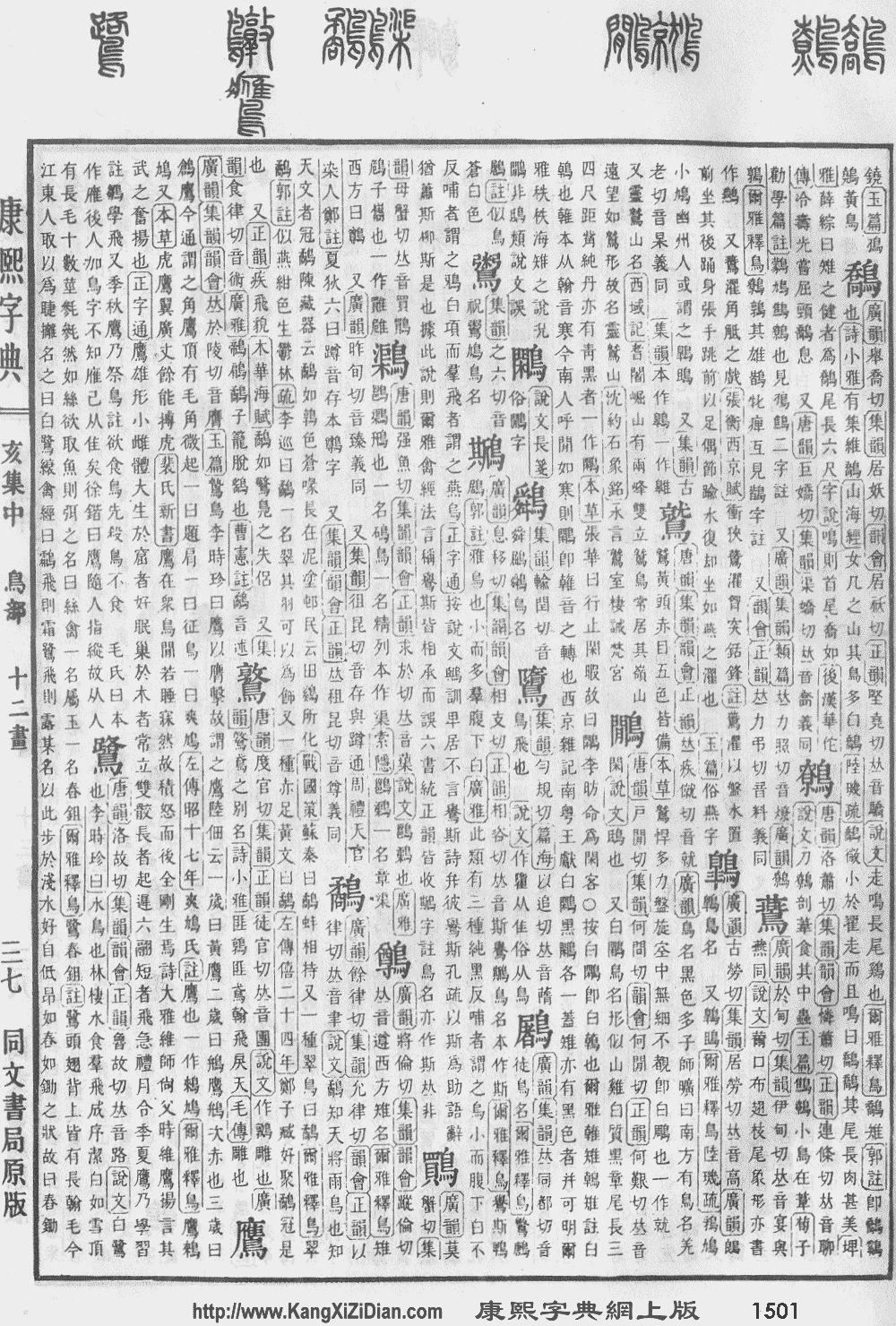
- Kangxi Dictionary: page 1501, character 19
- Dai Kanwa Jiten: character 47362
- Hanyu Da Zidian (first edition): volume 7, page 4664, character 9
- Unihan data for U+9DFA
- Unihan data for U+F93A
Chinese
Lua error in Module:utilities at line 142: attempt to perform arithmetic on local 'h' (a nil value)
Glyph origin
| Historical forms of the character 鷺 | |
|---|---|
| Shuowen Jiezi (compiled in Han) | Liushutong (compiled in Ming) |
| Small seal script | Transcribed ancient scripts |
 |
 |
Characters in the same phonetic series (各) (Zhengzhang, 2003)
| Old Chinese | |
|---|---|
| 髂 | *kʰraːɡs |
| 路 | *ɡ·raːɡs |
| 輅 | *ɡ·raːɡs |
| 賂 | *ɡ·raːɡs |
| 虂 | *ɡ·raːɡs |
| 露 | *ɡ·raːɡs |
| 潞 | *raːɡs |
| 鷺 | *raːɡs |
| 璐 | *raːɡs |
| 簬 | *raːɡs |
| 簵 | *ɡ·raːɡs |
| 洛 | *ɡ·raːɡ |
| 駱 | *ɡ·raːɡ |
| 絡 | *ɡ·raːɡ |
| 酪 | *ɡ·raːɡ |
| 烙 | *ɡ·raːɡ |
| 雒 | *ɡ·raːɡ |
| 珞 | *ɡ·raːɡ |
| 硌 | *ɡ·raːɡ |
| 袼 | *ɡ·raːɡ, *klaːɡ |
| 笿 | *ɡ·raːɡ |
| 鉻 | *ɡ·raːɡ, *kraːɡ |
| 鮥 | *ɡ·raːɡ |
| 鵅 | *ɡ·raːɡ, *kraːɡ |
| 挌 | *ɡ·raːɡ, *kraːɡ |
| 落 | *ɡ·raːɡ |
| 各 | *klaːɡ |
| 胳 | *klaːɡ |
| 閣 | *klaːɡ |
| 格 | *klaːɡ, *kraːɡ |
| 擱 | *klaːɡ |
| 恪 | *kʰlaːɡ |
| 愙 | *kʰaːɡ |
| 貉 | *ɡlaːɡ, *mɡraːɡ |
| 狢 | *ɡlaːɡ |
| 佫 | *ɡlaːɡ |
| 略 | *ɡ·raɡ |
| 茖 | *kraːɡ |
| 骼 | *kraːɡ |
| 觡 | *kraːɡ |
| 蛒 | *kraːɡ |
| 敋 | *kraːɡ |
| 客 | *kʰraːɡ |
| 喀 | *kʰraːɡ |
| 揢 | *kʰraːɡ |
| 額 | *ŋɡraːɡ |
| 峉 | *ŋɡraːɡ |
| 頟 | *ŋɡraːɡ |
| 詻 | *ŋɡraːɡ |
| 垎 | *ɡraːɡ |
| 楁 | *ɡraːɡ |
Phono-semantic compound (形聲/形声, OC *raːɡs) : phonetic 路 (OC *ɡ·raːɡs) + semantic 鳥 (“bird”).
Etymology
Compare Khmer ក្រក (krɑɑk, “species of heron”), Thai ร้า (ráa, “species of heron”) (Schuessler, 2007).
Pronunciation
Compounds
- 夜鷺/夜鹭 (yèlù)
- 宿鷺/宿鹭
- 寒鷺/寒鹭
- 延鷺堠/延鹭堠
- 振鷺/振鹭
- 振鷺充庭/振鹭充庭
- 振鷺在庭/振鹭在庭
- 暗鷺/暗鹭
- 月鷺/月鹭
- 朱鷺/朱鹭 (zhūlù)
- 朱鷺曲/朱鹭曲
- 池鷺/池鹭
- 沙鷺/沙鹭
- 漚鷺/沤鹭
- 班鷺/班鹭
- 琵鷺/琵鹭 (pílù)
- 白鷺/白鹭 (báilù)
- 白鷺洲/白鹭洲
- 白鷺縗/白鹭缞
- 白鷺纕/白鹭𬙋
- 白鷺轉花/白鹭转花
- 白鷺鷥/白鹭鸶 (báilùsī)
- 眠鷗宿鷺/眠鸥宿鹭
- 簉鷺/簉鹭
- 蒼鷺/苍鹭 (cānglù)
- 長腳鷺鷥/长脚鹭鸶
- 長頸鷺鷥/长颈鹭鸶
- 閒鷗野鷺/闲鸥野鹭
- 雪鷺/雪鹭
- 霜鷺/霜鹭
- 青鷺/青鹭
- 鴛鷺/鸳鹭
- 鴜鷺/鴜鹭
- 鴛鷺班/鸳鹭班
- 鴛鷺群/鸳鹭群
- 鴛鷺行/鸳鹭行
- 鴻鷺/鸿鹭
- 鵠鷺/鹄鹭
- 鵷班鷺序/鹓班鹭序
- 鵷鷺/鹓鹭
- 鶖鷺/鹙鹭
- 鷗浮鷺立/鸥浮鹭立
- 鷗鷺忘機/鸥鹭忘机
- 鷗鷺盟/鸥鹭盟
- 鷺堠/鹭堠
- 鷺嶼/鹭屿
- 鷺序/鹭序 (lùxù)
- 鷺序鴛行/鹭序鸳行
- 鷺序鵷行/鹭序鹓行
- 鷺朋鷗侶/鹭朋鸥侣
- 鷺濤/鹭涛
- 鷺約鷗盟/鹭约鸥盟
- 鷺羽/鹭羽
- 鷺翿/鹭𰭣
- 鷺行/鹭行
- 鷺車/鹭车
- 鷺門/鹭门
- 鷺鴛/鹭鸳
- 鷺鵷/鹭鹓
- 鷺鶿/鹭鹚
- 鷺鶴/鹭鹤
- 鷺鷥/鹭鸶 (lùsī)
- 鷺鷥藤/鹭鸶藤
- 鷺鼓/鹭鼓
- 鸞鷺/鸾鹭
- 麻鷺/麻鹭
- 黑冠麻鷺/黑冠麻鹭 (hēiguān málù)
- 黑面琵鷺/黑面琵鹭
Japanese
Readings
Lua error in Module:utilities at line 142: attempt to perform arithmetic on local 'h' (a nil value)
Etymology
| Kanji in this term |
|---|
| 鷺 |
| さぎ Jinmeiyō |
| kun’yomi |
From Old Japanese. First cited to the Kojiki of 712.[1]
Noun
鷺 • (sagi)
Derived terms
- 白鷺 (shirasagi): egret
- 黒鷺 (kurosagi): Pacific reef heron
- 蒼鷺 (aosagi): grey heron
- 五位鷺 (goisagi): black-crowned night heron
References
Korean
Hanja
鷺 (eum 로 (ro), South Korea 노 (no))
- This term needs a translation to English. Please help out and add a translation, then remove the text
{{rfdef}}.
Vietnamese
This article is issued from Wiktionary. The text is licensed under Creative Commons - Attribution - Sharealike. Additional terms may apply for the media files.