鬧
| ||||||||
Translingual
| Traditional | Lua error in Module:utilities at line 142: attempt to perform arithmetic on local 'h' (a nil value) |
|---|---|
| Shinjitai (extended) |
閙 |
| Simplified | 闹 |
Alternative forms
Note that the Ming typeface used in Japan and Korea as well as the Kangxi dictionary uses a vertical dot for the upper component of 亠 which is slightly different from modern Chinese scripts which uses a slanting 丶 dot for the upper component of 亠 in 市.
Han character
鬧 (Kangxi radical 191, 鬥+5, 15 strokes, cangjie input 中弓卜中月 (LNYLB), four-corner 77227, composition ⿵鬥市(GHTKV) or ⿵鬥巿(J))
Derived characters
Related characters
References
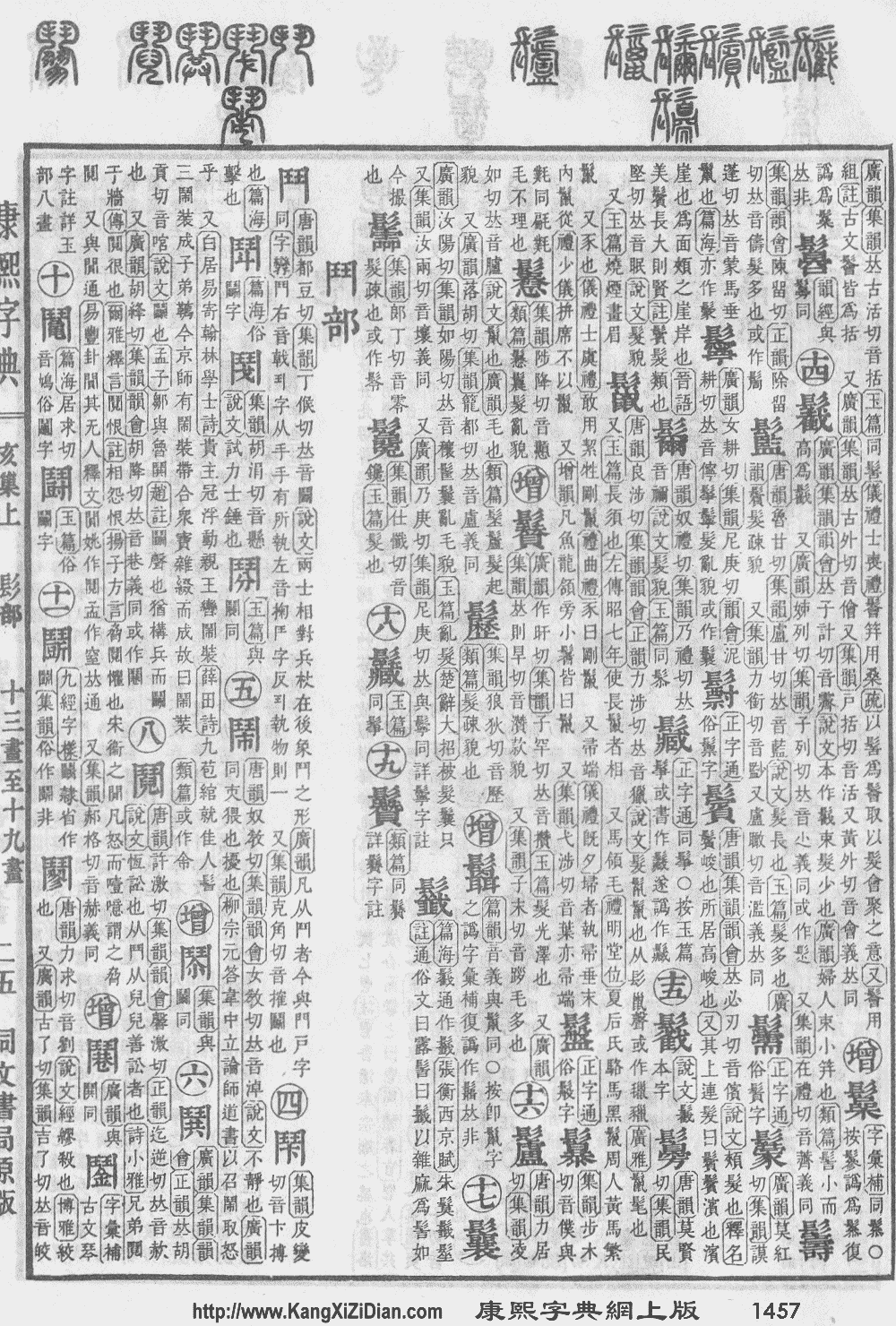
- Kangxi Dictionary: page 1457, character 34
- Dai Kanwa Jiten: character 45639
- Dae Jaweon: page 1989, character 23
- Hanyu Da Zidian (first edition): volume 7, page 4515, character 7
- Unihan data for U+9B27
Chinese
Lua error in Module:utilities at line 142: attempt to perform arithmetic on local 'h' (a nil value)
Glyph origin
In the current form, ideogrammic compound (會意/会意) : 鬥 (“to fight”) + 市 (“market; town”) – noisy.
Pronunciation
Definitions
鬧
Synonyms
Lua error in Module:utilities at line 142: attempt to perform arithmetic on local 'h' (a nil value)
Compounds
- 亂鬧/乱闹 (luànnào)
- 吵吵鬧鬧/吵吵闹闹 (chǎochǎonàonào)
- 吵鬧/吵闹 (chǎonào)
- 和鬧/和闹
- 哭鬧/哭闹 (kūnào)
- 喧鬧/喧闹 (xuānnào)
- 嚷鬧/嚷闹
- 囂鬧/嚣闹
- 大吵大鬧/大吵大闹 (dàchǎodànào)
- 嬉鬧/嬉闹 (xīnào)
- 尋鬧/寻闹
- 廝鬧/厮闹
- 打打鬧鬧/打打闹闹
- 打鬧/打闹 (dǎnào)
- 挨鬧/挨闹
- 春香鬧學/春香闹学
- 混鬧/混闹
- 湊熱鬧/凑热闹 (còurènao)
- 潑哭潑鬧/泼哭泼闹
- 無理取鬧/无理取闹 (wúlǐqǔnào)
- 煩囂喧鬧/烦嚣喧闹
- 熱熱鬧鬧/热热闹闹
- 熱鬧/热闹
- 熱鬧哄哄/热闹哄哄
- 爭鬧/争闹
- 發鬧/发闹
- 看熱鬧/看热闹 (kàn rènao)
- 瞎鬧/瞎闹
- 瞧熱鬧/瞧热闹
- 紛紛鬧鬧/纷纷闹闹
- 索鬧/索闹
- 胡掄混鬧/胡抡混闹
- 胡鬧/胡闹 (húnào)
- 騷鬧/骚闹
- 鬧不清/闹不清
- 鬧中取靜/闹中取静
- 鬧亂子/闹乱子
- 鬧事/闹事 (nàoshì)
- 鬧交/闹交
- 鬧刺兒/闹刺儿
- 鬧劇/闹剧 (nàojù)
- 鬧動/闹动
- 鬧區/闹区 (nàoqū)
- 鬧口舌/闹口舌
- 鬧哄哄/闹哄哄
- 鬧喪鼓兒/闹丧鼓儿
- 鬧嗓子/闹嗓子
- 鬧嘴舌/闹嘴舌
- 鬧嚷嚷/闹嚷嚷
- 鬧垓垓/闹垓垓
- 鬧場/闹场
- 鬧天宮/闹天宫
- 鬧天氣/闹天气
- 鬧娥/闹娥
- 鬧家務/闹家务
- 鬧小旦/闹小旦
- 鬧小月子/闹小月子
- 鬧市/闹市 (nàoshì)
- 鬧彆扭/闹别扭
- 鬧心/闹心 (nàoxīn)
- 鬧心眼兒/闹心眼儿
- 鬧忙/闹忙
- 鬧性子/闹性子
- 鬧情緒/闹情绪 (nào qíngxù)
- 鬧意見/闹意见
- 鬧戲兒/闹戏儿
- 鬧房/闹房 (nàofáng)
- 鬧擰了/闹拧了
- 鬧攘/闹攘
- 鬧新房/闹新房
- 鬧架/闹架
- 鬧標鬧闊/闹标闹阔
- 鬧油/闹油
- 鬧洞房/闹洞房 (nàodòngfáng)
- 鬧災/闹灾
- 鬧炒/闹炒
- 鬧烘烘/闹烘烘
- 鬧熱/闹热 (nàorè)
- 鬧病/闹病 (nàobìng)
- 鬧的慌/闹的慌
- 鬧磨擦/闹磨擦
- 鬧竿兒/闹竿儿
- 鬧笑話/闹笑话 (nào xiàohuà)
- 鬧米湯/闹米汤
- 鬧翻/闹翻 (nàofān)
- 鬧翻身/闹翻身
- 鬧耗子/闹耗子
- 鬧聲/闹声
- 鬧肚子/闹肚子 (nào dùzi)
- 鬧脾氣/闹脾气 (nào píqi)
- 鬧臺/闹台
- 鬧荒/闹荒 (nàohuāng)
- 鬧荒荒/闹荒荒
- 鬧著玩兒/闹著玩儿 (nàozhewánr)
- 鬧虛/闹虚
- 鬧裝/闹装
- 鬧賊/闹贼
- 鬧酒/闹酒
- 鬧酸款/闹酸款
- 鬧錯/闹错
- 鬧鐘/闹钟 (nàozhōng)
- 鬧鑊鐸/闹镬铎
- 鬧風潮/闹风潮
- 鬧饑荒/闹饥荒
- 鬧騰/闹腾 (nàoteng)
- 鬧騰勁兒/闹腾劲儿
- 鬧鬧熱熱/闹闹热热
- 鬧鬧穰穰/闹闹穰穰
- 鬧鬨/闹哄
- 鬧鬼/闹鬼 (nàoguǐ)
- 鬧魔/闹魔
- 鬧龍燈/闹龙灯
Japanese
| 閙 | |
| Lua error in Module:utilities at line 142: attempt to perform arithmetic on local 'h' (a nil value) |
Readings
Korean
Vietnamese
Han character
鬧: Hán Nôm readings: náo, náu, nháo, nao, nào
- This term needs a translation to English. Please help out and add a translation, then remove the text
{{rfdef}}.
References
This article is issued from Wiktionary. The text is licensed under Creative Commons - Attribution - Sharealike. Additional terms may apply for the media files.