賓
| ||||||||
 | ||||||||
Translingual
Han character
賓 (Kangxi radical 154, 貝+7 in Chinese and Korean, 貝+8 in Japanese, 14 strokes in Chinese and Korean, 15 strokes in Japanese, cangjie input 十一竹金 (JMHC), four-corner 30806, composition ⿱⿳宀一𣥂貝(GHTKV) or ⿱⿳宀一少貝(J))
Derived characters
References
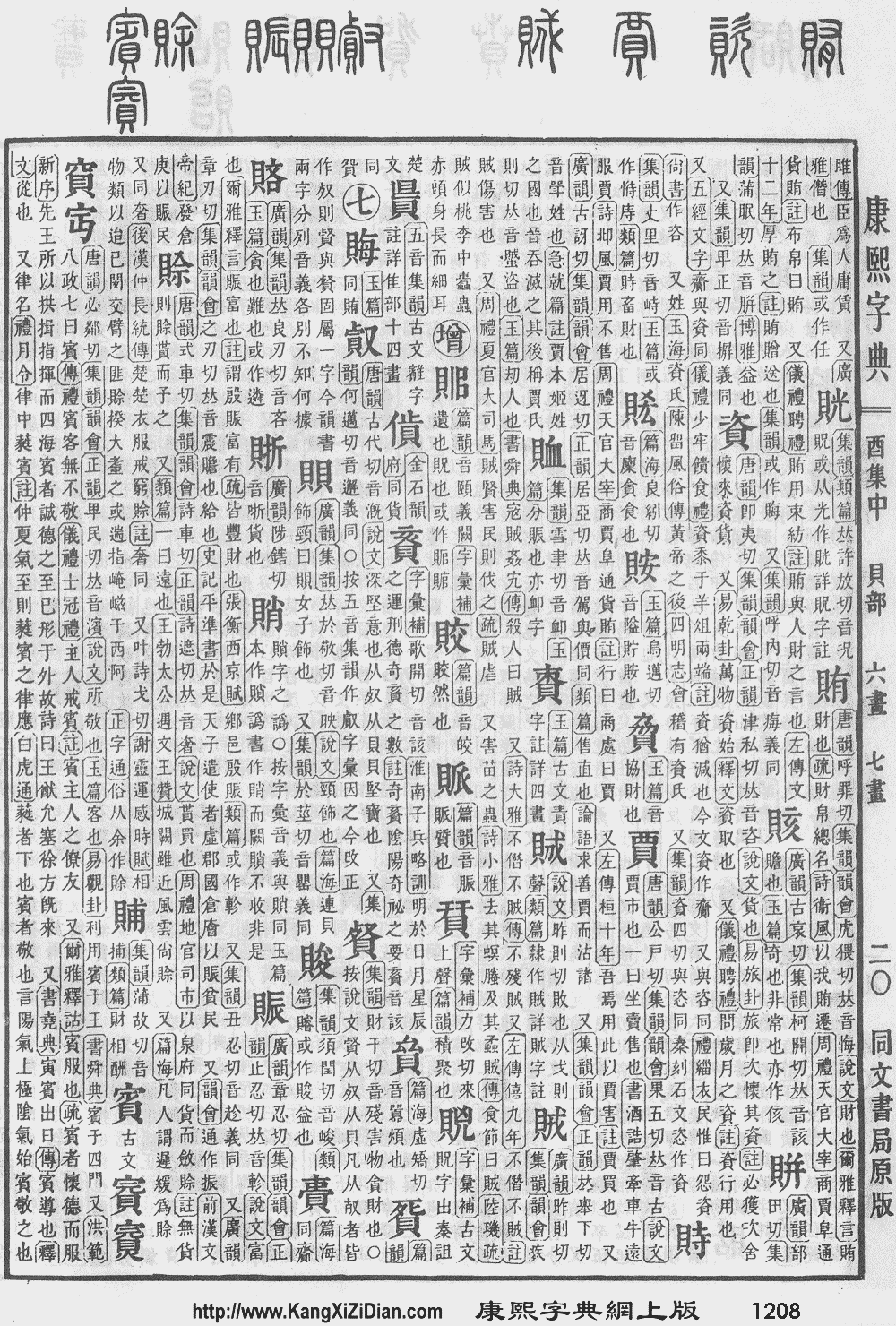
- Kangxi Dictionary: page 1208, character 37
- Dai Kanwa Jiten: character 36788
- Dae Jaweon: page 1676, character 7
- Hanyu Da Zidian (first edition): volume 6, page 3643, character 8
- Unihan data for U+8CD3
- Unihan data for U+FA64
Chinese
Lua error in Module:utilities at line 142: attempt to perform arithmetic on local 'h' (a nil value)
Glyph origin
| Historical forms of the character 賓 |
|---|
| Shang |
| Oracle bone script |
 |
Shuowen: Phono-semantic compound (形聲/形声, OC *mpin) : phonetic 𡧍 () + semantic 貝.
Etymology
From n-nominalization of Proto-Sino-Tibetan *hin (“to give”). Cognate with 嬪 (OC *bin, “to become a bride”), which is an endopassive of 賓 (OC *mpin, “lit, "to be received like a guest"”).
Pronunciation 1
Definitions
賓
Compounds
- 上賓/上宾 (shàngbīn)
- 九賓/九宾
- 來賓/来宾 (láibīn)
- 倒屣迎賓/倒屣迎宾
- 儀賓/仪宾
- 入幕之賓/入幕之宾
- 內賓/内宾 (nèibīn)
- 卡賓槍/卡宾枪 (kǎbīnqiāng)
- 反賓為主/反宾为主
- 喧賓奪主/喧宾夺主 (xuānbīnduózhǔ)
- 嘉賓/嘉宾 (jiābīn)
- 國賓/国宾 (guóbīn)
- 外賓/外宾 (wàibīn)
- 大宴賓客/大宴宾客
- 大賓/大宾
- 宜賓/宜宾 (Yíbīn)
- 寅賓/寅宾
- 幕賓/幕宾
- 延賓/延宾
- 截髮留賓/截发留宾
- 沙賓疫苗/沙宾疫苗
- 特別來賓/特别来宾
- 相待如賓/相待如宾
- 相敬如賓/相敬如宾
- 罽賓/罽宾 (Jìbīn)
- 羅賓漢/罗宾汉 (Luóbīn Hàn)
- 菲律賓/菲律宾 (Fēilǜbīn)
- 蕤賓/蕤宾
- 蕤賓佳節/蕤宾佳节
- 西賓/西宾
- 貴賓/贵宾 (guìbīn)
- 貴賓卡/贵宾卡
- 賓主/宾主 (bīnzhǔ)
- 賓主盡歡/宾主尽欢
- 賓主禮/宾主礼
- 賓之初筵/宾之初筵
- 賓享/宾享
- 賓位/宾位
- 賓友/宾友
- 賓器/宾器
- 賓士/宾士
- 賓夕凡尼亞/宾夕凡尼亚 (Bīnxīfánníyà)
- 賓夕法尼亞/宾夕法尼亚 (Bīnxīfǎníyà)
- 賓天/宾天 (bīntiān)
- 賓宇/宾宇
- 賓客/宾客 (bīnkè)
- 賓客填門/宾客填门
- 賓客如雲/宾客如云
- 賓客盈庭/宾客盈庭
- 賓客盈門/宾客盈门
- 賓實/宾实
- 賓州/宾州 (Bīnzhōu)
- 賓師/宾师
- 賓待/宾待
- 賓從/宾从
- 賓旅/宾旅
- 賓服/宾服
- 賓朋/宾朋 (bīnpéng)
- 賓朋滿座/宾朋满座
- 賓果/宾果 (bīnguǒ)
- 賓東/宾东 (bīndōng)
- 賓次/宾次
- 賓漢/宾汉
- 賓白/宾白 (bīnbái)
- 賓禮/宾礼
- 賓至如歸/宾至如归 (bīnzhìrúguī)
- 賓興/宾兴
- 賓舟/宾舟
- 賓萌/宾萌
- 賓詞/宾词 (bīncí)
- 賓語/宾语 (bīnyǔ)
- 賓貢/宾贡
- 賓賓/宾宾
- 賓郎/宾郎 (bīnláng)
- 賓鐵/宾铁 (bīntiě)
- 賓陽/宾阳 (Bīnyáng)
- 賓館/宾馆 (bīnguǎn)
- 賓鴻/宾鸿
- 迎賓/迎宾 (yíngbīn)
- 遲賓之館/迟宾之馆
- 鄭驛留賓/郑驿留宾
- 酬賓/酬宾 (chóubīn)
- 門不停賓/门不停宾
- 門無雜賓/门无杂宾
- 館賓/馆宾
Pronunciation 2
Japanese
| Shinjitai | 賓 | |
| Kyūjitai [1] |
賓 賓or 賓+ ︀? |
|
| 賓󠄀 賓+ 󠄀?(Adobe-Japan1) | ||
| 賓󠄃 賓+ 󠄃?(Hanyo-Denshi) (Moji_Joho) | ||
| The displayed kanji may be different from the image due to your environment. See here for details. | ||
Readings
Lua error in Module:utilities at line 142: attempt to perform arithmetic on local 'h' (a nil value)
References
- “賓”, in 漢字ぺディア (Kanjipedia) (in Japanese), 日本漢字能力検定協会, 2015–2024
Korean
Etymology
From Middle Chinese 賓 (MC pjin). Recorded as Middle Korean 賔/비ᇰ (ping) (Yale: ping) in Hunmong Jahoe (訓蒙字會 / 훈몽자회), 1527.
Pronunciation
- (SK Standard/Seoul) IPA(key): [pin]
- Phonetic hangul: [빈]