薺
| ||||||||
Translingual
| Traditional | Lua error in Module:utilities at line 142: attempt to perform arithmetic on local 'h' (a nil value) |
|---|---|
| Shinjitai (extended) |
萕 |
| Simplified | 荠 |
Han character
薺 (Kangxi radical 140, 艸+14, 20 strokes, cangjie input 廿卜X (TYX), four-corner 44223, composition ⿱艹齊)
References
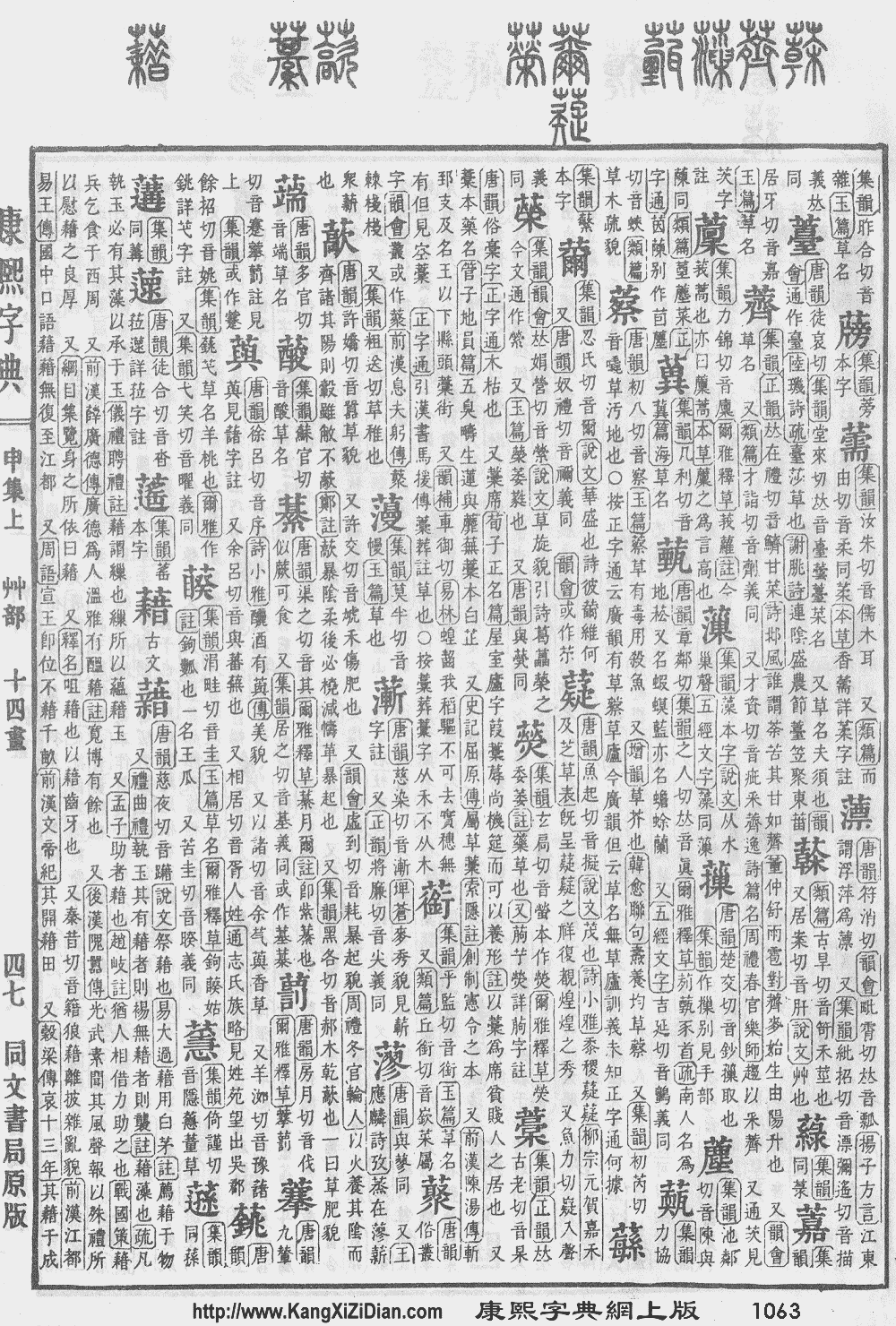
- Kangxi Dictionary: page 1063, character 8
- Dai Kanwa Jiten: character 32208
- Dae Jaweon: page 1527, character 34
- Hanyu Da Zidian (first edition): volume 5, page 3315, character 11
- Unihan data for U+85BA
Chinese
Lua error in Module:utilities at line 142: attempt to perform arithmetic on local 'h' (a nil value)
Glyph origin
| Old Chinese | |
|---|---|
| 儕 | *zriːl |
| 麡 | *zriːl, *ʔsliːl, *zliːl |
| 齋 | *ʔsriːl |
| 穧 | *ʔsleds, *ʔsliːls, *zliːls |
| 擠 | *ʔsliːl, *ʔsliːls |
| 躋 | *ʔsliːl, *ʔsliːls |
| 齏 | *ʔsliːl |
| 齎 | *ʔsliːl, *ʔslil |
| 櫅 | *ʔsliːl |
| 齌 | *ʔsliːl, *sʰliːl, *zliːls |
| 隮 | *ʔsliːl, *ʔsliːls |
| 賷 | *ʔsliːl |
| 虀 | *ʔsliːl |
| 濟 | *ʔsliːlʔ, *ʔsliːls |
| 癠 | *ʔsliːlʔ, *zliːl, *zliːlʔ, *zliːls |
| 霽 | *ʔsliːls |
| 齊 | *zliːl, *zliːls |
| 臍 | *zliːl |
| 蠐 | *zliːl, *zlil |
| 懠 | *zliːl, *zliːls |
| 薺 | *zliːlʔ, *zlil |
| 鱭 | *zliːlʔ |
| 嚌 | *zliːls |
| 劑 | *zliːls, *ʔslel |
| 齍 | *ʔslil |
Phono-semantic compound (形聲/形声, OC *zliːlʔ, *zlil) : semantic 艸 (“grass; plant”) + phonetic 齊 (OC *zliːl, *zliːls).
Pronunciation
Pronunciation
Pronunciation
Japanese
| 萕 | |
| Lua error in Module:utilities at line 142: attempt to perform arithmetic on local 'h' (a nil value) |
Kanji

(uncommon “Hyōgai” kanji, kyūjitai kanji, shinjitai form 萕)
Readings
Lua error in Module:utilities at line 142: attempt to perform arithmetic on local 'h' (a nil value)
Etymology
| Kanji in this term |
|---|
| 薺 |
| なずな Hyōgaiji |
| kun’yomi |
/nad͡zuna/ > /nazuna/
Unclear. There are two leading theories, based on older form nadzuna:
- May be derived from natsu na, as in 夏 (natsu, “summer”) + 無 (na, “missing, gone”), from the way the plant dies back in the summer.
- May be derived from nadzuru na, as in 撫づる (nadzuru, “to pet, to pat, to stroke”, the 連体形 (rentaikei, “attributive form”) of Old Japanese verb 撫づ nadzu, modern Japanese 撫でる naderu) + 菜 (na, “edible greens”), from the way the flower clusters may invite handling.
Usage notes
As with many terms that name organisms, this term is often spelled in katakana, especially in biological contexts (where katakana is customary), as ナズナ.
Hypernyms
- 春の七草 (haru no nanakusa)
Korean
Hanja
薺 • (je) (hangeul 제, revised je, McCune–Reischauer che, Yale cey)
- This term needs a translation to English. Please help out and add a translation, then remove the text
{{rfdef}}.