芥
| ||||||||
Translingual
Han character
芥 (Kangxi radical 140, 艸+4, 8 strokes in traditional Chinese and Korean, 7 strokes in mainland China and Japanese, cangjie input 廿人中中 (TOLL) or X廿人中中 (XTOLL), four-corner 44228, composition ⿱艹介)
Derived characters
- 𠶋, 𦄶
References
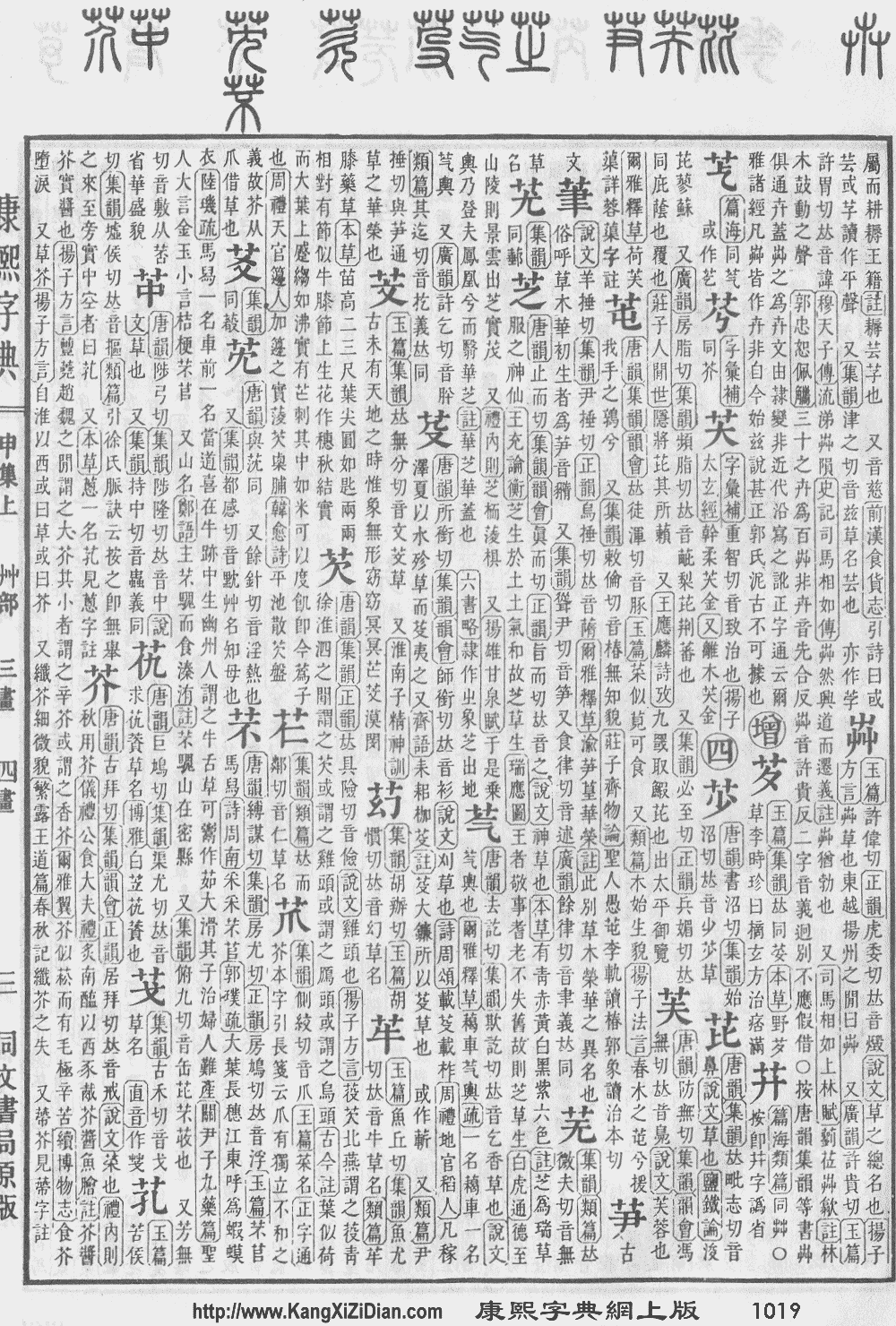
- Kangxi Dictionary: page 1019, character 31
- Dai Kanwa Jiten: character 30715
- Dae Jaweon: page 1477, character 14
- Hanyu Da Zidian (first edition): volume 5, page 3182, character 6
- Unihan data for U+82A5
Chinese
Lua error in Module:utilities at line 142: attempt to perform arithmetic on local 'h' (a nil value)
Glyph origin
| Historical forms of the character 芥 | |
|---|---|
| Warring States | Shuowen Jiezi (compiled in Han) |
| Qin slip script | Small seal script |
 |
 |
Phono-semantic compound (形聲/形声, OC *kreːds) : semantic 艸 (“grass, plant”) + phonetic 介 (OC *kreːds) – a type of plant.
Etymology
The meaning "mustard green" is attested earliest in the Book of Rites; "small grass" in Zuo zhuan (Ai 1).
Schuessler (2007) compares it to Middle Korean 갓 (kas), Proto-Southwestern Tai *ka:tᴰ (> Thai กาด (gàat), Lao ກາດ (kāt), Shan ၵၢတ်ႇ (kàat)), Proto-Vietic *kaːs (> Vietnamese cải, Muong cái, & Thavung kajh¹). However, all those foreign items might have been loaned from Late Old Chinese or Eastern Han Chinese (as proposed by Pittayaporn for *ka:tᴰ),
Pronunciation
Definitions
芥
- mustard greens (Brassica juncea)
- 膾:春用蔥,秋用芥。 [Classical Chinese, trad.]
- From: The Book of Rites, c. 4th – 2nd century BCE, translated based on James Legge's version
- Kuài: chūn yòng cōng, qiū yòng jiè. [Pinyin]
- Mince was made in spring, with onions; in autumn, with the mustard plant.
脍:春用葱,秋用芥。 [Classical Chinese, simp.]
- (literary) small grass
- 臣聞:「國之興也,視民如傷,是其福也。其亡也,以民為土芥,是其禍也。」 [Classical Chinese, trad.]
- From: Commentary of Zuo, c. 4th century BCE, translated based on James Legge's version
- Chén wén: “Guó zhī xìng yě, shì mín rú shāng, shì qí fú yě. Qí wáng yě, yǐ mín wèi tǔjiè, shì qí huò yě.” [Pinyin]
- I have heard that States flourish when they regard their people as if apprehensive of their receiving hurt:;`——that brings prosperity. States again perish when they treat their people as earth or grass; —that brings calamity.
臣闻:“国之兴也,视民如伤,是其福也。其亡也,以民为土芥,是其祸也。” [Classical Chinese, simp.]- 君之視臣如土芥,則臣視君如寇讎 [Classical Chinese, trad.]
- From: Mencius, c. 4th century BCE, translated based on James Legge's version
- jūn zhī shì chén rú tǔjiè, zé chén shì jūn rú kòuchóu [Pinyin]
- When the prince regards his ministers as earth or as grass, they regard him as a robber and an enemy.
君之视臣如土芥,则臣视君如寇雠 [Classical Chinese, simp.]- 覆杯水於坳堂之上,則芥為之舟。 [Classical Chinese, trad.]
- From: Zhuangzi, circa 3rd – 2nd centuries BCE, translated based on James Legge's version
- Fù bēi shuǐ yú àotáng zhī shàng, zé jiè wéi zhī zhōu. [Pinyin]
- Tip water from a cup into a cavity, and a leaf of grass will float on it like were a boat.
覆杯水于坳堂之上,则芥为之舟。 [Classical Chinese, simp.]
- (literary, figurative) triviality
Compounds
- 一芥
- 俛拾地芥/俯拾地芥
- 土芥
- 地芥
- 埃芥
- 塵芥/尘芥 (chénjiè)
- 塵芥蟲/尘芥虫
- 壤芥
- 大頭芥/大头芥
- 如拾地芥
- 山芥
- 引鍼拾芥/引针拾芥
- 拾地芥
- 拾芥
- 掌中芥
- 易如拾芥
- 橫芥/横芥
- 殺人如芥/杀人如芥
- 毛芥
- 毫芥
- 浮芥
- 石芥
- 視如土芥/视如土芥
- 視如草芥/视如草芥
- 視若草芥/视若草芥
- 纖芥/纤芥
- 纖芥不遺/纤芥不遗
- 纖芥無爽/纤芥无爽
- 腐芥
- 芥子 (jièzǐ)
- 芥子毒氣/芥子毒气 (jièzǐ dúqì)
- 芥子油
- 芥子須彌/芥子须弥
- 芥川賞/芥川赏
- 芥拾
- 芥拾青紫
- 芥末 (“mustard”)
- 芥視/芥视
- 芥羽
- 芥舟
- 芥菜
- 芥菜頭/芥菜头
- 芥蒂 (jièdì)
- 芥蔕/芥蒂
- 芥藍/芥蓝
- 芥藍菜/芥蓝菜
- 芥蘭/芥兰
- 芥蠆/芥虿
- 芥辣
- 芥黃/芥黄
- 草芥 (cǎojiè)
- 荊芥/荆芥 (jīngjiè)
- 草芥人命
- 蒂芥
- 蔕芥/蒂芥
- 薹芥
- 蜀芥
- 蠆芥/虿芥
- 負芥/负芥
- 遺芥/遗芥
- 針芥/针芥
- 針芥之合/针芥之合
- 針芥之契/针芥之契
- 針芥之投/针芥之投
- 針芥相投/针芥相投
- 鍼芥相投/针芥相投
- 須彌芥子/须弥芥子
Japanese
Readings
Lua error in Module:utilities at line 142: attempt to perform arithmetic on local 'h' (a nil value)
Etymology 1
| Kanji in this term |
|---|
| 芥 |
| からし Jinmeiyō |
| kun’yomi |
| For pronunciation and definitions of 芥 – see the following entry. | ||
| ||
| (This term, 芥, is an alternative spelling of the above term.) |
Korean
Hanja
芥 • (gae) (hangeul 개, revised gae, McCune–Reischauer kae, Yale kay)
- This term needs a translation to English. Please help out and add a translation, then remove the text
{{rfdef}}.