挺
| ||||||||
Translingual
Han character
挺 (Kangxi radical 64, 手+6, 9 strokes, cangjie input 手弓大土 (QNKG), four-corner 52041, composition ⿰扌廷)
Derived characters
- 𮐄
References
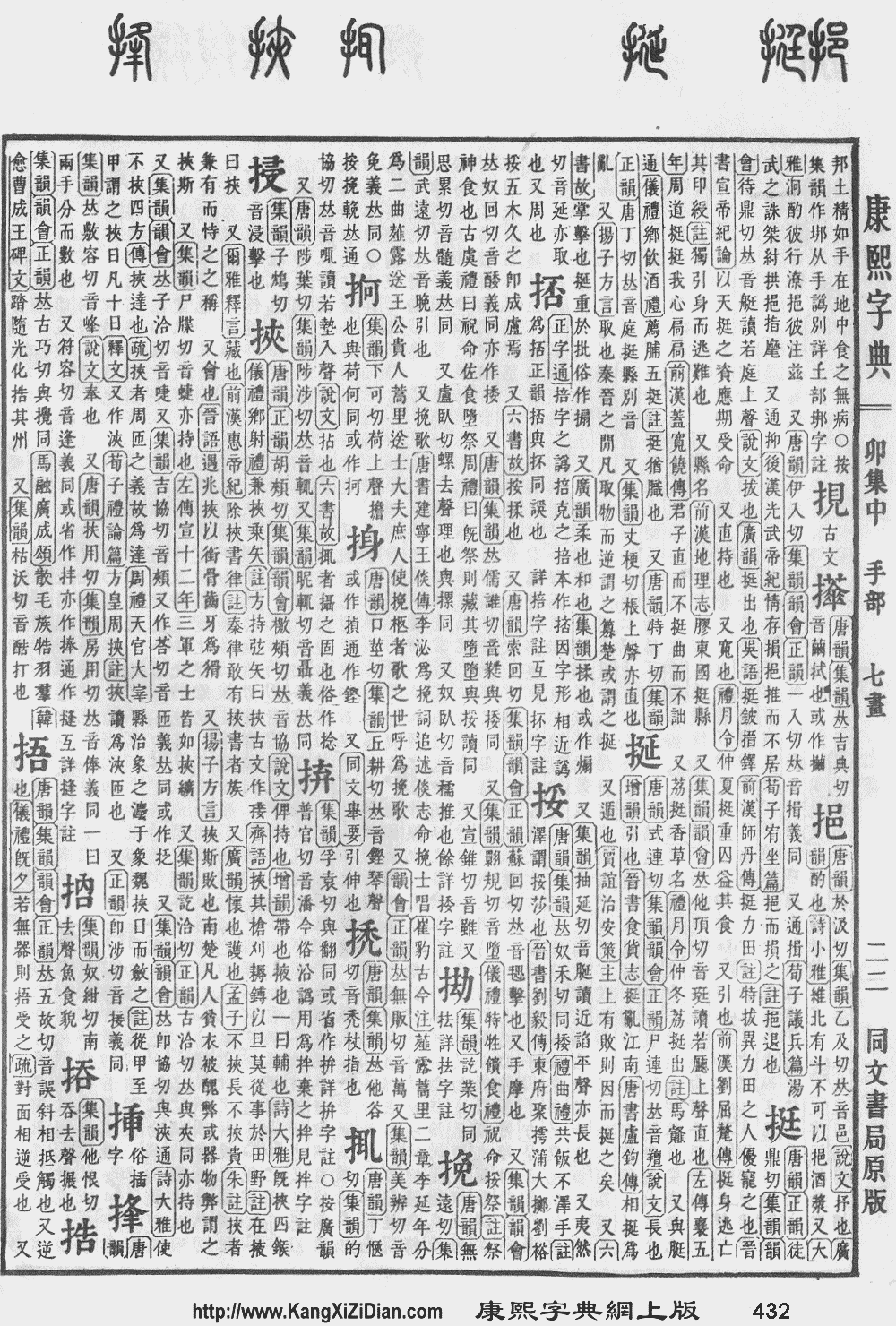
- Kangxi Dictionary: page 432, character 4
- Dai Kanwa Jiten: character 12106
- Dae Jaweon: page 781, character 12
- Hanyu Da Zidian (first edition): volume 3, page 1869, character 11
- Unihan data for U+633A
Chinese
| simp. and trad. |
挺 | |
|---|---|---|
| alternative forms | 𡈼 ancient | |
Glyph origin
Characters in the same phonetic series (廷) (Zhengzhang, 2003)
Phono-semantic compound (形聲/形声, OC *l'eːŋ, *l'eːŋʔ) : semantic 手 (“hand”) + phonetic 廷 (OC *l'eːŋ, *l'eːŋʔ).
Pronunciation
Definitions
挺
- straight; erect
- to stick out; to straighten up
- to endure; to stand
- to support
- outstanding; prominent
- (colloquial) quite; rather; pretty; very
- Classifier for machine guns.
Synonyms
- (to support):
- 佐理 (zuǒlǐ) (literary, with a task)
- 使勁/使劲 (shǐjìn)
- 加勢/加势 (jiāshì)
- 助 (zhù)
- 助力 (zhùlì)
- 助理 (zhùlǐ)
- 助益 (zhùyì) (literary)
- 匡助 (kuāngzhù) (literary)
- 協助/协助 (xiézhù)
- 參佐/参佐 (cānzuǒ) (literary)
- 增援 (zēngyuán, “to provide reinforcements”)
- 幫/帮 (bāng)
- 幫助/帮助 (bāngzhù)
- 幫同/帮同 (bāngtóng) (literary)
- 幫寸/帮寸 (bāngcùn)
- 幫帶/帮带 (bāngdài)
- 幫忙/帮忙 (bāngmáng)
- 幫手/帮手 (bong1 sau2) (Cantonese)
- 幫扶/帮扶 (bāngfú)
- 幫襯/帮衬 (bāngchèn)
- 幫贈/帮赠 (Min Nan)
- 扶
- 扶助 (fúzhù)
- 扶持 (fúchí)
- 扶掖 (fúyè) (formal)
- 拉巴 (dialectal)
- 援助 (yuánzhù)
- 𢯭手 (Hakka)
- 支助 (zhīzhù) (literary)
- 支持 (zhīchí)
- 支援 (zhīyuán)
- 救 (jiù)
- 相幫/相帮 (xiāngbāng) (dialectal)
- 翼 (yì) (literary, or in compounds)
- 聲援/声援 (shēngyuán, “to express support for”)
- 臂助 (bìzhù) (literary)
- 補益/补益 (bǔyì)
- 補臺/补台 (bǔtái) (mainland China)
- 贈力/赠力 (Min Nan)
- 贈助/赠助 (Min Nan)
- 贊喙/赞喙 (“to express support for”) (Min Nan)
- 贈手/赠手 (Min Nan)
- 贊聲/赞声 (“to express support for”) (Min Nan)
- 輔助/辅助 (fǔzhù)
- 陪 (péi) (literary, or in compounds)
- 鬥幫贈/斗帮赠 (Min Nan)
- 鬥相共/斗相共 (Min Nan)
- 鬥跤手/斗跤手 (Min Nan)
- 鬥跤搭/斗跤搭 (Min Nan)
- (outstanding):
- 不得了 (bùdéliǎo) (colloquial)
- 了不得 (colloquial)
- 了不起 (liǎobùqǐ) (colloquial)
- 了勿起 (6liau-veq-chi) (Wu)
- 佼佼 (jiǎojiǎo) (literary)
- 俊偉/俊伟 (jùnwěi) (literary)
- 偉大/伟大 (wěidà)
- 傑出/杰出 (jiéchū)
- 傲人 (àorén) (nowadays especially of breasts, body curve)
- 優異/优异 (yōuyì)
- 優秀/优秀 (yōuxiù)
- 優越/优越 (yōuyuè)
- 出挑 (chūtiāo) (of personal appearance)
- 出擢 (Min Nan)
- 出眾/出众 (chūzhòng)
- 出腳/出脚 (Min Nan)
- 出色 (chūsè)
- 勿得了 (Wu)
- 卓然 (zhuórán) (literary)
- 卓犖/卓荦 (zhuóluò) (literary)
- 卓異/卓异 (zhuóyì) (literary)
- 卓著 (zhuózhù)
- 卓越 (zhuóyuè)
- 厲害/厉害 (lìhài) (informal)
- 好極了/好极了 (hǎo jíle)
- 尤異/尤异 (yóuyì) (literary)
- 崢嶸/峥嵘 (zhēngróng)
- 彰顯/彰显 (zhāngxiǎn)
- 惡實/恶实 (o5 shr6) (Xiang, used as a complement)
- 打得 (Hakka)
- 斐然 (fěirán)
- 棒 (bàng) (colloquial)
- 標青/标青 (Cantonese, Teochew)
- 漂亮
- 炳 (bǐng) (literary)
- 牛 (niú) (Mandarin, slang)
- 牛鬼 (Guilin Mandarin)
- 特出 (tèchū)
- 特異/特异 (tèyì)
- 犀利 (xīlì) (originally Cantonese, sometimes Mandarin)
- 皦皦 (jiǎojiǎo) (literary)
- 看家 (kānjiā) (attributive, of skill, ability, etc.)
- 穩/稳 (wěn) (slang, neologism)
- 突出 (tūchū)
- 英英 (yīngyīng) (literary)
- 蓋帽/盖帽 (gàimào) (slang)
- 表表 (biǎobiǎo) (literary)
- 超凡 (chāofán)
- 超拔 (chāobá) (literary)
- 超絕/超绝 (chāojué)
- 非凡 (fēifán)
- 響噹噹/响当当 (xiǎngdāngdāng)
- 顯著/显著 (xiǎnzhù)
- 高強/高强 (gāoqiáng)
Dialectal synonyms of 很 (“very”) [map]
Compounds
- 伏地挺身 (fúdì tǐngshēn)
- 傲然挺立
- 前挺
- 堅挺/坚挺 (jiāntǐng)
- 孤挺花 (gūtǐnghuā)
- 峻挺
- 廝挺/厮挺
- 打挺兒/打挺儿
- 抬頭挺胸/抬头挺胸
- 拍馬挺鎗/拍马挺枪
- 挺住 (tǐngzhù)
- 挺刑
- 挺妥
- 挺尸
- 挺屍/挺尸
- 挺拔 (tǐngbá)
- 挺拔不群
- 挺挺
- 挺撞
- 挺撅挺橫/挺撅挺横
- 挺然
- 挺然卓立
- 挺生
- 挺直 (tǐngzhí)
- 挺矛 (tǐngmáo)
- 挺秀
- 挺立 (tǐnglì)
- 挺節/挺节
- 挺胸
- 挺胸凸肚
- 挺胸疊肚/挺胸叠肚
- 挺脫/挺脱
- 挺腳/挺脚
- 挺腰
- 挺腰子
- 挺舉/挺举 (tǐngjǔ)
- 挺解
- 挺起胸膛
- 挺身 (tǐngshēn)
- 挺身而出 (tǐngshēn'érchū)
- 挺進/挺进 (tǐngjìn)
- 挺過去/挺过去
- 揚眉挺身/扬眉挺身
- 昂頭挺立/昂头挺立
- 昂首挺立
- 昂首挺胸
- 死挺挺
- 牽挺/牵挺
- 直挺挺
- 直而不挺
- 硬挺 (yìngtǐng)
- 筆挺/笔挺 (bǐtǐng)
- 英挺 (yīngtǐng)
- 陰挺/阴挺
Etymology 2
(This etymology is missing or incomplete. Please add to it, or discuss it at the Etymology scriptorium.)
Pronunciation
References
- “挺”, in 漢語多功能字庫 (Multi-function Chinese Character Database), 香港中文大學 (the Chinese University of Hong Kong), 2014–
Korean
Etymology
(This etymology is missing or incomplete. Please add to it, or discuss it at the Etymology scriptorium. Particularly: “Middle Korean readings, if any”)
Pronunciation
- (SK Standard/Seoul) IPA(key): [t͡ɕʌ̹ŋ]
- Phonetic hangul: [정]
Hanja
Wikisource 挺 • (jeong) (hangeul 정, revised jeong, McCune–Reischauer chŏng, Yale ceng)
- This term needs a translation to English. Please help out and add a translation, then remove the text
{{rfdef}}.
Vietnamese
Han character
- This term needs a translation to English. Please help out and add a translation, then remove the text
{{rfdef}}.
References
This article is issued from Wiktionary. The text is licensed under Creative Commons - Attribution - Sharealike. Additional terms may apply for the media files.