唾
| ||||||||
Translingual
Han character
唾 (Kangxi radical 30, 口+8, 11 strokes, cangjie input 口竹十一 (RHJM), four-corner 62014, composition ⿰口垂)
References
- Kangxi Dictionary: page 194, character 14
- Dai Kanwa Jiten: character 3785
- Dae Jaweon: page 414, character 20
- Hanyu Da Zidian (first edition): volume 1, page 641, character 14
- Unihan data for U+553E
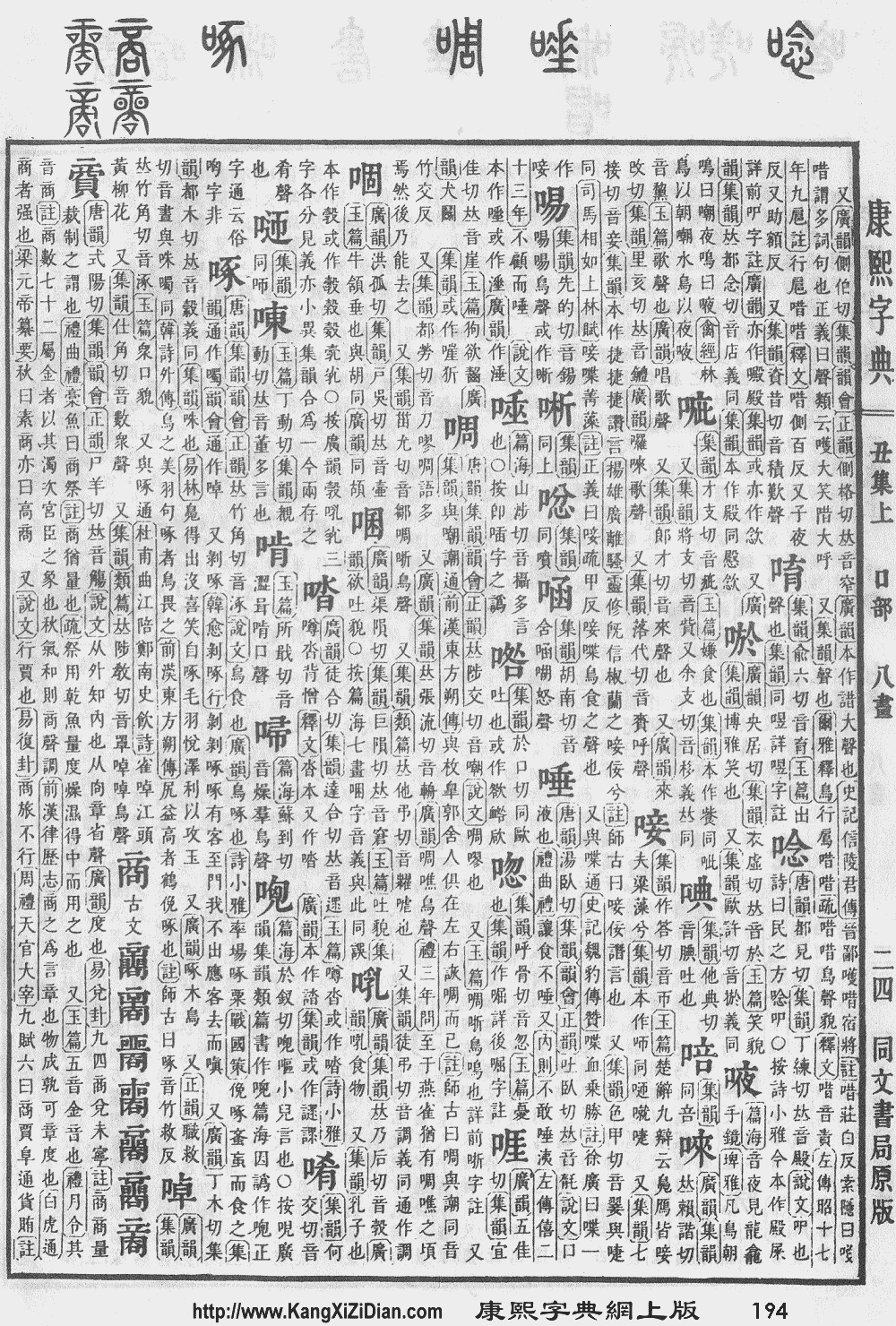
Chinese
Lua error in Module:utilities at line 142: attempt to perform arithmetic on local 'h' (a nil value)
Glyph origin
| Historical forms of the character 唾 | |
|---|---|
| Shuowen Jiezi (compiled in Han) | Liushutong (compiled in Ming) |
| Small seal script | Transcribed ancient scripts |
 |
 |
Phono-semantic compound (形聲/形声, OC *tʰoːls) : semantic 口 + phonetic 垂 (OC *djol).
Etymology
Sino-Tibetan; compare Tibetan ཐོ་ལེ (tho le, “spit”), Burmese တွေး (twe:, “spittle”) (Coblin, 1986; Schuessler, 2007; Hill, 2014).
Pronunciation
Definitions
唾
Synonyms
Lua error in Module:utilities at line 142: attempt to perform arithmetic on local 'h' (a nil value)
Compounds
- 一唾
- 不顧而唾/不顾而唾
- 乾嚥唾/干咽唾
- 交唾
- 交詈聚唾
- 口唾
- 咽唾
- 咳唾
- 咳唾成珠
- 咳珠唾玉
- 唾井
- 唾取
- 唾吐
- 唾噦/唾哕
- 唾地成文
- 唾壺/唾壶 (tuòhú)
- 唾壺擊缺/唾壶击缺
- 唾壺敲缺/唾壶敲缺
- 唾手
- 唾手可取
- 唾手可得 (tuòshǒukědé)
- 唾掌
- 唾斥
- 唾是命
- 唾棄/唾弃 (tuòqì)
- 唾沫 (tuòmo)
- 唾沫星
- 唾沫星子 (tuòmo xīngzi)
- 唾沫直嚥/唾沫直咽
- 唾津
- 唾洟
- 唾津兒/唾津儿
- 唾涕
- 唾涎
- 唾液 (tuòyè)
- 唾液腺 (tuòyèxiàn)
- 唾玉
- 唾盂 (tuòyú)
- 唾視/唾视
- 唾絨/唾绒
- 唾罵/唾骂 (tuòmà)
- 唾耳
- 唾背
- 唾腺 (tuòxiàn)
- 唾辱
- 唾酒
- 唾面
- 唾面自乾/唾面自干
- 唾餘/唾余
- 噀唾
- 嚥唾/咽唾
- 寶唾/宝唾
- 拾人唾涕
- 拾人唾餘/拾人唾余
- 拾人涕唾
- 拾唾餘/拾唾余
- 拾餘唾/拾余唾
- 擊唾壺/击唾壶
- 擊碎唾壺/击碎唾壶
- 棄唾/弃唾
- 欬唾
- 欬唾成珠
- 止唾
- 津唾
- 涎唾
- 涕唾
- 玉唾
- 玉唾壺/玉唾壶
- 珠唾
- 珠璣咳唾/珠玑咳唾 (zhūjīkétuò)
- 衉唾
- 謦唾
- 銀鉤玉唾/银钩玉唾
- 霧唾/雾唾
- 餘唾/余唾
- 饞唾/馋唾
Japanese
Readings
Lua error in Module:utilities at line 142: attempt to perform arithmetic on local 'h' (a nil value)
Etymology 1
| Kanji in this term |
|---|
| 唾 |
| つばき Grade: S |
| kun’yomi |
Derived as the 連用形 (ren'yōkei, “continuative or stem form”) of now-obsolete verb 唾吐く (tsubaku, “to spit, to expectorate”), itself from Lua error in Module:utilities at line 142: attempt to perform arithmetic on local 'h' (a nil value) + 吐く (haku, “to expel from the mouth: to spit, to vomit, to exhale”).[1][2]
Etymology 2
| Kanji in this term |
|---|
| 唾 |
| つば Grade: S |
| kun’yomi |
Appears to be a shortening of tsubaki above. Alternatively, may be a fusion of tsu below with particle は (wa, originally pa in Old Japanese, combining in some cases as ba).[2]
Etymology 3
| Kanji in this term |
|---|
| 唾 |
| つ Grade: S |
| kun’yomi |
Appears to be the oldest form.[2] Possibly onomatopoeia.
Pronunciation
- IPA(key): [t͡sɨᵝ]
References
- 2006, 大辞林 (Daijirin), Third Edition (in Japanese), Tōkyō: Sanseidō, →ISBN
- 1988, 国語大辞典(新装版) (Kokugo Dai Jiten, Revised Edition) (in Japanese), Tōkyō: Shogakukan
Korean
Vietnamese
Han character
唾: Hán Nôm readings: thóa/thoá
- This term needs a translation to English. Please help out and add a translation, then remove the text
{{rfdef}}.