儉
 | ||||||||
Translingual
| Traditional | Lua error in Module:utilities at line 142: attempt to perform arithmetic on local 'h' (a nil value) |
|---|---|
| Shinjitai | 倹 |
| Simplified | 俭 |
Han character
儉 (Kangxi radical 9, 人+13, 15 strokes, cangjie input 人人一人 (OOMO), four-corner 28286, composition ⿰亻僉)
References
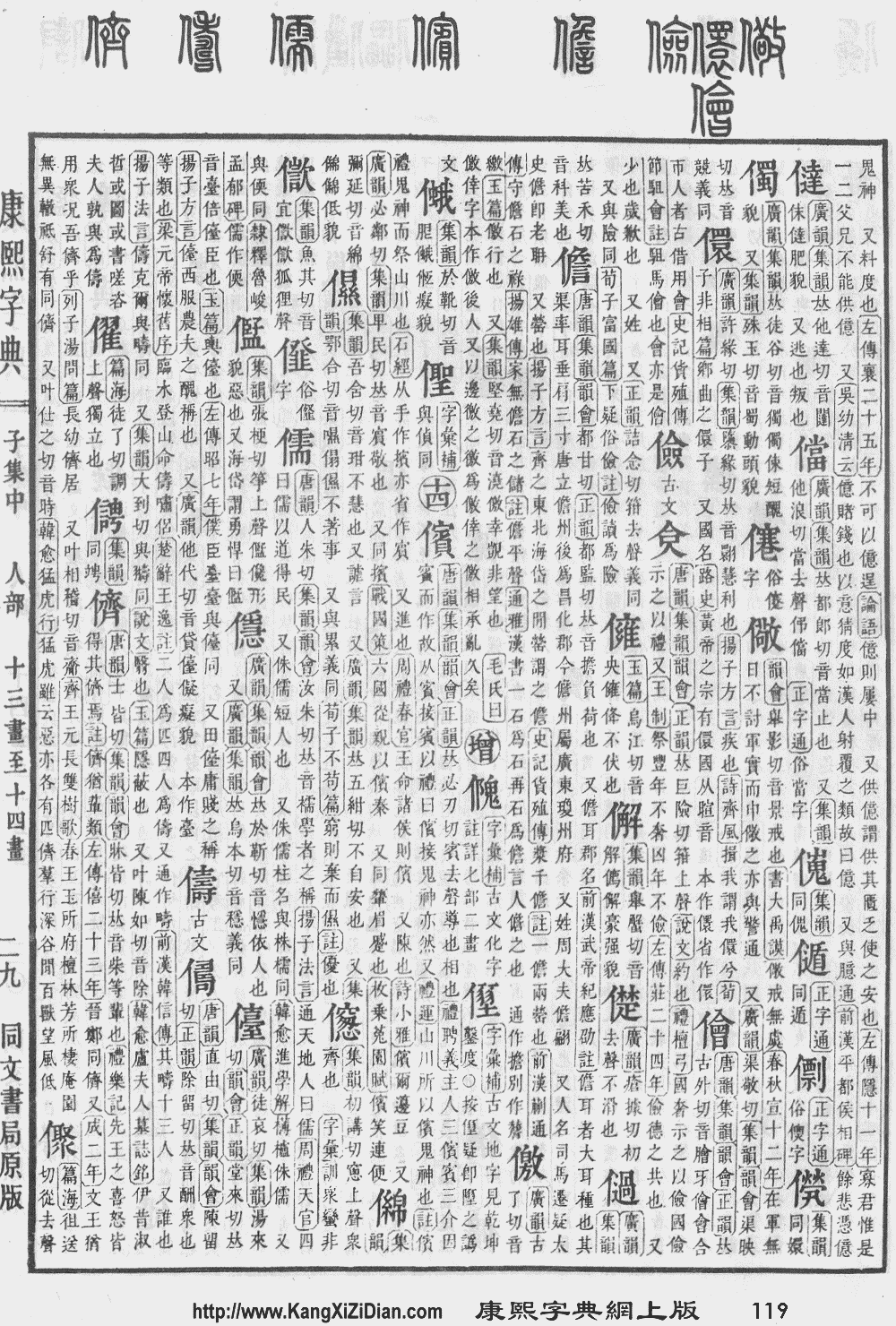
- Kangxi Dictionary: page 119, character 12
- Dai Kanwa Jiten: character 1190
- Dae Jaweon: page 252, character 11
- Hanyu Da Zidian (first edition): volume 1, page 226, character 6
- Unihan data for U+5109
Chinese
Lua error in Module:utilities at line 142: attempt to perform arithmetic on local 'h' (a nil value)
Glyph origin
| Historical forms of the character 儉 | |||||||||
|---|---|---|---|---|---|---|---|---|---|
| Shuowen Jiezi (compiled in Han) | Liushutong (compiled in Ming) | ||||||||
| Small seal script | Transcribed ancient scripts | ||||||||
 |
 | ||||||||
|
|
References: Mostly from Richard Sears' Chinese Etymology site (authorisation),
| |||||||||


| Old Chinese | |
|---|---|
| 厱 | *raːm, *kʰreːm, *kʰlam |
| 歛 | *qʰlaːm |
| 臉 | *ɡ·reːmʔ, *skʰlam, *kramʔ |
| 醶 | *ɡr·reːmʔ, *skʰraːmʔ |
| 鹼 | *kreːmʔ, *skʰlam |
| 薟 | *ɡ·ram, *ɡ·ramʔ, *qʰram |
| 匳 | *ɡ·ram |
| 獫 | *ɡ·ram, *ɡ·ramʔ, *ɡ·rams, *qʰramʔ |
| 蘞 | *ɡ·ram, *ɡ·ramʔ, *qʰlam |
| 籢 | *ɡ·ram |
| 斂 | *ɡ·ramʔ, *ɡ·rams |
| 瀲 | *ɡ·ramʔ, *ɡ·rams |
| 撿 | *ɡ·ramʔ, *kramʔ |
| 羷 | *ɡ·ramʔ |
| 殮 | *ɡ·rams |
| 簽 | *skʰlam |
| 僉 | *skʰlam |
| 憸 | *skʰlam, *skʰlamʔ, *sqʰlam, *qʰramʔ |
| 譣 | *skʰlam, *qʰramʔ |
| 檢 | *kramʔ |
| 瞼 | *kramʔ |
| 儉 | *ɡramʔ |
| 顩 | *ŋramʔ, *rlɯmʔ, *kʰrɯmʔ |
| 嬐 | *ŋramʔ |
| 嶮 | *ŋramʔ, *hŋramʔ |
| 噞 | *ŋramʔ, *ŋrams |
| 驗 | *ŋrams |
| 險 | *qʰramʔ |
| 劒 | *kams |
| 劍 | *kams |
| 𩏩 | *qʰam |
Phono-semantic compound (形聲/形声, OC *ɡramʔ) : semantic 人 (“person”) + phonetic 僉 (OC *skʰlam).
Pronunciation
Definitions
儉
- frugal; thrifty
- 節儉/节俭 ― jiéjiǎn ― frugal; thrifty; economical
- 勤儉/勤俭 ― qínjiǎn ― hardworking and thrifty
- 儉樸/俭朴 ― jiǎnpǔ ― thrifty and simple
- 省吃儉用/省吃俭用 ― shěngchījiǎnyòng ― to save on food and daily expenses
- 勤工儉學/勤工俭学 ― qíngōngjiǎnxué ― part-time work and part-time study
- 禮,與其奢也,寧儉;喪,與其易也,寧戚。 [Classical Chinese, trad.]
- From: The Analects of Confucius, c. 475 – 221 BCE, translated based on James Legge's version
- Lǐ, yǔqí shē yě, nìng jiǎn; sāng, yǔqí yì yě, nìng qī. [Pinyin]
- In festive ceremonies, it is better to be sparing than extravagant. In the ceremonies of mourning, it is better that there be deep sorrow than a minute attention to observances.
礼,与其奢也,宁俭;丧,与其易也,宁戚。 [Classical Chinese, simp.]
- † modest; moderate; temperate
- 夫子溫、良、恭、儉、讓以得之。 [Classical Chinese, trad.]
- From: The Analects of Confucius, c. 475 – 221 BCE, translated based on James Legge's version
- Fūzǐ wēn, liáng, gōng, jiǎn, ràng yǐ dé zhī. [Pinyin]
- Our master is benign, upright, courteous, temperate, and complaisant and thus he gets his information.
夫子温、良、恭、俭、让以得之。 [Classical Chinese, simp.]- 恭儉而好禮者宜歌小雅。 [Classical Chinese, trad.]
- From: The Book of Rites, c. 4th – 2nd century BCE, translated based on James Legge's version
- Gōngjiǎn ér hàolǐ zhě yí gē Xiǎoyǎ. [Pinyin]
- The courteous and self-restraining, the lovers of the rules of propriety, should sing the Xiao Ya (Minor Odes of the Kingdom).
恭俭而好礼者宜歌小雅。 [Classical Chinese, simp.]
- † lacking; insufficient
- † poor harvest
- (Taiwanese Hokkien) to save up; to store up
- (Teochew, Singapore Hokkien) to save; to economize
- a surname
Synonyms
Lua error in Module:utilities at line 142: attempt to perform arithmetic on local 'h' (a nil value)
Compounds
- 乞窮儉相/乞穷俭相
- 儉嗇/俭啬
- 儉月/俭月
- 儉樸/俭朴 (jiǎnpǔ)
- 儉省/俭省 (jiǎnshěng)
- 儉約/俭约 (jiǎnyuē)
- 儉素/俭素
- 儉腹/俭腹
- 儉腸凹肚/俭肠凹肚 (khiām-tn̂g-neh-tō͘) (Min Nan)
- 儉色/俭色
- 儉薄/俭薄
- 儉觳/俭觳
- 儉錢/俭钱 (khiām-chîⁿ) (Min Nan)
- 克儉克勤/克俭克勤
- 克勤克儉/克勤克俭 (kèqínkèjiǎn)
- 勤儉/勤俭 (qínjiǎn)
- 崇節尚儉/崇节尚俭
- 恭儉/恭俭
- 恭儉靜一/恭俭静一
- 水儉/水俭
- 田豫儉素/田豫俭素
- 省儉/省俭 (shěngjiǎn)
- 省吃儉用/省吃俭用 (shěngchījiǎnyòng)
- 禮奢寧儉/礼奢宁俭
- 禮存寧儉/礼存宁俭
- 節儉/节俭 (jiéjiǎn)
- 節儉力行/节俭力行
- 節儉躬行/节俭躬行
- 自奉甚儉/自奉甚俭
- 豐儉由人/丰俭由人 (fēngjiǎnyóurén)
- 躬行節儉/躬行节俭
References
- “Entry #10993”, in 臺灣閩南語常用詞辭典 [Dictionary of Frequently-Used Taiwan Minnan] (in Chinese and Min Nan), Ministry of Education, R.O.C., 2023.
- “儉”, in 漢語多功能字庫 (Multi-function Chinese Character Database), 香港中文大學 (the Chinese University of Hong Kong), 2014–
Japanese
| 倹 | |
| Lua error in Module:utilities at line 142: attempt to perform arithmetic on local 'h' (a nil value) |
Kanji
(“Jinmeiyō” kanji used for names, kyūjitai kanji, shinjitai form 倹)
- This term needs a translation to English. Please help out and add a translation, then remove the text
{{rfdef}}.
Readings
- Go-on: げん (gen)
- Kan-on: けん (ken)
- Kun: つましい (tsumashii, 儉しい); つずまやか (tsuzumayaka, 儉やか)←つづまやか (tudumayaka, 儉やか, historical)
Korean
Etymology
(This etymology is missing or incomplete. Please add to it, or discuss it at the Etymology scriptorium. Particularly: “Middle Korean readings, if any”)
Pronunciation
- (SK Standard/Seoul) IPA(key): [kʌ̹m]
- Phonetic hangul: [검]