僉
| ||||||||
Translingual
| Traditional | Lua error in Module:utilities at line 142: attempt to perform arithmetic on local 'h' (a nil value) |
|---|---|
| Shinjitai (extended) |
㑒 |
| Simplified | 佥 |
Han character
僉 (Kangxi radical 9, 人+11, 13 strokes, cangjie input 人一口人 (OMRO), four-corner 80886, composition ⿳亼吅从)
Derived characters
References
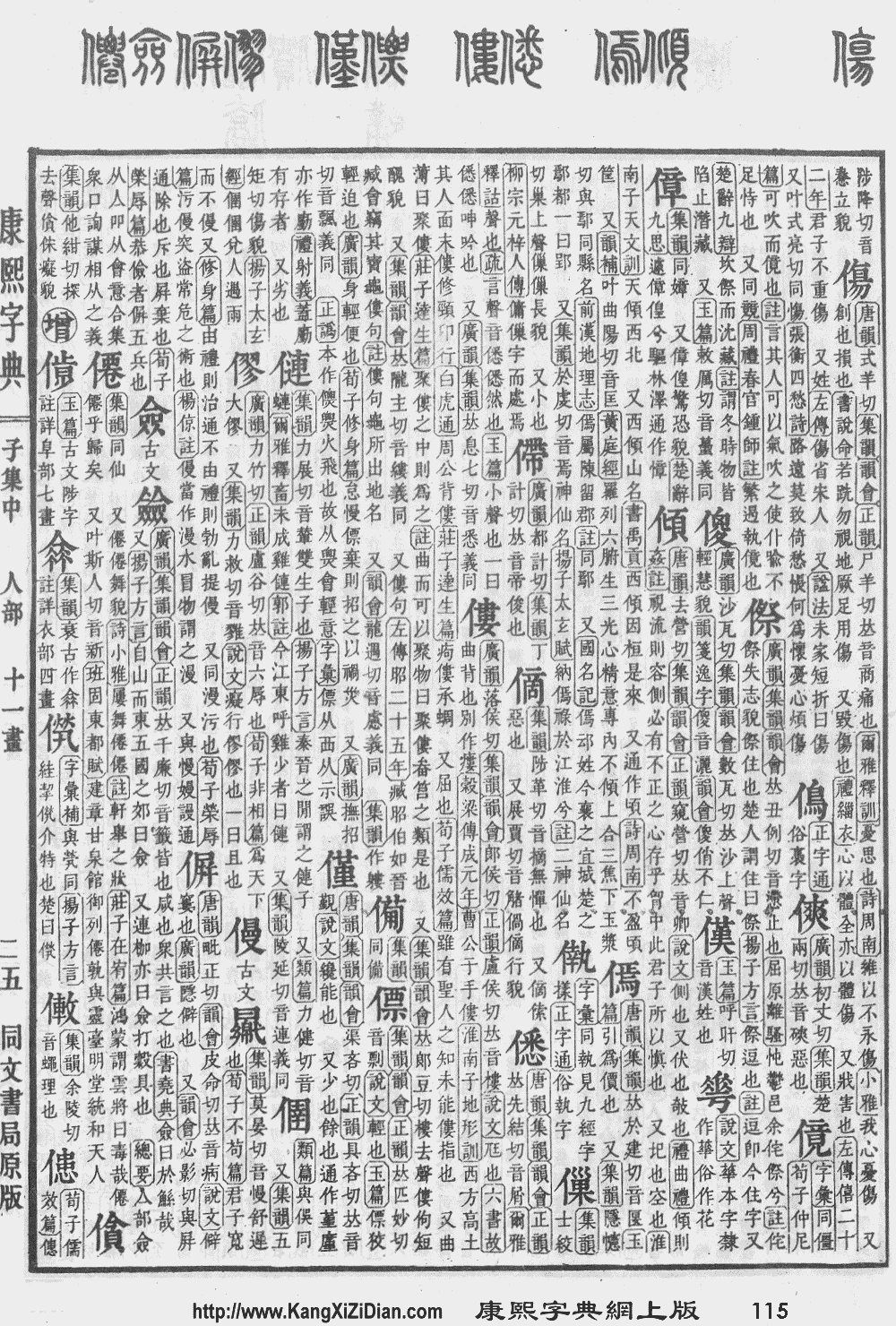
- Kangxi Dictionary: page 115, character 27
- Dai Kanwa Jiten: character 1054
- Dae Jaweon: page 246, character 14
- Hanyu Da Zidian (first edition): volume 1, page 207, character 3
- Unihan data for U+50C9
Chinese
Lua error in Module:utilities at line 142: attempt to perform arithmetic on local 'h' (a nil value)
Glyph origin
| Historical forms of the character 僉 | |||||||||
|---|---|---|---|---|---|---|---|---|---|
| Warring States | Shuowen Jiezi (compiled in Han) | Liushutong (compiled in Ming) | |||||||
| Bronze inscriptions | Small seal script | Transcribed ancient scripts | |||||||
 |
 |
 | |||||||
||
|
References: Mostly from Richard Sears' Chinese Etymology site (authorisation),
| |||||||||


Characters in the same phonetic series (僉) (Zhengzhang, 2003)
| Old Chinese | |
|---|---|
| 厱 | *raːm, *kʰreːm, *kʰlam |
| 歛 | *qʰlaːm |
| 臉 | *ɡ·reːmʔ, *skʰlam, *kramʔ |
| 醶 | *ɡr·reːmʔ, *skʰraːmʔ |
| 鹼 | *kreːmʔ, *skʰlam |
| 薟 | *ɡ·ram, *ɡ·ramʔ, *qʰram |
| 匳 | *ɡ·ram |
| 獫 | *ɡ·ram, *ɡ·ramʔ, *ɡ·rams, *qʰramʔ |
| 蘞 | *ɡ·ram, *ɡ·ramʔ, *qʰlam |
| 籢 | *ɡ·ram |
| 斂 | *ɡ·ramʔ, *ɡ·rams |
| 瀲 | *ɡ·ramʔ, *ɡ·rams |
| 撿 | *ɡ·ramʔ, *kramʔ |
| 羷 | *ɡ·ramʔ |
| 殮 | *ɡ·rams |
| 簽 | *skʰlam |
| 僉 | *skʰlam |
| 憸 | *skʰlam, *skʰlamʔ, *sqʰlam, *qʰramʔ |
| 譣 | *skʰlam, *qʰramʔ |
| 檢 | *kramʔ |
| 瞼 | *kramʔ |
| 儉 | *ɡramʔ |
| 顩 | *ŋramʔ, *rlɯmʔ, *kʰrɯmʔ |
| 嬐 | *ŋramʔ |
| 嶮 | *ŋramʔ, *hŋramʔ |
| 噞 | *ŋramʔ, *ŋrams |
| 驗 | *ŋrams |
| 險 | *qʰramʔ |
| 劒 | *kams |
| 劍 | *kams |
| 𩏩 | *qʰam |
Pronunciation
Compounds
- 僉事/佥事
- 僉同/佥同
- 僉押/佥押
- 僉望/佥望
- 僉謀/佥谋
- 僉議/佥议
- 打僉/打佥
Japanese
| 㑒 | |
| Lua error in Module:utilities at line 142: attempt to perform arithmetic on local 'h' (a nil value) |
Kanji
僉
(uncommon “Hyōgai” kanji, kyūjitai kanji, shinjitai form 㑒)
- This term needs a translation to English. Please help out and add a translation, then remove the text
{{rfdef}}.
Readings
Lua error in Module:utilities at line 142: attempt to perform arithmetic on local 'h' (a nil value)
Korean
Hanja
僉 • (cheom) (hangeul 첨, revised cheom, McCune–Reischauer ch'ŏm, Yale chem)
- This term needs a translation to English. Please help out and add a translation, then remove the text
{{rfdef}}.
Vietnamese
Han character
僉: Hán Nôm readings: thiêm
- This term needs a translation to English. Please help out and add a translation, then remove the text
{{rfdef}}.
References
This article is issued from Wiktionary. The text is licensed under Creative Commons - Attribution - Sharealike. Additional terms may apply for the media files.