駒
| ||||||||
Translingual
Han character
駒 (Kangxi radical 187, 馬+5, 15 strokes, cangjie input 尸火心口 (SFPR), four-corner 77320, composition ⿰馬句)
References
- Kangxi Dictionary: page 1436, character 5
- Dai Kanwa Jiten: character 44663
- Dae Jaweon: page 1960, character 30
- Hanyu Da Zidian (first edition): volume 7, page 4549, character 2
- Unihan data for U+99D2
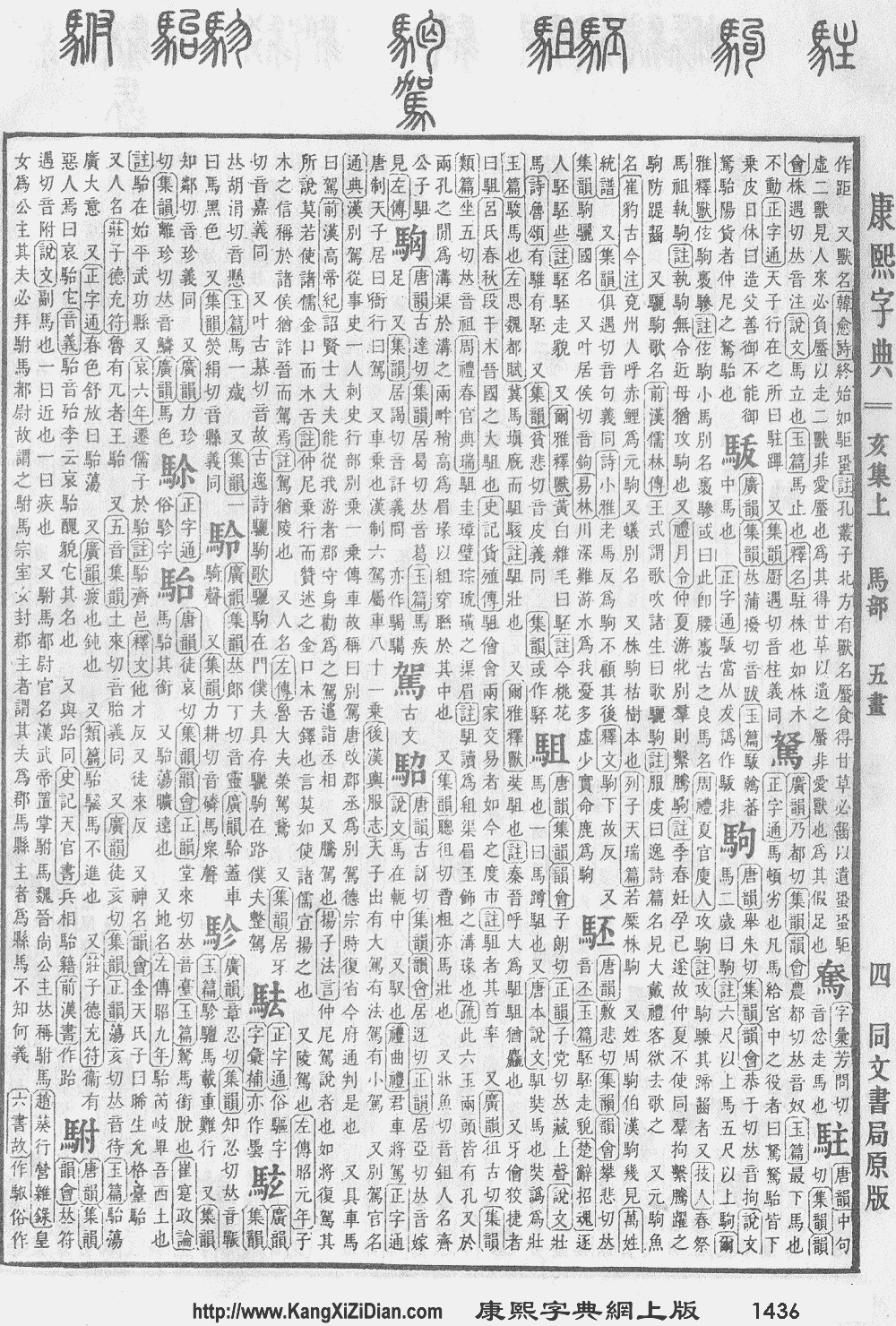
Chinese
Lua error in Module:utilities at line 142: attempt to perform arithmetic on local 'h' (a nil value)
Glyph origin
| Historical forms of the character 駒 | |||
|---|---|---|---|
| Western Zhou | Warring States | Shuowen Jiezi (compiled in Han) | Liushutong (compiled in Ming) |
| Bronze inscriptions | Chu slip and silk script | Small seal script | Transcribed ancient scripts |
 |
 |
 |
 |
| Old Chinese | |
|---|---|
| 勾 | *koː, *koːs |
| 鉤 | *koː |
| 鴝 | *koː, *ɡo |
| 句 | *koː, *koːs, *kos, *ɡo |
| 夠 | *koː, *koːs, *kʰoː |
| 枸 | *koː, *koːʔ, *koʔ |
| 軥 | *koː, *koːs, *ɡo |
| 狗 | *koːʔ |
| 苟 | *koːʔ |
| 岣 | *koːʔ, *ko |
| 笱 | *koːʔ |
| 玽 | *koːʔ |
| 耇 | *koːʔ |
| 豿 | *koːʔ, *qʰroːɡ |
| 敂 | *koːʔ |
| 怐 | *koːs, *kʰoːs, *qʰoːs, *kos |
| 雊 | *koːs |
| 竘 | *kʰoːʔ, *kʰoʔ |
| 齁 | *qʰoː |
| 呴 | *qʰoːʔ, *qʰos |
| 蚼 | *qʰoːʔ, *ɡo |
| 豞 | *qʰoːs |
| 訽 | *qʰoːs, *ɡoːs |
| 佝 | *qʰoːs |
| 拘 | *ko |
| 駒 | *ko |
| 眗 | *ko |
| 跔 | *ko |
| 鮈 | *ko |
| 痀 | *ko |
| 蒟 | *koʔ, *kos |
| 絇 | *kos, *ɡo |
| 邭 | *kos |
| 劬 | *ɡo |
| 朐 | *ɡo |
| 鼩 | *ɡo |
| 斪 | *ɡo |
| 翑 | *ɡo |
| 葋 | *ɡo |
| 姁 | *ɡo, *qʰo, *qʰoʔ, *qʰos |
| 欨 | *qʰo, *qʰoʔ |
| 喣 | *qʰoʔ |
| 煦 | *qʰoʔ, *qʰos |
| 昫 | *qʰos |
Phono-semantic compound (形聲/形声, OC *ko) : semantic 馬 (“horse”) + phonetic 句 (OC *koː, *koːs, *kos, *ɡo).
Etymology
Ultimately from Sanskrit घोट (ghoṭa), घोड (ghoḍa) (see घोटक (ghoṭaka) for Indo-Aryan descendants), which has been borrowed into many Sino-Tibetan languages; cognate with Proto-Tani *kɯ, Mizo sa-kawr (STEDT 6023).
Alternatively, Wang (1982) relates this to 狗 (OC *koːʔ, “dog; puppy”), 羔 (OC *kluː, “lamb”), 𤘽 (“calf”).
Pronunciation
Definitions
駒
- foal (young horse)
- 老馬反為駒、不顧其後。 [Pre-Classical Chinese, trad.]
- From: The Classic of Poetry, c. 11th – 7th centuries BCE, translated based on James Legge's version
- Lǎomǎ fǎn wéi jū, bù gù qí hòu. [Pinyin]
- An old horse, notwithstanding, thinks himself a colt, and has no regard to the future.
老马反为驹、不顾其后。 [Pre-Classical Chinese, simp.]
- a surname
Synonyms
Lua error in Module:utilities at line 142: attempt to perform arithmetic on local 'h' (a nil value)
Compounds
References
- “駒”, in 漢語多功能字庫 (Multi-function Chinese Character Database), 香港中文大學 (the Chinese University of Hong Kong), 2014–
Japanese
Readings
Lua error in Module:utilities at line 142: attempt to perform arithmetic on local 'h' (a nil value)
Compounds
Etymology
| Kanji in this term |
|---|
| 駒 |
| こま Grade: S |
| kun’yomi |
Compound of 子 (ko, “child”) + 馬 (ma, “horse”).
See also 子馬 (kōma).
Pronunciation
Noun
駒 • (koma)
- (rare) foal, young horse (or generally) horse
- (shogi, chess) piece, man
- 2013, Habu Yoshiharu: Shōgi-shi o nuri-kaeta otoko [Yoshiharu Habu: The man who changed the face of shogi history], page 88:
- ポーンは一歩斜めにある駒を取ることができます。
- Pōn wa ippo naname ni aru koma o toru koto ga dekimasu.
- A pawn can take a piece that is one step away diagonally.
- ポーンは一歩斜めにある駒を取ることができます。
- someone controlled by another: a pawn, a puppet
- (music) bridge (the piece, on string instruments, that supports the strings from the sounding board)
Synonyms
- (horse): 馬 (uma)
Derived terms
- 駒台 (komadai)
- 駒鳥 (komadori, “Japanese robin”)
- 駒を進める (koma o susumeru, “to advance”)
Korean
Etymology
(This etymology is missing or incomplete. Please add to it, or discuss it at the Etymology scriptorium. Particularly: “Middle Korean readings, if any”)
Pronunciation
- (SK Standard/Seoul) IPA(key): [ku]
- Phonetic hangul: [구]
Hanja
Wikisource 駒 • (gu) (hangeul 구, revised gu, McCune–Reischauer ku, Yale kwu)
- This term needs a translation to English. Please help out and add a translation, then remove the text
{{rfdef}}.