閂
| ||||||||
Translingual
Han character
閂 (Kangxi radical 169, 門+1, 9 strokes, cangjie input 日弓一 (ANM), four-corner 77107, composition ⿵門一)
References
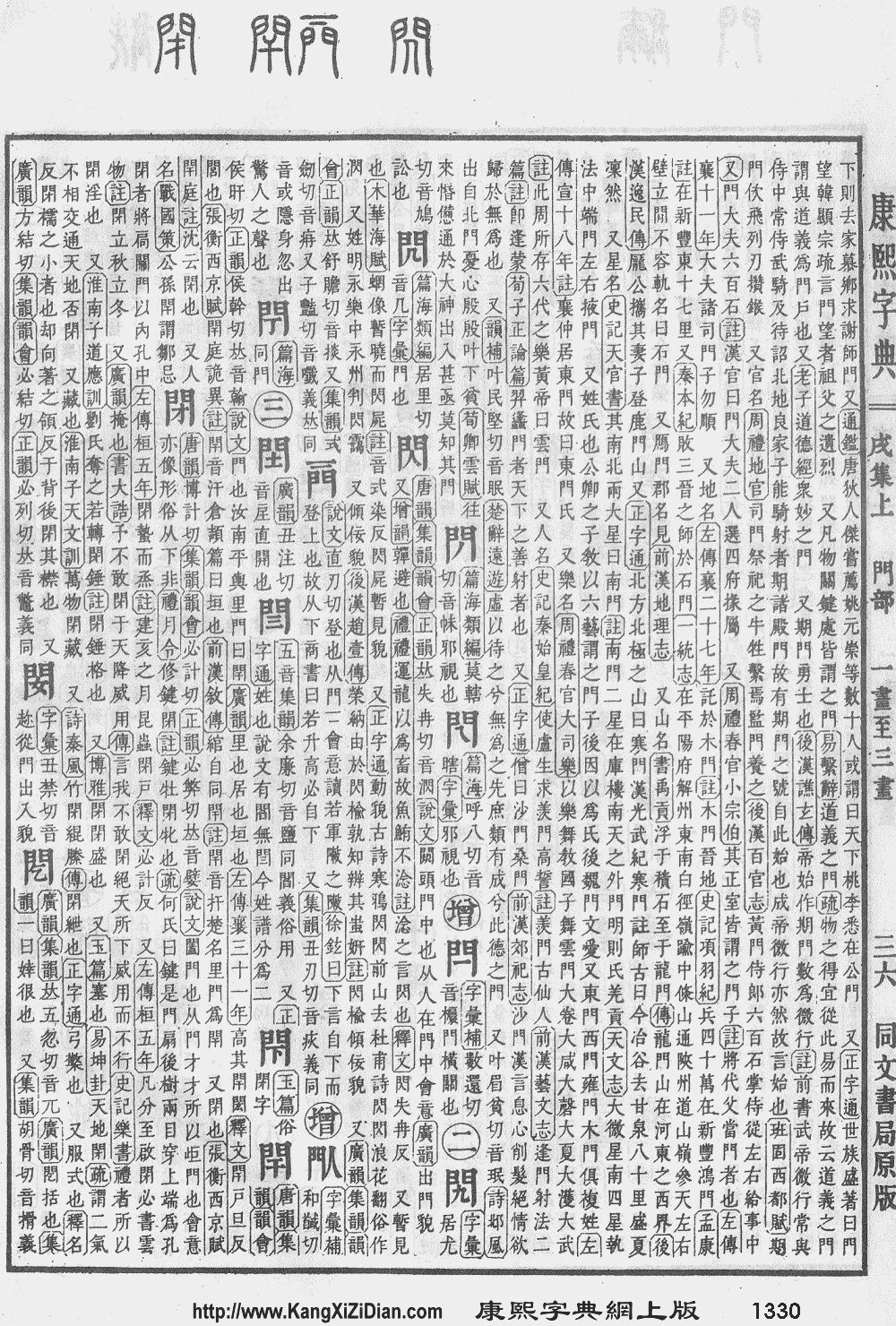
- Kangxi Dictionary: page 1330, character 3
- Dai Kanwa Jiten: character 41211
- Dae Jaweon: page 1834, character 3
- Hanyu Da Zidian (first edition): volume 7, page 4282, character 3
- Unihan data for U+9582
Chinese
Lua error in Module:utilities at line 142: attempt to perform arithmetic on local 'h' (a nil value)
Glyph origin
Ideogrammic compound (會意/会意) : 門 (“gate”) + 一 (“crossbar”) ― a crossbar over a gate; sealing it closed.
Compare 關.
Etymology 1
Related to 關 (OC *kroːn) (Zhengzhang, 2003).
Pronunciation
Definitions
閂
Synonyms
Lua error in Module:utilities at line 142: attempt to perform arithmetic on local 'h' (a nil value)
Pronunciation
Definitions
閂 (Min)
Japanese
Readings
Lua error in Module:utilities at line 142: attempt to perform arithmetic on local 'h' (a nil value)
Etymology
| Kanji in this term |
|---|
| 閂 |
| かんぬき Hyōgaiji |
| kun’yomi |
| Alternative spelling |
|---|
| 貫木 (uncommon) |

/kʷan no ki/ → /kʷanːoki/ → /kʷanːuki/ → /kanːuki/
Shift from 貫の木 (kan no ki, literally “1-kan (3.75-kilogram/8.267-pound) wood”)[1][2] or 関の木 (kan no ki, literally “barrier-wood”), possibly influenced by 貫き (nuki, “wooden beam used in joinery”).
Pronunciation
Noun
閂 • (kannuki) ←くわんぬき (kwannuki)?
- a heavy, usually wooden, crossbar used to lock across double doors or gates of an entrance to a building, similar to a latch
- Synonym: 貫木 (kangi)
- (sumo) a grip in which one wrestler wraps his arms around both of his opponent’s arms and squeezes them together to maneuver the opponent for a kimedashi or kimetaoshi, or to weaken the opponent’s grip on the mawashi; a type of armbar
Derived terms
- 閂差し (kannuki-zashi)
- 閂相場 (kannuki sōba)
- 閂止め (kannuki-dome)