豺
| ||||||||
Translingual
Han character
豺 (Kangxi radical 153, 豸+3, 10 strokes, cangjie input 月竹木竹 (BHDH), four-corner 24200, composition ⿰豸才)
Derived characters
- 𡺵
References
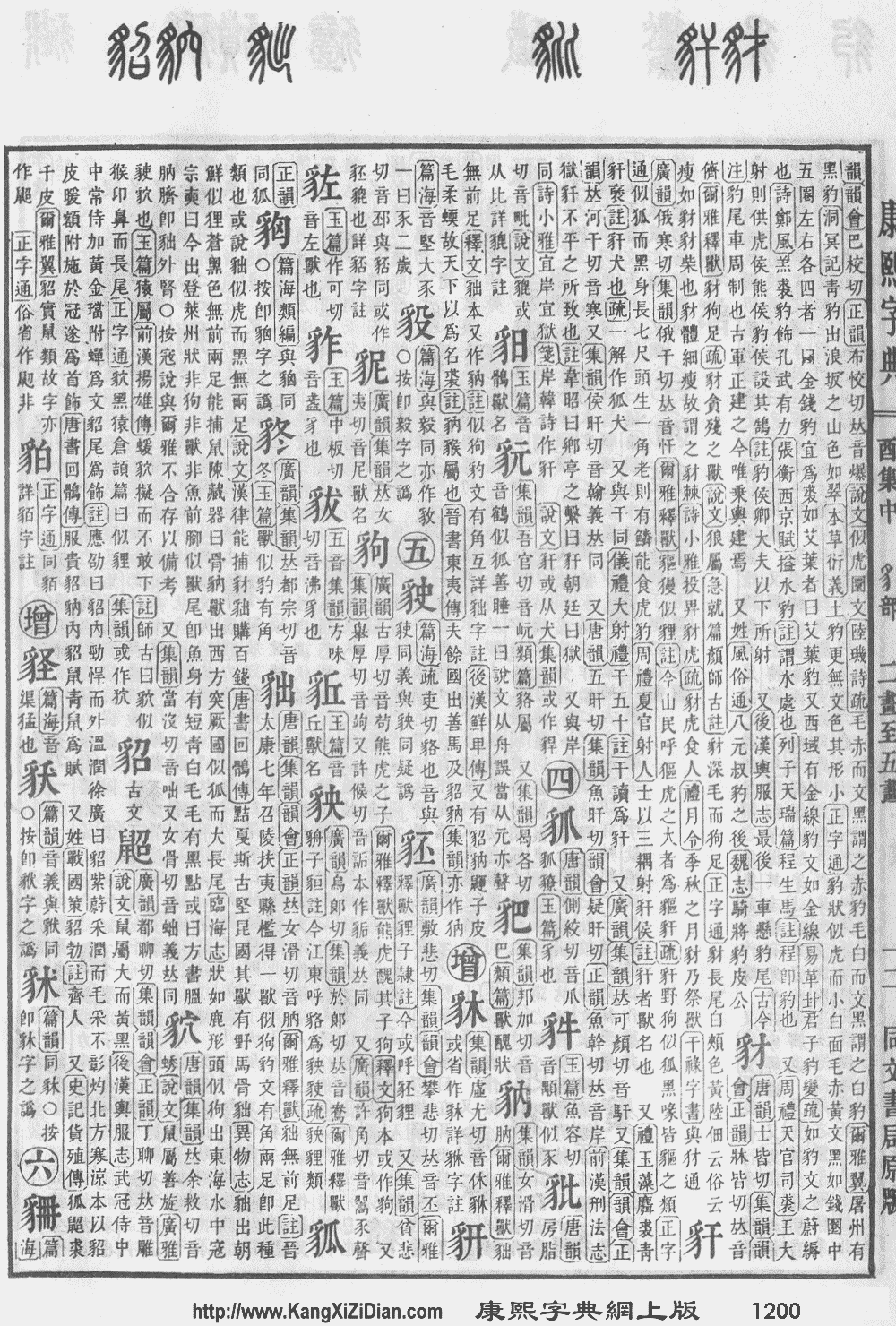
- Kangxi Dictionary: page 1200, character 1
- Dai Kanwa Jiten: character 36500
- Dae Jaweon: page 1662, character 4
- Hanyu Da Zidian (first edition): volume 6, page 3908, character 4
- Unihan data for U+8C7A
Chinese
Lua error in Module:utilities at line 142: attempt to perform arithmetic on local 'h' (a nil value)
Glyph origin
Phono-semantic compound (形聲/形声, OC *zrɯː) : semantic 豸 (“creature”) + phonetic 才 (OC *zlɯː, *zlɯːs).
Etymology
(This etymology is missing or incomplete. Please add to it, or discuss it at the Etymology scriptorium. Particularly: “link with Manchu "jar'hu"?”)
Pronunciation
Definitions
豺

- dhole (Cuon alpinus)
- 豺祭獸,然後田獵。 [Classical Chinese, trad.]
- From: The Book of Rites, c. 4th – 2nd century BCE
- Chái jì shòu, ránhòu tiánliè. [Pinyin]
- When the dhole sacrificed its prey, the hunting commenced.
豺祭兽,然后田猎。 [Classical Chinese, simp.]
Synonyms
Lua error in Module:utilities at line 142: attempt to perform arithmetic on local 'h' (a nil value)
Usage notes
This canid is often misidentified as a jackal (胡狼) or a wolf (狼) by English translators (Schafer, 1991). Chinese translators also often use 豺 to translate "jackal".
Compounds
- 投畀豺虎 (tóubìcháihǔ)
- 虎豹豺狼 (hǔbàocháiláng)
- 虺豺 (huǐchái)
- 蜂目豺聲/蜂目豺声 (fēngmùcháishēng)
- 豺兕 (cháisì)
- 豺心
- 豺武
- 豺漆
- 豺牙 (cháiyá)
- 豺狗 (cháigǒu)
- 豺狼 (cháiláng)
- 豺狼塞路
- 豺狼成性
- 豺狼橫道/豺狼横道
- 豺狼當塗/豺狼当涂
- 豺狼當路/豺狼当路
- 豺狼當道/豺狼当道 (cháilángdāngdào)
- 豺狼虎豹 (cháilánghǔbào)
- 豺狼野心
- 豺獺/豺獭 (cháitǎ)
- 豺目
- 豺祭
- 豺節/豺节
- 豺羹 (cháigēng)
- 豺羽
- 豺聲/豺声
- 豺舅
- 豺虎 (cháihǔ)
- 豺虎窟
- 豺虎肆虐
- 豺虺
- 豺豕
- 豺貙/豺䝙
- 豺貪/豺贪
- 豺遘
- 豺鼠子
- 金豺 (jīnchái)
- 隆豺
- 騰豺/腾豺
- 骨瘦如豺 (gǔshòurúchái)
- 鳶肩豺目/鸢肩豺目 (yuānjiān cháimù)
- 鼠豺
Japanese
Kanji
- This term needs a translation to English. Please help out and add a translation, then remove the text
{{rfdef}}.
Korean
Etymology
From Middle Chinese 豺 (MC dzreaj). Recorded as Middle Korean 𧲣/싀 (suy) (Yale: suy) in Hunmong Jahoe (訓蒙字會 / 훈몽자회), 1527.
Vietnamese
Han character
豺: Hán Việt readings: sài (
豺: Nôm readings: sài[1][3][5], rài[4][5]
- This term needs a translation to English. Please help out and add a translation, then remove the text
{{rfdef}}.
References
- Nguyễn et al. (2009).
- Trần (2004).
- Bonet (1899).
- Génibrel (1898).
- Taberd & Pigneau de Béhaine (1838).