詐
See also: 诈
| ||||||||
Translingual
Han character
詐 (Kangxi radical 149, 言+5, 12 strokes, cangjie input 卜口人尸 (YROS), four-corner 08611, composition ⿰訁乍)
Derived characters
- 𠁙, 𨐷
References
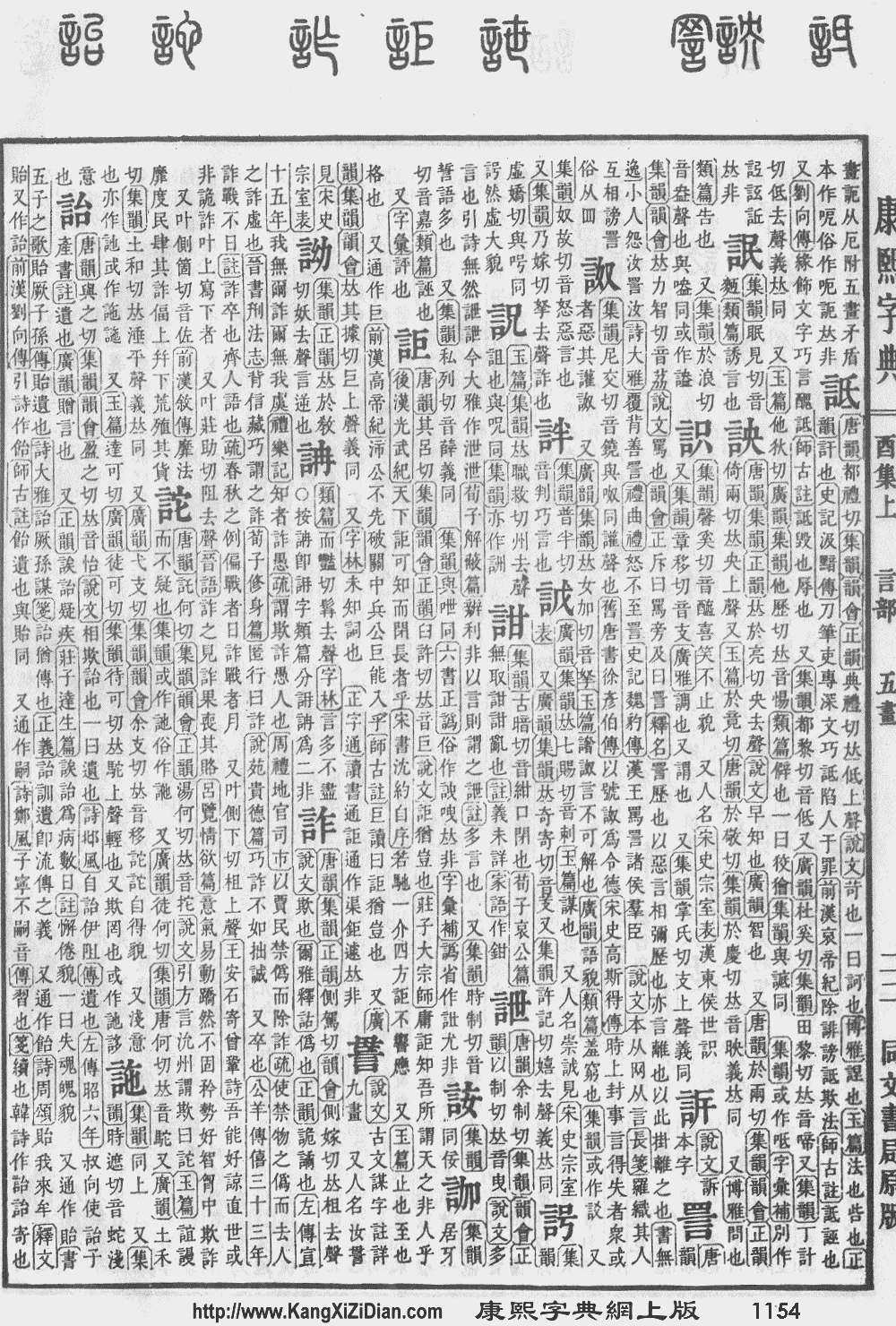
- Kangxi Dictionary: page 1154, character 20
- Dai Kanwa Jiten: character 35373
- Dae Jaweon: page 1620, character 21
- Hanyu Da Zidian (first edition): volume 6, page 3954, character 11
- Unihan data for U+8A50
Chinese
Lua error in Module:utilities at line 142: attempt to perform arithmetic on local 'h' (a nil value)
Glyph origin
| Historical forms of the character 詐 | |
|---|---|
| Spring and Autumn | Shuowen Jiezi (compiled in Han) |
| Bronze inscriptions | Small seal script |
 |
 |
Characters in the same phonetic series (乍) (Zhengzhang, 2003)
| Old Chinese | |
|---|---|
| 作 | *ʔsaːɡs, *ʔsaːɡs, *ʔsaːɡ |
| 鲊 | *ʔsraːʔ |
| 痄 | *ʔsraːʔ |
| 厏 | *ʔsraːʔ, *zraːʔ |
| 詐 | *ʔsraːɡs |
| 咋 | *ʔsraːɡs, *zraːɡ, *ʔsreːɡ |
| 笮 | *ʔsraːɡs, *zaːɡ, *ʔsraːɡ |
| 榨 | *ʔsraːɡs |
| 炸 | *ʔr'aːɡs, *zreːb |
| 乍 | *zraːɡs |
| 拃 | *ʔsraːnʔ |
| 酢 | *sʰaːɡs, *zaːɡ |
| 祚 | *zaːɡs |
| 胙 | *zaːɡs |
| 阼 | *zaːɡs |
| 飵 | *zaːɡs, *zaːɡ |
| 秨 | *zaːɡs, *zaːɡ |
| 迮 | *ʔsaːɡ, *ʔsraːɡ |
| 柞 | *ʔsaːɡ, *zaːɡ |
| 昨 | *zaːɡ |
| 怍 | *zaːɡ |
| 砟 | *zaːɡ |
| 莋 | *zaːɡ |
| 岝 | *zaːɡ, *zraːɡ |
| 鈼 | *zaːɡ |
| 筰 | *zaːɡ |
| 葃 | *zaːɡ, *zreːɡ, *zaɡ |
| 舴 | *ʔr'aːɡ, *ʔsraːɡ |
| 窄 | *ʔsraːɡ |
| 蚱 | *ʔsraːɡ |
| 齚 | *zraːɡ |
| 泎 | *zraːɡ |
Phono-semantic compound (形聲/形声, OC *ʔsraːɡs) : semantic 言 + phonetic 乍 (OC *zraːɡs).
Pronunciation
Definitions
詐
- to cheat; to defraud; to swindle
- to pretend; to feign
- 將軍紀信乃乘王駕,詐為漢王,誑楚。 [Classical Chinese, trad.]
- From: The Records of the Grand Historian, by Sima Qian, c. 91 BCE
- Jiāngjūn Jì Xìn nǎi chéng wángjià, zhà wèi hànwáng, kuáng chǔ. [Pinyin]
- General Ji Xin rode the king's carriage, pretending to be the King of Han (Liu Bang) to deceive the Chu.
将军纪信乃乘王驾,诈为汉王,诳楚。 [Classical Chinese, simp.]
- to bluff (someone) into giving information
- (obsolete) pretty; charming; dignified; haughty; proud
- (obsolete) Alternative form of 乍 (zhà, “suddenly”)
- 此偏戰也,曷為以詐戰之辭言之? [Classical Chinese, trad.]
- From: Commentary of Gongyang, c. 206 BCE– 9 CE
- Cǐ piānzhàn yě, hé wèi yǐ zhàzhàn zhī cí yán zhī? [Pinyin]
- This was a positional war. Why does it then talk about it in terms of a surprise attack? (translation adapted from Gentz, 2015)
此偏战也,曷为以诈战之辞言之? [Classical Chinese, simp.]
Compounds
- 不苦詐/不苦诈
- 乘偽行詐/乘伪行诈
- 兵不厭詐/兵不厌诈 (bīngbùyànzhà)
- 刁詐/刁诈
- 勒詐/勒诈
- 哄嚇騙詐/哄吓骗诈
- 嚇詐/吓诈
- 奸詐/奸诈 (jiānzhà)
- 奸詐不級/奸诈不级
- 姦詐/奸诈 (jiānzhà)
- 巧詐/巧诈 (qiǎozhà)
- 打詐/打诈
- 撒詐搗虛/撒诈捣虚
- 敲詐/敲诈 (qiāozhà)
- 敲詐勒索/敲诈勒索 (qiāozhàlèsuǒ)
- 機詐/机诈
- 權詐/权诈
- 欺詐/欺诈 (qīzhà)
- 爾虞我詐/尔虞我诈 (ěryúwǒzhà)
- 爾詐我虞/尔诈我虞
- 狂三詐四/狂三诈四
- 狙詐/狙诈
- 狡猾多詐/狡猾多诈
- 狡詐/狡诈 (jiǎozhà)
- 矯情飾詐/矫情饰诈
- 紮詐/扎诈
- 虛詐/虚诈
- 行詐/行诈
- 訛詐/讹诈 (ézhà)
- 詐偽/诈伪
- 詐取/诈取 (zhàqǔ)
- 詐取豪奪/诈取豪夺
- 詐哄/诈哄
- 詐唬/诈唬 (zhàhǔ)
- 詐啞佯聾/诈哑佯聋
- 詐奸不及/诈奸不及
- 詐屍/诈尸 (zhàshī)
- 詐故/诈故
- 詐敗/诈败 (zhàbài)
- 詐敗佯輸/诈败佯输
- 詐欺/诈欺 (zhàqī)
- 詐欺罪/诈欺罪
- 詐死/诈死 (zhàsǐ)
- 詐眼兒/诈眼儿
- 詐稱/诈称 (zhàchēng)
- 詐術/诈术
- 詐語/诈语
- 詐謀奇計/诈谋奇计
- 詐財/诈财 (zhàcái)
- 詐降/诈降
- 詐騙/诈骗 (zhàpiàn)
- 誆言詐語/诓言诈语
- 詭詐/诡诈 (guǐzhà)
- 謊詐/谎诈
- 譎詐/谲诈
- 譟詐/噪诈
- 變詐/变诈
- 賴詐/赖诈
- 逆詐/逆诈
- 鄙詐/鄙诈
- 險詐/险诈 (xiǎnzhà)
Japanese
Kanji
詐
- This term needs a translation to English. Please help out and add a translation, then remove the text
{{rfdef}}.
Korean
Hanja
詐 • (sa) (hangeul 사, revised sa, McCune–Reischauer sa, Yale sa)
- This term needs a translation to English. Please help out and add a translation, then remove the text
{{rfdef}}.
Vietnamese
This article is issued from Wiktionary. The text is licensed under Creative Commons - Attribution - Sharealike. Additional terms may apply for the media files.