臭
See also: 𦤀
| ||||||||
 | ||||||||
Translingual
| Japanese | 臭 |
|---|---|
| Simplified | 臭 |
| Traditional | 臭 |
Alternative forms
- In Japanese shinjitai, the bottom component is simplified to 大, rather than the traditional 犬 (“dog”).
- This character has technically been encoded in Unicode as 𦤀 (
U+26900) but is not used in Japanese computing; instead, the character 臭 (U+81ED) changes appearance depending on the font. - A CJK compatibility ideograph exists at
U+FA5Cfor the kyūjitai form used in Japanese which contains 犬 as its bottom component.
- This character has technically been encoded in Unicode as 𦤀 (
Han character
| Stroke order | |||
|---|---|---|---|
 | |||
| Stroke order (Japan) | |||
|---|---|---|---|
 | |||
臭 (Kangxi radical 132, 自+4 in Chinese, 自+3 in Japanese, 10 strokes in Chinese, 9 strokes in Japanese, cangjie input 竹山戈大 (HUIK), four-corner 26430, composition ⿱自犬(GHTKV or U+FA5C) or ⿱自大(J))
Derived characters
References
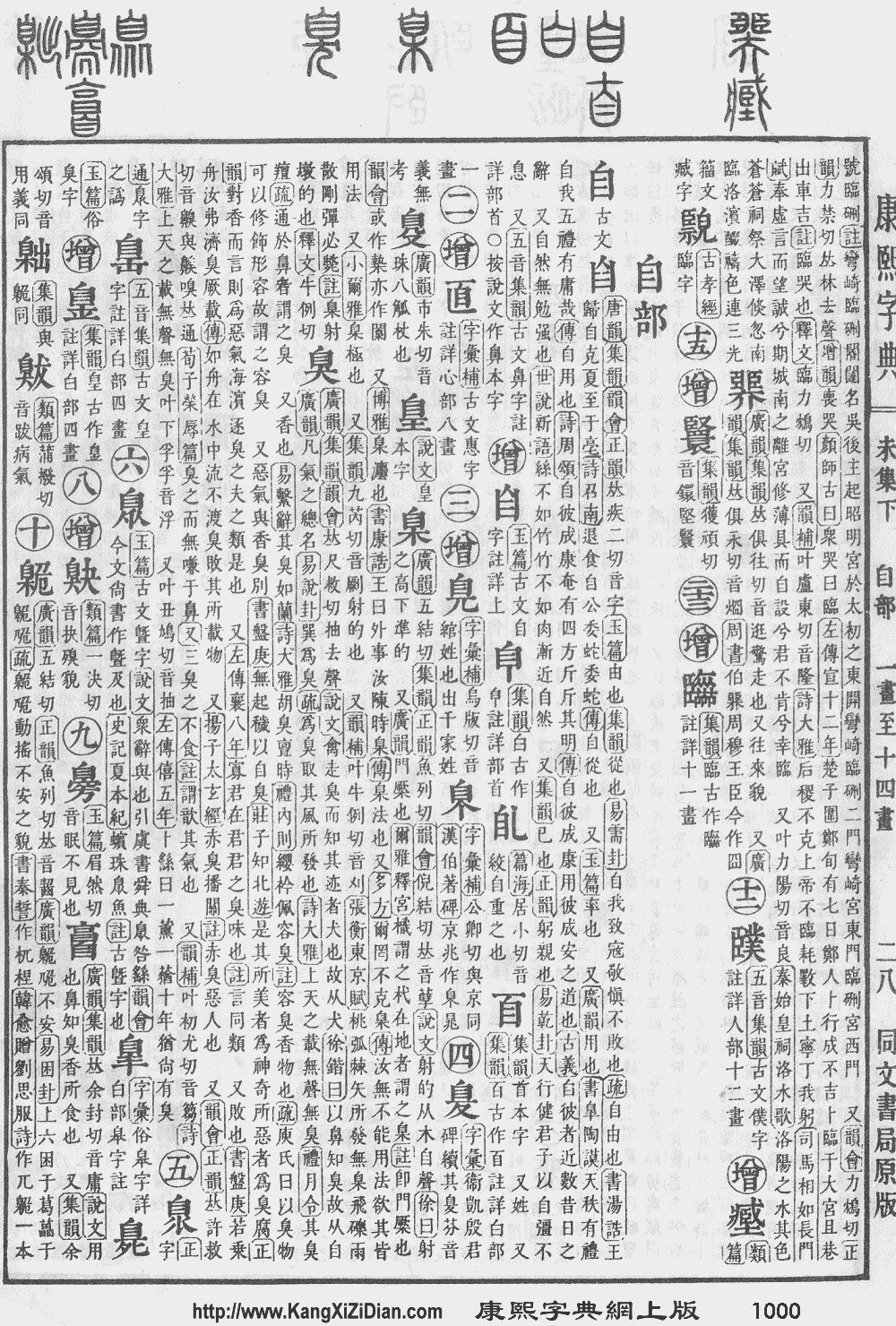
- Kangxi Dictionary: page 1000, character 20
- Dai Kanwa Jiten: character 30103
- Dae Jaweon: page 1456, character 7
- Hanyu Da Zidian (first edition): volume 5, page 3047, character 4
- Unihan data for U+81ED
- Unihan data for U+FA5C
Chinese
| trad. | 臭 | |
|---|---|---|
| simp. # | 臭 | |
| alternative forms | 𦤀 | |
Glyph origin
Characters in the same phonetic series (臭) (Zhengzhang, 2003)
Ideogrammic compound (會意/会意) : 犬 (“dog”) + 自 (“nose”), referring to the dog's strong sense of smell.
Etymology
Schuessler (2007) considers it to be cognate with 犨 (OC *kʰju, “sound of an ox breathing”) and connects it to Burmese ဟိုက် (huik, “to pant”).
Also compare 朽 (OC *qʰluʔ, “to rot; to decay”) (Baxter and Sagart, 2014).
Pronunciation 1
Definitions
臭
Compounds
- 不知香臭
- 口臭 (kǒuchòu)
- 惡臭/恶臭 (èchòu)
- 捧臭腳/捧臭脚 (pěng chòujiǎo)
- 播惡遺臭/播恶遗臭
- 淫汙穢臭/淫污秽臭
- 渾身銅臭/浑身铜臭
- 狐臭 (húchòu)
- 狐騷臭/狐骚臭
- 發臭/发臭 (fāchòu)
- 胡臭 (húchòu)
- 脫臭/脱臭
- 腐臭 (fǔchòu)
- 腋臭 (yèchòu)
- 腥臭 (xīngchòu)
- 臭不可當/臭不可当
- 臭不可聞/臭不可闻
- 臭么
- 臭乎乎
- 臭侷
- 臭名 (chòumíng)
- 臭名昭彰
- 臭名昭著 (chòumíngzhāozhù)
- 臭名遠揚/臭名远扬
- 臭嚼
- 臭屁 (chòupì)
- 臭彈/臭弹 (chhàu-tōaⁿ) (Min Nan)
- 臭恭維/臭恭维
- 臭打
- 臭排場/臭排场
- 臭架子 (chòujiàzi)
- 臭椿 (chòuchūn)
- 臭死
- 臭氧 (chòuyǎng)
- 臭氣/臭气 (chòuqì)
- 臭氧層/臭氧层 (chòuyǎngcéng)
- 臭氣沖天/臭气冲天
- 臭泥
- 臭烘烘 (chòuhōnghōng)
- 臭皮匠 (chòupíjiàng)
- 臭皮囊
- 臭短臊長/臭短臊长
- 臭罵/臭骂 (chòumà)
- 臭美 (chòuměi)
- 臭耳聾/臭耳聋 (chhàu-hīⁿ-lâng) (Min Nan)
- 臭肉來蠅/臭肉来蝇
- 臭腺
- 臭腳丫子/臭脚丫子
- 臭蓋/臭盖
- 臭蟲/臭虫 (chòuchóng)
- 臭街爛巷/臭街烂巷
- 臭豆
- 臭豆腐 (chòudòufu)
- 臭錢/臭钱 (chòuqián)
- 臭頭/臭头 (chòutóu)
- 臭鼬 (chòuyòu)
- 逐臭
- 逐臭之夫
- 遺臭/遗臭
- 遺臭千年/遗臭千年
- 遺臭萬代/遗臭万代
- 遺臭萬年/遗臭万年 (yíchòuwànnián)
- 遺臭萬載/遗臭万载
- 防臭劑/防臭剂 (fángchòujì)
- 附膻逐臭
- 餿臭/馊臭 (sōuchòu)
- 體臭/体臭
- 齆臭 (wèngchòu)
Pronunciation 2
Definitions
臭
- † odour
- 羴:羊臭也。 [Classical Chinese, trad. and simp.]
- From: Shuowen Jiezi, circa 2nd century CE
- Shān: yáng xiù yě. [Pinyin]
- The character 羴 (shān): sheep's smell.
- † fragrance
- 二人同心,其利斷金。同心之言,其臭如蘭。 [Pre-Classical Chinese, trad.]
- From: I Ching, 11th – 8th century BCE
- Èrrén tóngxīn, qí lì duàn jīn. Tóngxīn zhī yán, qí chòu rú lán. [Pinyin]
- But when two men are one in heart, not iron bolts keep them apart. The words they in their union use, fragrance like orchid plants diffuse.
二人同心,其利断金。同心之言,其臭如兰。 [Pre-Classical Chinese, simp.]
- † Original form of 嗅 (xiù, “to smell”).
References
- “臭”, in 漢語多功能字庫 (Multi-function Chinese Character Database), 香港中文大學 (the Chinese University of Hong Kong), 2014–
Japanese
| Shinjitai | 臭 | |
| Kyūjitai [1][2] |
臭 臭or 臭+ ︀? |
|
| 臭󠄁 臭+ 󠄁?(Adobe-Japan1) | ||
| 臭󠄃 臭+ 󠄃?(Hanyo-Denshi) (Moji_Joho) | ||
| The displayed kanji may be different from the image due to your environment. See here for details. | ||
Kanji
臭
Readings
From Middle Chinese 臭 (MC tsyhuwH):
From Middle Chinese; compare Mandarin 臭 (xiù):
From native Japanese roots:
Suffix
臭 • (-shū)
References
- “臭”, in 漢字ぺディア (Kanjipedia) (in Japanese), 日本漢字能力検定協会, 2015–2024
- 1914, 漢和大辭書 (Kanwa Dai Jisho, “The Great Kanji-Japanese Dictionary”) (in Japanese), page 1776 (paper), page 940 (digital), Tōkyō: 興文社 (Kōbunsha)
Korean
Etymology
From a corrupted or unorthodox reading. The original reading is 추 (chu) based on Middle Chinese 臭 (MC tsyhuwH).
| Historical Readings | ||
|---|---|---|
| Middle Korean | ||
| Text | Eumhun | |
| Gloss (hun) | Reading | |
| Hunmong Jahoe, 1527 | 내〮 (Yale: náy) | ᄎᆔ〯 (Yale: chywǔy) |
Pronunciation
- (SK Standard/Seoul) IPA(key): [t͡ɕʰɥi(ː)] ~ [t͡ɕʰy(ː)]
- Phonetic hangul: [취(ː)]
- Though still prescribed in Standard Korean, most speakers in both Koreas no longer distinguish vowel length.
Compounds
Vietnamese
This article is issued from Wiktionary. The text is licensed under Creative Commons - Attribution - Sharealike. Additional terms may apply for the media files.