禿

See also:
禿 U+79BF, 禿
CJK UNIFIED IDEOGRAPH-79BF

[U+79BE]
CJK Unified Ideographs
[U+79C0]

Translingual

Han character

禿 (Kangxi radical 115, +2, 7 strokes, cangjie input 竹木竹山 (HDHU), four-corner 20217, composition )

Derived characters

References

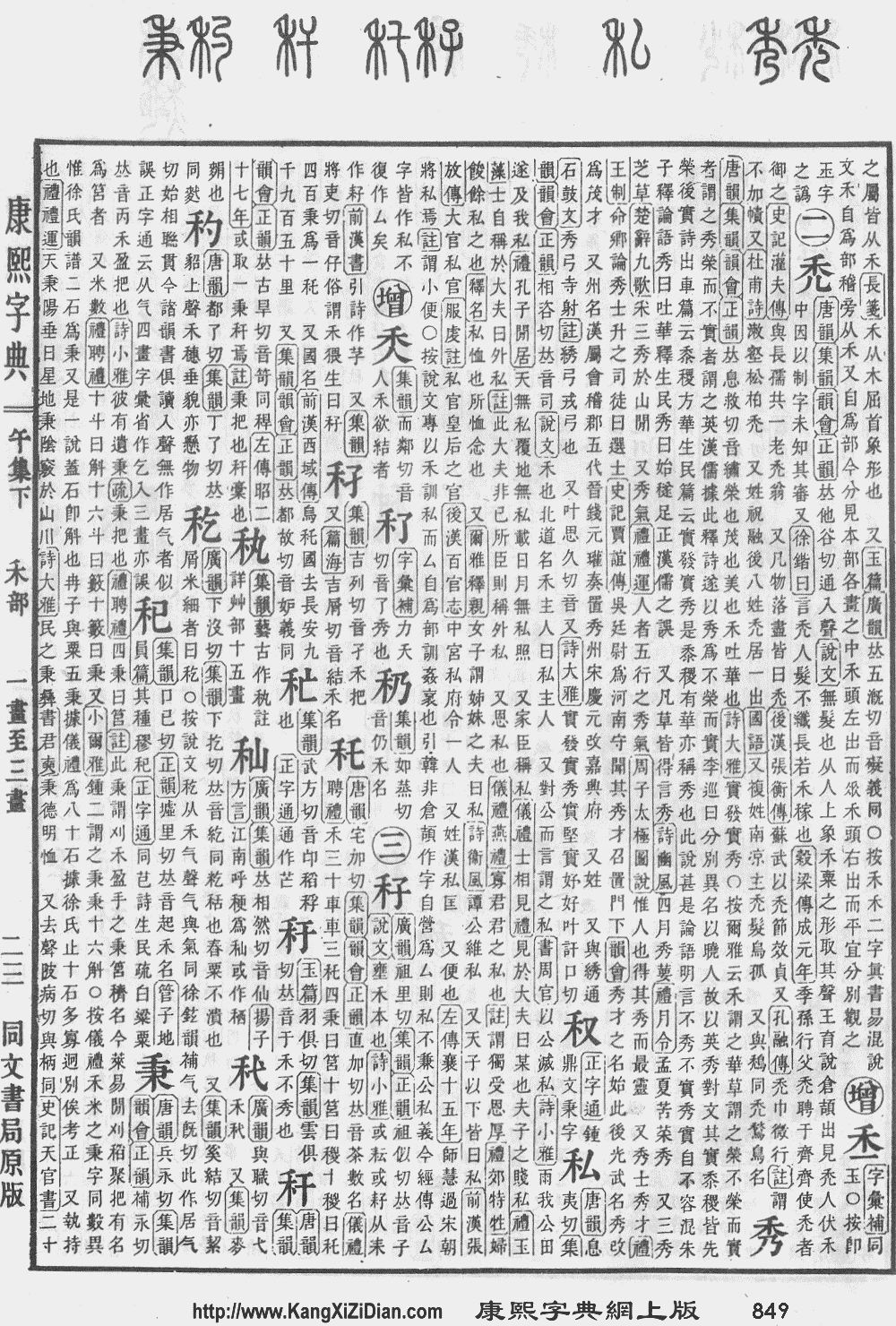
  • Kangxi Dictionary: page 849, character 2
  • Dai Kanwa Jiten: character 24910
  • Dae Jaweon: page 1270, character 15
  • Hanyu Da Zidian (first edition): not present, would follow volume 4, page 2588, character 7
  • Unihan data for U+79BF

Chinese

trad. 禿
simp.
alternative forms
𣬜

Glyph origin

Historical forms of the character 禿
Liushutong (compiled in Ming)
Transcribed ancient scripts

Ideogrammic compound (會意会意) : (hair) + (person). later corrupted into .

Pronunciation


  • Dialectal data
Variety Location 禿
Mandarin Beijing /tʰu⁵⁵/
Harbin /tʰu⁴⁴/
Tianjin /tʰu²¹/
Jinan /tʰu²¹³/
Qingdao /tʰu⁵⁵/
Zhengzhou /tʰu²⁴/
Xi'an /tʰu²¹/
Xining /tʰv̩⁴⁴/
Yinchuan /tʰu¹³/
Lanzhou /tʰu¹³/
Ürümqi /tʰu⁴⁴/
Wuhan /tʰəu²¹³/
Chengdu /tʰu³¹/
Guiyang /tʰu²¹/
Kunming /tʰu³¹/
Nanjing /tʰuʔ⁵/
Hefei /tʰuəʔ⁵/
Jin Taiyuan /tʰuəʔ²/
Pingyao /tʰuʌʔ¹³/
Hohhot /tʰuəʔ⁴³/
Wu Shanghai /tʰoʔ⁵/
Suzhou /tʰoʔ⁵/
Hangzhou /tʰoʔ⁵/
Wenzhou /tʰɤu²¹³/
Hui Shexian /tʰuʔ²¹/
/tʰeʔ²¹/
Tunxi /tʰəu⁵/
Xiang Changsha /tʰəu²⁴/
Xiangtan /tʰəɯ²⁴/
Gan Nanchang /tʰuʔ⁵/
Hakka Meixian /tʰut̚⁵/
Taoyuan
Cantonese Guangzhou /tʰok̚⁵/
Nanning /tʰuk̚⁵⁵/
Hong Kong /tʰuk̚⁵/
Min Xiamen (Min Nan) /tʰɔk̚³²/
/tʰut̚³²/
Fuzhou (Min Dong) /tʰuʔ²³/
Jian'ou (Min Bei) /tʰu²⁴/
Shantou (Min Nan) /tʰek̚²/
Haikou (Min Nan) /ho³¹/

Rime
Character 禿
Reading # 1/1
Initial () (6)
Final () (3)
Tone (調) Checked (Ø)
Openness (開合) Open
Division () I
Fanqie
Baxter thuwk
Reconstructions
Zhengzhang
Shangfang
/tʰuk̚/
Pan
Wuyun
/tʰuk̚/
Shao
Rongfen
/tʰuk̚/
Edwin
Pulleyblank
/tʰəwk̚/
Li
Rong
/tʰuk̚/
Wang
Li
/tʰuk̚/
Bernard
Karlgren
/tʰuk̚/
Expected
Mandarin
Reflex
tu
Expected
Cantonese
Reflex
tuk1
BaxterSagart system 1.1 (2014)
Character 禿
Reading # 1/1
Modern
Beijing
(Pinyin)
Middle
Chinese
‹ thuwk ›
Old
Chinese
/*[tʰ]ˁok/
English bald

Notes for Old Chinese notations in the Baxter–Sagart system:

* Parentheses "()" indicate uncertain presence;
* Square brackets "[]" indicate uncertain identity, e.g. *[t] as coda may in fact be *-t or *-p;
* Angle brackets "<>" indicate infix;
* Hyphen "-" indicates morpheme boundary;

* Period "." indicates syllable boundary.
Zhengzhang system (2003)
Character 禿
Reading # 1/1
No. 12484
Phonetic
component
禿
Rime
group
Rime
subdivision
0
Corresponding
MC rime
Old
Chinese
/*tʰoːɡ/
Notes

Definitions

禿

  1. (of a person's scalp) having little or no hair; bald
  2. (of a mountain, vegetation, etc.) bare; barren; stripped
  3. (of a tool) blunt
  4. (of a work) unfinished; unsatisfactory

Compounds

  • 兀兀禿禿兀兀秃秃
  • 光禿光秃
  • 光禿禿光秃秃 (guāngtūtū)
  • 剔抽禿刷剔抽秃刷
  • 剔抽禿揣剔抽秃揣
  • 剔留禿魯剔留秃鲁
  • 斑禿斑秃 (bāntū)
  • 白禿風白秃风
  • 眼禿刷眼秃刷
  • 禿妃之髮秃妃之发
  • 禿子秃子 (tūzi)
  • 禿子打傘秃子打伞
  • 禿寶蓋秃宝盖 (tūbǎogài)
  • 禿小子秃小子
  • 禿山秃山
  • 禿廝秃厮
  • 禿斑秃斑 (tūbān)
  • 禿歪剌秃歪剌
  • 禿瘡秃疮 (tūchuāng)
  • 禿的秃的
  • 禿禿裡秃秃里
  • 禿科子秃科子
  • 禿筆秃笔
  • 禿賊秃贼
  • 禿頂秃顶 (tūdǐng)
  • 禿頭秃头 (tūtóu)
  • 禿馬秃马
  • 禿驢秃驴 (tūlǘ)
  • 禿髮秃发 (tūfà)
  • 禿髮奮戰秃发奋战
  • 禿髮症秃发症
  • 禿髮飄飄秃发飘飘
  • 禿鶖秃鹙
  • 禿鷲秃鹫 (tūjiù)
  • 禿鷹秃鹰 (tūyīng)
  • 禿鸛秃鹳 (tūguàn)
  • 突禿突秃
  • 護禿兒护秃儿
  • 賊禿贼秃

Japanese

Kanji

禿

(uncommon “Hyōgai” kanji)

Readings

Compounds

Etymology 1

Kanji in this term
禿
はげ
Hyōgaiji
kun’yomi

Pronunciation

Noun

禿(はげ) • (hage) 

  1. baldness
  2. treelessness
Derived terms

Etymology 2

Kanji in this term
禿
かむろ
Hyōgaiji
kun’yomi

Alteration of kaburo below.[1]

Pronunciation

Noun

禿(かむろ) • (kamuro) 

  1. bobbed hair
  2. baldness
  3. young girl attendant of a high-class prostitute
Derived terms

Etymology 3

Kanji in this term
禿
かぶろ
Hyōgaiji
kun’yomi

Pronunciation

  • (Tokyo) ぶろ [kàbúró] (Heiban – [0])[1]
  • IPA(key): [ka̠bɯ̟ᵝɾo̞]

Noun

禿(かぶろ) • (kaburo) 

  1. bobbed hair
  2. baldness
  3. young girl attendant of a high-class prostitute
Derived terms

Etymology 4

Kanji in this term
禿
とく
Hyōgaiji
on’yomi

Middle Chinese 禿 (tʰuk̚)

Affix

禿(とく) • (toku) 

  1. bald
Derived terms

Etymology 5

From Masayoshi Son, founder of SoftBank, is bald.

Pronunciation

  • IPA(key): [ha̠ɡe̞]

Proper noun

禿(はげ) • (Hage) 

  1. (Internet slang, sometimes derogatory, sometimes offensive) SoftBank (telecommunications company based in Japan)
  2. (Internet slang, sometimes derogatory, sometimes offensive) Masayoshi Son

References

  1. 2006, 大辞林 (Daijirin), Third Edition (in Japanese), Tōkyō: Sanseidō, →ISBN
  2. 1998, NHK日本語発音アクセント辞典 (NHK Japanese Pronunciation Accent Dictionary) (in Japanese), Tōkyō: NHK, →ISBN

Korean

Hanja

禿 • (dok) (hangeul , revised dok, McCuneReischauer tok, Yale tok)

  1. Bald
This article is issued from Wiktionary. The text is licensed under Creative Commons - Attribution - Sharealike. Additional terms may apply for the media files.