渾
See also: 浑
| ||||||||
Translingual
Han character
渾 (Kangxi radical 85, 水+9, 12 strokes, cangjie input 水月十十 (EBJJ), four-corner 37156, composition ⿰氵軍)
Derived characters
- 𩅴
Related characters
References
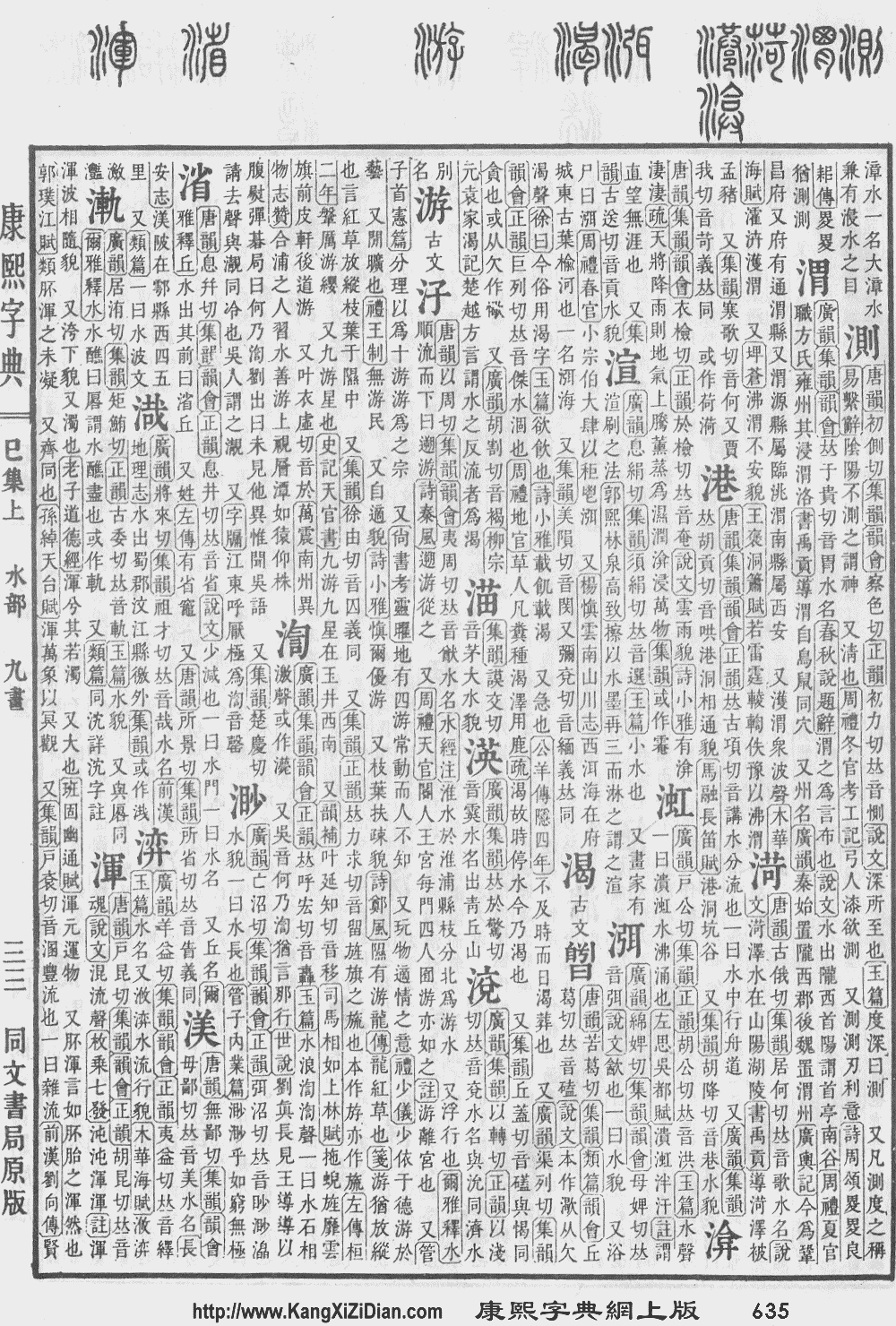
- Kangxi Dictionary: page 635, character 23
- Dai Kanwa Jiten: character 17800
- Dae Jaweon: page 1043, character 8
- Hanyu Da Zidian (first edition): volume 3, page 1687, character 8
- Unihan data for U+6E3E
Chinese
Lua error in Module:utilities at line 142: attempt to perform arithmetic on local 'h' (a nil value)
Glyph origin
| Historical forms of the character 渾 | |
|---|---|
| Shuowen Jiezi (compiled in Han) | Liushutong (compiled in Ming) |
| Small seal script | Transcribed ancient scripts |
 |
 |
Characters in the same phonetic series (軍) (Zhengzhang, 2003)
| Old Chinese | |
|---|---|
| 揮 | *qʰul |
| 輝 | *qʰul |
| 翬 | *qʰul |
| 暉 | *qʰul |
| 煇 | *qʰul, *ɡuːn, *ɡuːnʔ |
| 楎 | *qʰul, *ɡuːn |
| 瀈 | *qʰul |
| 韗 | *qʰons, *ɢuns |
| 褌 | *kuːn |
| 鶤 | *kuːn, *ɢuns |
| 緷 | *kuːnʔ, *ɡuːnʔ, *ɢuns |
| 睴 | *kuːns, *ɡuːnʔ |
| 璭 | *kuːns |
| 瘒 | *ŋɡuːn |
| 顐 | *ŋɡuːn, *ŋɡuːns, *ɡuːn |
| 諢 | *ŋɡuːns |
| 餫 | *ɡuːn, *ɢuns |
| 渾 | *ɡuːn, *ɡuːnʔ |
| 琿 | *ɡuːn |
| 鼲 | *ɡuːn |
| 堚 | *ɡuːn |
| 鯶 | *ɡuːnʔ |
| 軍 | *kun |
| 皸 | *kun, *kuns |
| 齳 | *ŋɡunʔ |
| 喗 | *ŋɡunʔ |
| 葷 | *qʰun |
| 惲 | *qunʔ |
| 賱 | *qunʔ |
| 運 | *ɢuns |
| 暈 | *ɢuns |
| 鄆 | *ɢuns |
Phono-semantic compound (形聲/形声, OC *ɡuːn, *ɡuːnʔ) : semantic 氵 (“river”) + phonetic 軍 (OC *kun).
Pronunciation 1
Definitions
渾
Synonyms
Lua error in Module:utilities at line 142: attempt to perform arithmetic on local 'h' (a nil value)
Compounds
- 吐谷渾/吐谷浑 (tǔyùhún)
- 含渾/含浑
- 含蓄渾厚/含蓄浑厚
- 圓渾/圆浑
- 大渾家/大浑家
- 打水不渾/打水不浑
- 攪渾/搅浑 (jiǎohún)
- 渾不似/浑不似
- 渾不比/浑不比
- 渾世/浑世
- 渾人/浑人
- 渾似/浑似
- 渾倌/浑倌
- 渾全/浑全
- 渾化/浑化
- 渾厚/浑厚 (húnhòu)
- 渾可事/浑可事
- 渾噩/浑噩
- 渾圓/浑圆 (húnyuán)
- 渾家/浑家 (húnjiā)
- 渾小子/浑小子
- 渾成/浑成
- 渾是/浑是
- 渾樸/浑朴 (húnpǔ)
- 渾樸自然/浑朴自然
- 渾水/浑水 (húnshuǐ)
- 渾水摸魚/浑水摸鱼 (húnshuǐmōyú)
- 渾河/浑河
- 渾涵/浑涵
- 渾渾噩噩/浑浑噩噩 (húnhún'è'è)
- 渾濁/浑浊 (húnzhuó)
- 渾然/浑然 (húnrán)
- 渾然一體/浑然一体 (húnrányītǐ)
- 渾然不知/浑然不知
- 渾然不覺/浑然不觉
- 渾然天成/浑然天成
- 渾然忘我/浑然忘我
- 渾無罣礙/浑无罣碍
- 渾箇/浑个
- 渾純/浑纯
- 渾脫/浑脱
- 渾花/浑花
- 渾蓋/浑盖
- 渾蛋/浑蛋
- 渾言/浑言
- 渾話/浑话
- 渾身/浑身 (húnshēn)
- 渾身是膽/浑身是胆
- 渾身無力/浑身无力
- 渾身發軟/浑身发软
- 渾身解數/浑身解数
- 渾身銅臭/浑身铜臭
- 渾酒/浑酒
- 渾金璞玉/浑金璞玉
- 渾閒/浑闲
- 渾閑事/浑闲事
- 渾骨丫髻/浑骨丫髻
- 璞玉渾金/璞玉浑金
- 老忘渾/老忘浑
- 谷渾/谷浑 (Yùhún)
- 質直渾厚/质直浑厚
- 踹渾水/踹浑水
- 蹚渾水/蹚浑水
- 躧渾水/𰸐浑水
- 鑿渾沌/凿浑沌
- 阿月渾子/阿月浑子 (āyuèhúnzǐ)
- 雄渾/雄浑 (xiónghún)
- 鬼打渾/鬼打浑
Pronunciation 2
Definitions
渾
Compounds
Pronunciation 3
Lua error in Module:utilities at line 142: attempt to perform arithmetic on local 'h' (a nil value)
Pronunciation 4
Japanese
Korean
Vietnamese
This article is issued from Wiktionary. The text is licensed under Creative Commons - Attribution - Sharealike. Additional terms may apply for the media files.