搔
| ||||||||
Translingual
| Japanese | 掻 |
|---|---|
| Simplified | 搔 |
| Traditional | 搔 |
Han character
搔 (Kangxi radical 64, 手+10, 13 strokes, cangjie input 手水戈戈 (QEII), four-corner 57036, composition ⿰扌蚤)
Descendants
References
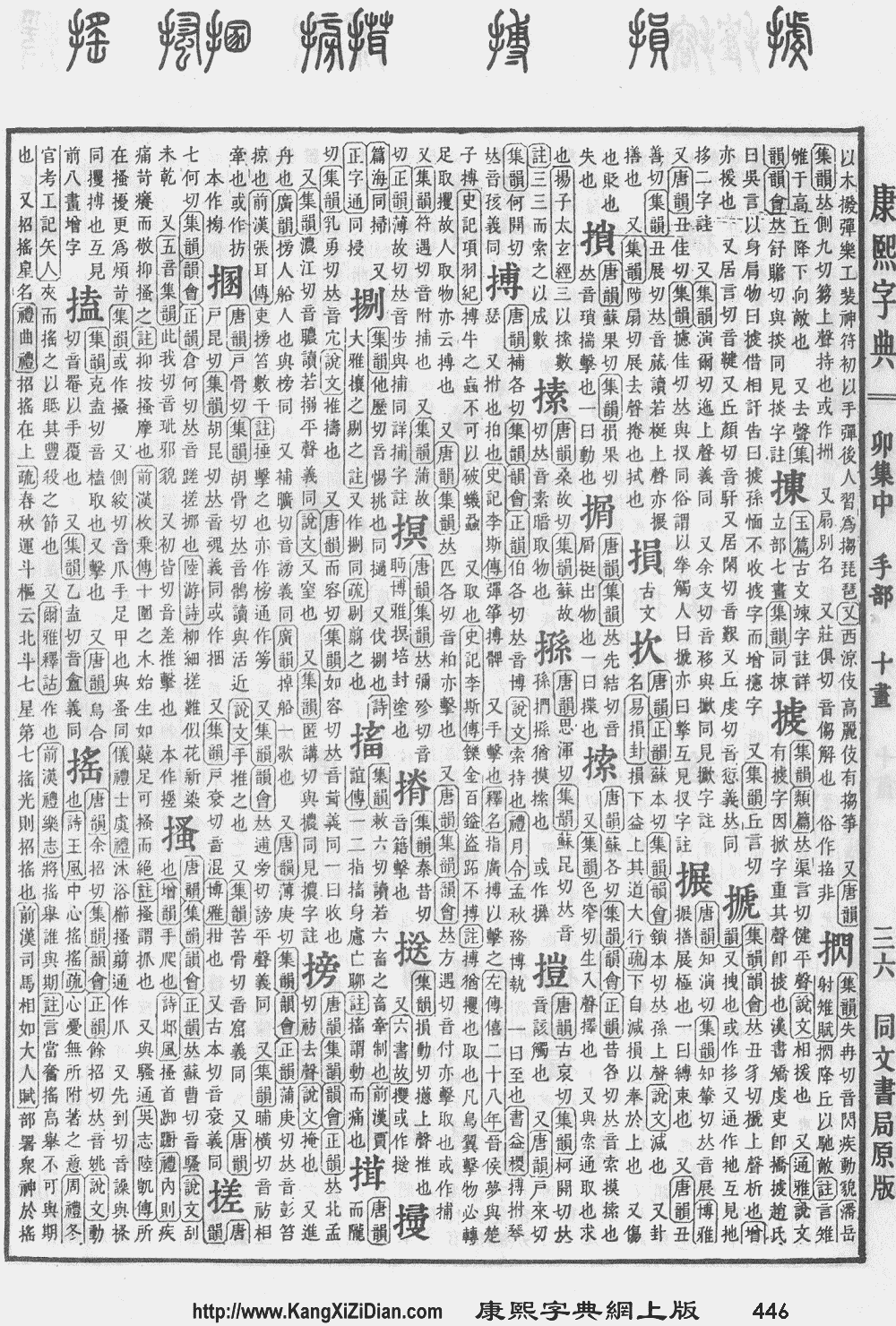
- Kangxi Dictionary: page 446, character 25
- Dai Kanwa Jiten: character 12477
- Dae Jaweon: page 797, character 9
- Hanyu Da Zidian (first edition): volume 3, page 1939, character 6
- Unihan data for U+6414
Chinese
Lua error in Module:utilities at line 142: attempt to perform arithmetic on local 'h' (a nil value)
Glyph origin
| Historical forms of the character 搔 |
|---|
| Shuowen Jiezi (compiled in Han) |
| Small seal script |
 |
Phono-semantic compound (形聲/形声, OC *suː) : semantic 手 (“hand”) + phonetic 蚤 (OC *ʔsuːʔ, “flea, louse”).
Etymology
Schuessler (2007) considers 掃 (OC *suːʔ, *suːs, “to brush”) to be cognate and suggests a Sino-Tibetan etymology, relating it to Chepang साव्सा (saw-, “to itch”), सोस्सा (sos‑, “to itch”), Bodo (India) [script needed] (su-, “to itch”).
Baxter and Sagart (2014) relates it to 爪 (OC *ʔsruːʔ, “claw”).
Pronunciation
Synonyms
Lua error in Module:utilities at line 142: attempt to perform arithmetic on local 'h' (a nil value)
Japanese
| 掻 | |
| Lua error in Module:utilities at line 142: attempt to perform arithmetic on local 'h' (a nil value) |
Readings
Definitions
| For pronunciation and definitions of 搔 – see the following entry. | ||
| ||
| (This term, 搔, is the kyūjitai of the above term.) |
Korean
Hanja
搔 • (so) (hangeul 소, revised so, McCune–Reischauer so, Yale so)
- This term needs a translation to English. Please help out and add a translation, then remove the text
{{rfdef}}.