旭
| ||||||||
Translingual
| Stroke order | |||
|---|---|---|---|
 | |||
Han character
旭 (Kangxi radical 72, 日+2, 6 strokes, cangjie input 大弓日 (KNA), four-corner 46010, composition ⿺九日)
Derived characters
- 𮎴, 𢬐, 𣑢, 𪺬, 𫀯, 𮡵, 𬲑, 𫘲
References
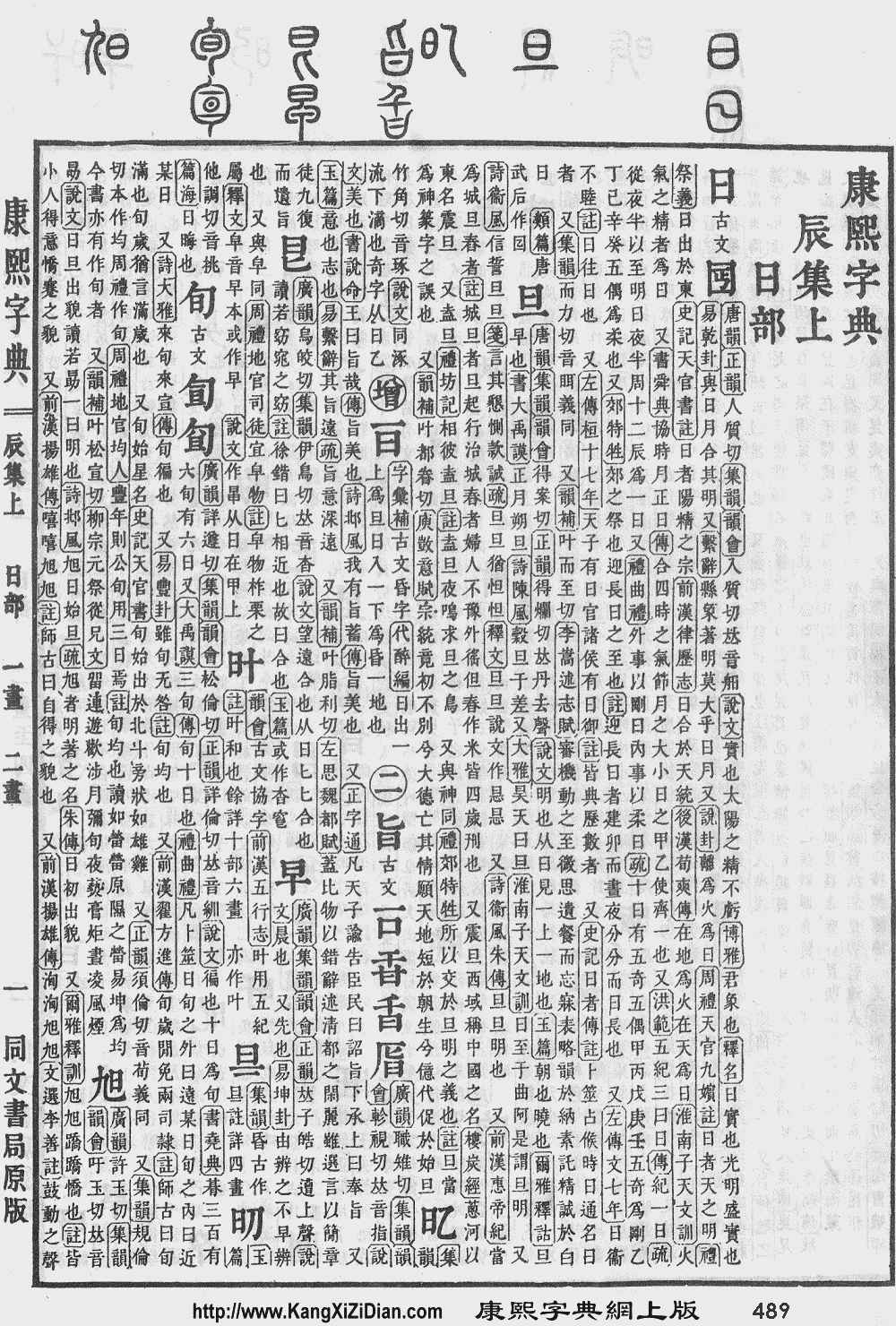
- Kangxi Dictionary: page 489, character 19
- Dai Kanwa Jiten: character 13747
- Dae Jaweon: page 851, character 1
- Hanyu Da Zidian (first edition): volume 2, page 1485, character 4
- Unihan data for U+65ED
Chinese
Lua error in Module:utilities at line 142: attempt to perform arithmetic on local 'h' (a nil value)
Glyph origin
| Historical forms of the character 旭 | |
|---|---|
| Shuowen Jiezi (compiled in Han) | Liushutong (compiled in Ming) |
| Small seal script | Transcribed ancient scripts |
 |
 |
Characters in the same phonetic series (九) (Zhengzhang, 2003)
Phono-semantic compound (形聲/形声, OC *qʰʷoɡ) : phonetic 九 (OC *kuʔ) + semantic 日 (“sun”).
Pronunciation
Further reading
- “旭”, in 漢語多功能字庫 (Multi-function Chinese Character Database), 香港中文大學 (the Chinese University of Hong Kong), 2014–
Japanese
Readings
Lua error in Module:utilities at line 142: attempt to perform arithmetic on local 'h' (a nil value)
Definitions
| Kanji in this term |
|---|
| 旭 |
| あさひ Jinmeiyō |
| kun’yomi |
| For pronunciation and definitions of 旭 – see the following entry. | ||
| ||
| (This term, 旭, is an alternative spelling of the above term.) |
Korean
Etymology
(This etymology is missing or incomplete. Please add to it, or discuss it at the Etymology scriptorium. Particularly: “Middle Korean readings, if any”)
Pronunciation
- (SK Standard/Seoul) IPA(key): [uk̚]
- Phonetic hangul: [욱]
Hanja
Wikisource 旭 • (uk) (hangeul 욱, revised uk, McCune–Reischauer uk, Yale wuk)
- rising sun
- brilliance
- radiant
Vietnamese
Han character
- This term needs a translation to English. Please help out and add a translation, then remove the text
{{rfdef}}.
References
This article is issued from Wiktionary. The text is licensed under Creative Commons - Attribution - Sharealike. Additional terms may apply for the media files.