弛
| ||||||||
Translingual
Han character
弛 (Kangxi radical 57, 弓+3, 6 strokes, cangjie input 弓心木 (NPD), four-corner 14212, composition ⿰弓也)
References
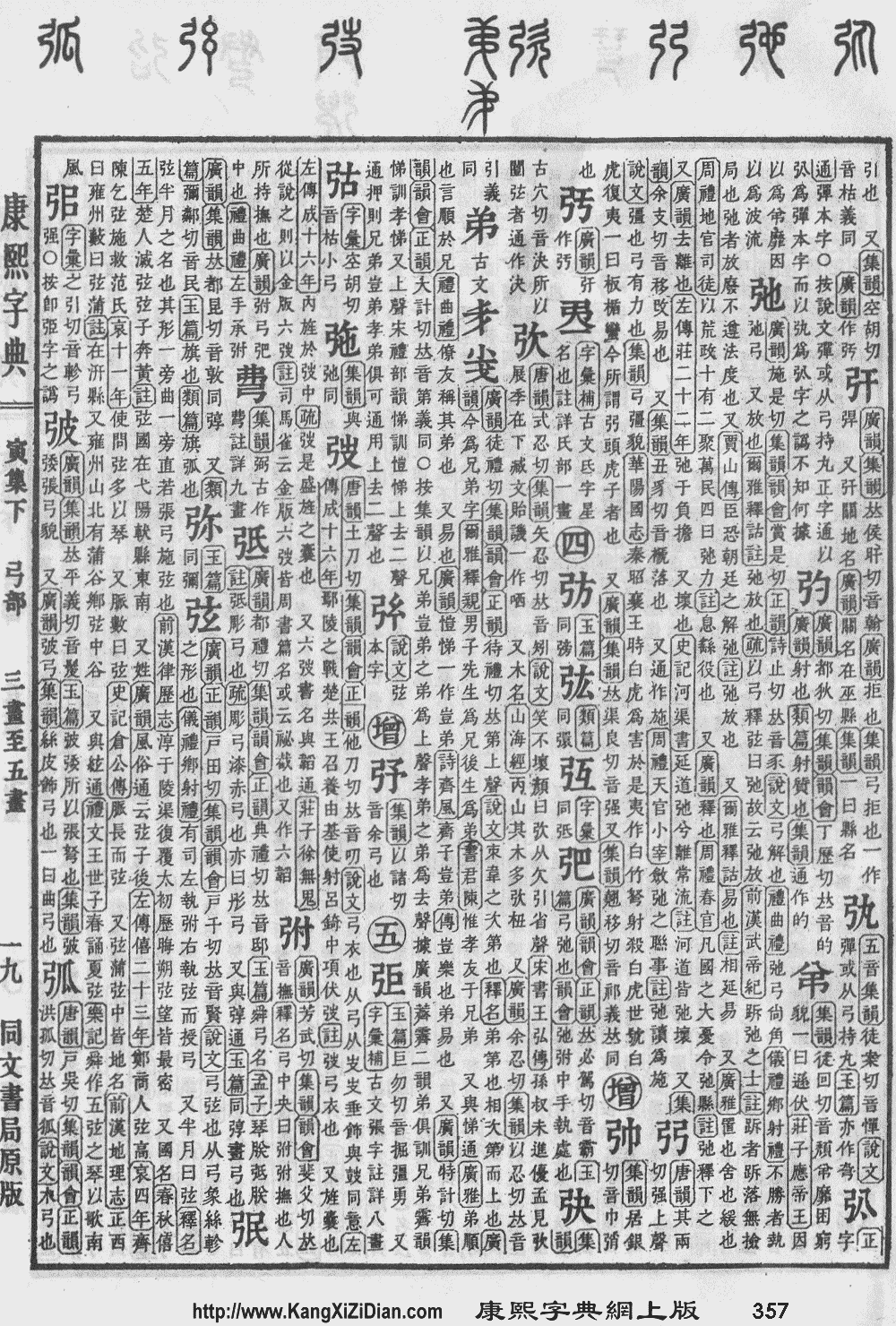
- Kangxi Dictionary: page 357, character 6
- Dai Kanwa Jiten: character 9724
- Dae Jaweon: page 673, character 14
- Hanyu Da Zidian (first edition): volume 2, page 991, character 13
- Unihan data for U+5F1B
Chinese
Lua error in Module:utilities at line 142: attempt to perform arithmetic on local 'h' (a nil value)
Glyph origin
| Historical forms of the character 弛 | |
|---|---|
| Shuowen Jiezi (compiled in Han) | Liushutong (compiled in Ming) |
| Small seal script | Transcribed ancient scripts |
 |
 |
Characters in the same phonetic series (也) (Zhengzhang, 2003)
| Old Chinese | |
|---|---|
| 他 | *l̥ʰaːl |
| 拖 | *l̥ʰaːl, *l̥ʰaːls |
| 駞 | *l'aːl |
| 池 | *l'aːl, *l'al |
| 灺 | *ljalʔ |
| 鍦 | *ɦljaːl, *hljal, *hljals |
| 虵 | *ɦljal, *laːlʔ, *lal |
| 也 | *laːlʔ |
| 忚 | *hleːl |
| 髢 | *l'eːls |
| 杝 | *l̥ʰalʔ, *l'alʔ, *lal |
| 肔 | *l̥ʰalʔ, *lalʔ |
| 馳 | *l'al |
| 阤 | *l'alʔ, *hljalʔ |
| 施 | *hljal, *hljals |
| 絁 | *hljal |
| 葹 | *hljal |
| 弛 | *hljalʔ |
| 箷 | *lal |
| 衪 | *lel, *lalʔ |
| 暆 | *lel |
| 迆 | *lal, *lalʔ |
| 酏 | *lal, *lalʔ |
| 匜 | *lal, *lalʔ |
| 迤 | *lalʔ |
| 扡 | *lalʔ |
| 崺 | *lalʔ |
| 貤 | *lals, *ɦljels, *lels |
| 地 | *l'els |
Pronunciation
Definitions
弛
Compounds
Etymology 2
Lua error in Module:utilities at line 142: attempt to perform arithmetic on local 'h' (a nil value)
Japanese
Korean
Vietnamese
Han character
弛: Hán Nôm readings: thỉ
- This term needs a translation to English. Please help out and add a translation, then remove the text
{{rfdef}}.
This article is issued from Wiktionary. The text is licensed under Creative Commons - Attribution - Sharealike. Additional terms may apply for the media files.