廊
| ||||||||
 | ||||||||
| ||||||||
Translingual
Han character
廊 (Kangxi radical 53, 广+9, 12 strokes, cangjie input 戈戈戈中 (IIIL), four-corner 00227, composition ⿸广郎(GHTJ) or ⿸广郞(KV))
Derived characters
- 𭏱
References
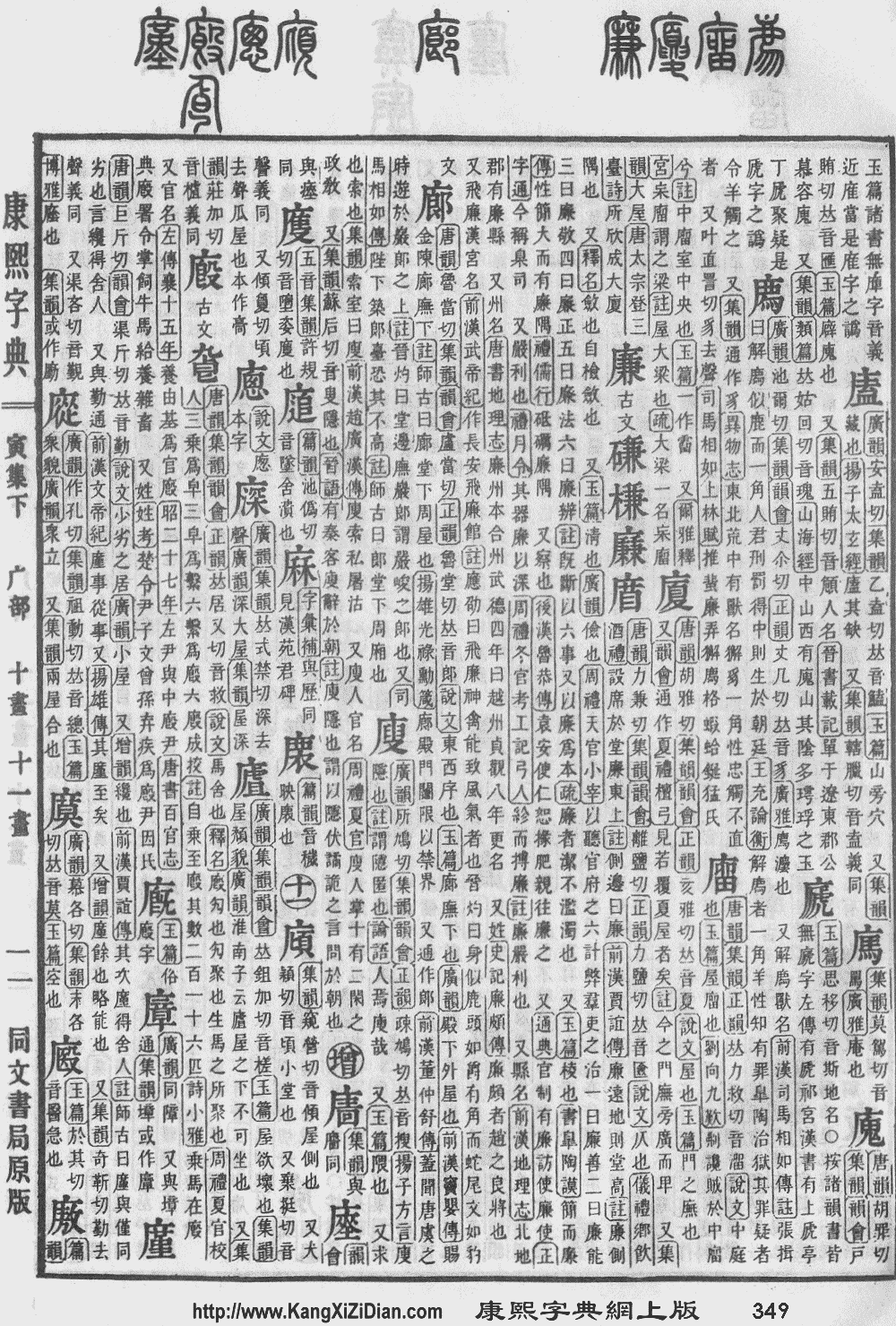
- Kangxi Dictionary: page 349, character 13
- Dai Kanwa Jiten: character 9437
- Dae Jaweon: page 660, character 1
- Hanyu Da Zidian (first edition): volume 2, page 890, character 3
- Unihan data for U+5ECA
- Unihan data for U+F928
- Unihan data for U+2F88E
Chinese
Lua error in Module:utilities at line 142: attempt to perform arithmetic on local 'h' (a nil value)
Glyph origin
| Historical forms of the character 廊 | |
|---|---|
| Shuowen Jiezi (compiled in Han) | Liushutong (compiled in Ming) |
| Small seal script | Transcribed ancient scripts |
 |
 |
Characters in the same phonetic series (良) (Zhengzhang, 2003)
| Old Chinese | |
|---|---|
| 剆 | *raːl, *raːlʔ |
| 郎 | *raːŋ |
| 稂 | *raːŋ |
| 桹 | *raːŋ |
| 鋃 | *raːŋ |
| 硠 | *raːŋ |
| 浪 | *raːŋ, *raːŋs |
| 蜋 | *raːŋ, *raŋ |
| 琅 | *raːŋ |
| 狼 | *raːŋ |
| 欴 | *raːŋ |
| 踉 | *raːŋ, *raŋ, *raŋs |
| 莨 | *raːŋ, *raːŋs |
| 艆 | *raːŋ |
| 駺 | *raːŋ |
| 躴 | *raːŋ |
| 筤 | *raːŋ |
| 閬 | *raːŋ, *raːŋs |
| 哴 | *raːŋ, *raŋs |
| 蓈 | *raːŋ |
| 廊 | *raːŋ |
| 榔 | *raːŋ, *raːŋʔ |
| 螂 | *raːŋ |
| 瑯 | *raːŋ |
| 朗 | *raːŋʔ |
| 朖 | *raːŋʔ |
| 誏 | *raːŋʔ |
| 俍 | *raːŋʔ |
| 崀 | *raːŋʔ |
| 埌 | *raːŋs |
| 蒗 | *raːŋs |
| 娘 | *naŋ |
| 良 | *raŋ |
| 粮 | *raŋ |
| 悢 | *raŋs |
Phono-semantic compound (形聲/形声, OC *raːŋ) : semantic 广 + phonetic 郎 (OC *raːŋ).
良 may be the original form of this character, see there for more.
Pronunciation
Japanese
| Shinjitai | 廊 | |
| Kyūjitai [1] |
廊 廊or 廊+ ︀? |
|
| 廊󠄁 廊+ 󠄁?(Adobe-Japan1) | ||
| 廊󠄄 廊+ 󠄄?(Hanyo-Denshi) (Moji_Joho) | ||
| The displayed kanji may be different from the image due to your environment. See here for details. | ||
Readings
Lua error in Module:utilities at line 142: attempt to perform arithmetic on local 'h' (a nil value)
Etymology
| Kanji in this term |
|---|
| 廊 |
| ろう Grade: S |
| on’yomi |
| Alternative spelling |
|---|
| 廊 (kyūjitai) |
From Middle Chinese 廊 (MC lang, “side-gallery”).
Korean
Vietnamese
This article is issued from Wiktionary. The text is licensed under Creative Commons - Attribution - Sharealike. Additional terms may apply for the media files.