康
See also: 隶
| ||||||||
Translingual
| Stroke order | |||
|---|---|---|---|
 | |||
Han character
康 (Kangxi radical 53, 广+8, 11 strokes, cangjie input 戈中水 (ILE), four-corner 00232, composition ⿸广隶)
References
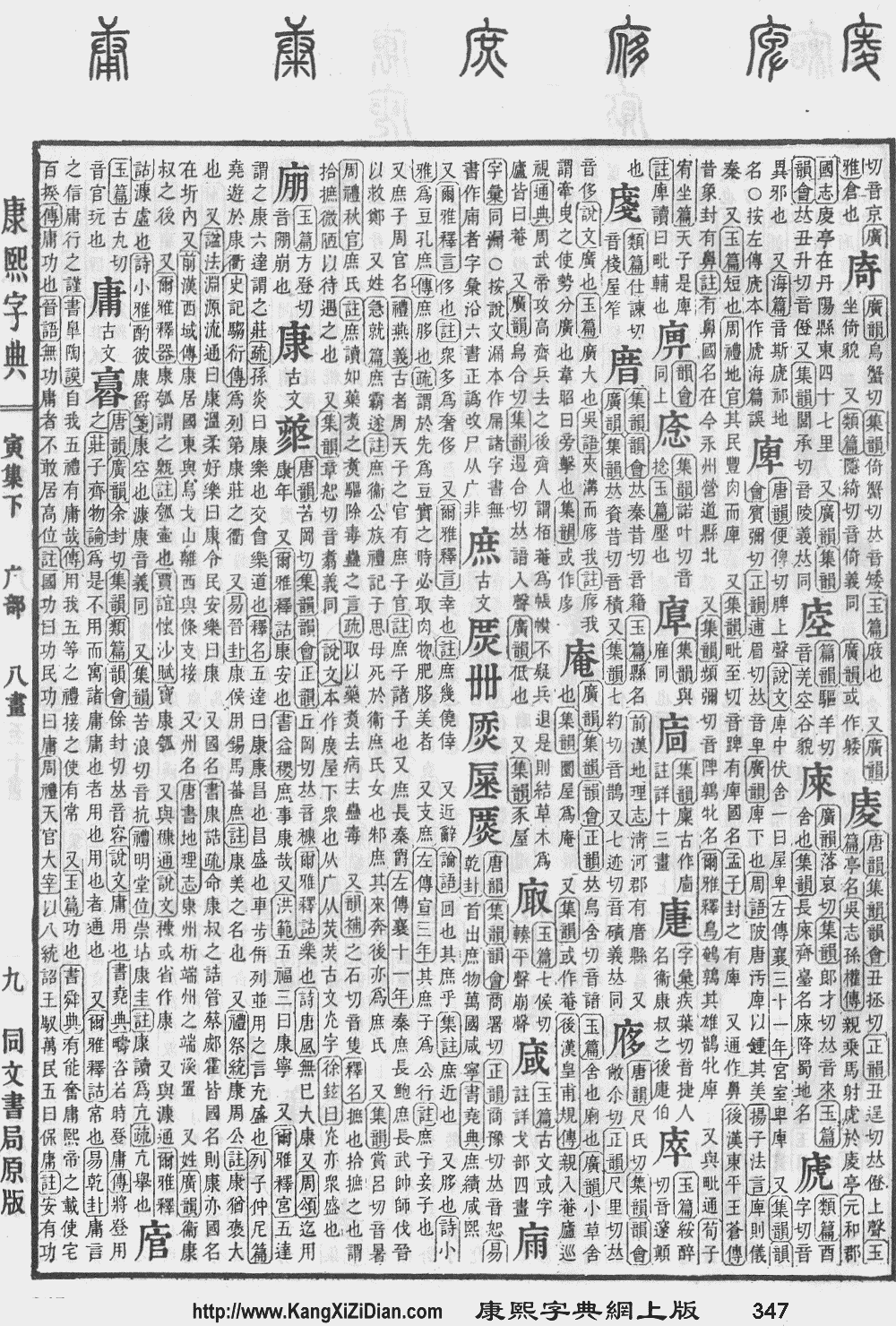
- Kangxi Dictionary: page 347, character 27
- Dai Kanwa Jiten: character 9376
- Dae Jaweon: page 658, character 3
- Hanyu Da Zidian (first edition): volume 2, page 891, character 1
- Unihan data for U+5EB7
Chinese
Lua error in Module:utilities at line 142: attempt to perform arithmetic on local 'h' (a nil value)
Glyph origin
| Historical forms of the character 康 | ||
|---|---|---|
| Western Zhou | Shuowen Jiezi (compiled in Han) | Liushutong (compiled in Ming) |
| Bronze inscriptions | Small seal script | Transcribed ancient scripts |
 |
 |
 |
Characters in the same phonetic series (庚) (Zhengzhang, 2003)
Ideogrammic compound (會意/会意) : 庚 (“threshing tools”) + 米 (“rice”) – chaff.
The derivative 糠 refers to the original word.
Etymology
- quiet, calm, peaceful
- Schuessler (2007) compares 康 (OC *khâŋ) < *khlaŋ to Mizo tlan ~ tlang (“good, kindly, mild, calm, etc.”), both tentatively from Proto-Sino-Tibetan *klaŋ.
- Kham
- Borrowed from Tibetan ཁམས (khams).
- "to look, to see"
- Arose from mishearing of 好康 (hǎokāng, “rich; lucky; fortunate”) as 好看 (hǎokàn, “good-looking; worth seeing”) in a line of 《如果早知道男生也會被性侵》.
Pronunciation
Definitions
康
- peaceful and happy; tranquil
- healthy; well; strong
- prosperous; plentiful; abundant
- broad; vast; smooth; level
- (obsolete) hollow; empty
- (obsolete) Original form of 糠 (kāng, “chaff; husk”).
- (Chinese mythology) Tai Kang (third king of the semi-legendary Xia dynasty)
- Synonym: 太康 (Tài Kāng)
- (Chinese mythology) Zhong Kang (fourth king of the semi-legendary Xia dynasty)
- Synonym: 仲康 (Zhòng Kāng)
- (Chinese mythology) Shao Kang (sixth king of the semi-legendary Xia dynasty)
- Synonym: 少康 (Shào Kāng)
- a surname
- 康有為/康有为 ― Kāng Yǒuwéi ― Kang Youwei
- Kham (a historical region in Tibet)
- (Internet slang) Alternative form of 看 (“to look; to see”)
Compounds
- 保康 (Bǎokāng)
- 保康縣/保康县
- 健康 (jiànkāng)
- 健康保險/健康保险 (jiànkāng bǎoxiǎn)
- 健康教育
- 健康檢查/健康检查
- 健康襪/健康袜
- 健康醋
- 健康食品 (jiànkāng shípǐn)
- 周康王
- 團康/团康
- 太康 (Tàikāng)
- 太康體/太康体
- 好康 (hǎokāng)
- 孫康映雪/孙康映雪
- 安康 (ānkāng)
- 安康計畫/安康计画
- 富強康樂/富强康乐
- 小康 (xiǎokāng)
- 小康社會/小康社会 (xiǎokāng shèhuì)
- 小康計畫/小康计画
- 少康 (Shào Kāng)
- 嵇康
- 川端康成
- 平康 (píngkāng)
- 平康坊
- 平康巷
- 平康里
- 平直康莊/平直康庄
- 康乃馨 (kāngnǎixīn)
- 康健 (kāngjiàn)
- 康克爾/康克尔 (Kāngkè'ěr)
- 康其 (Kāngqí)
- 康回 (Kānghuí)
- 康坪 (Kāngpíng)
- 康定 (Kāngdìng)
- 康定縣/康定县
- 康寧/康宁
- 康居 (Kāngjū)
- 康居園/康居园 (Kāngjūyuán)
- 康年
- 康康舞 (kāngkāngwǔ)
- 康強/康强
- 康復/康复 (kāngfù)
- 康復醫學/康复医学
- 康德 (Kāngdé)
- 康德主義/康德主义
- 康德黎
- 康有為/康有为
- 康梁
- 康樂/康乐 (kānglè)
- 康樂活動/康乐活动
- 康泰 (kāngtài)
- 康濟/康济
- 康濟錄/康济录
- 康熙 (Kāngxī)
- 康熙字典 (Kāngxī Zìdiǎn)
- 康爵
- 康瓠
- 康白度
- 康莊/康庄 (kāngzhuāng)
- 康莊大道/康庄大道 (kāngzhuāngdàdào)
- 康衢
- 康阜
- 康青
- 康黴素/康霉素
- 建康 (Jiànkāng)
- 德川家康
- 心理健康 (xīnlǐ jiànkāng)
- 成康之治
- 提康德羅加/提康德罗加 (Tíkāngdéluójiā)
- 政躬康泰
- 杜康 (dùkāng)
- 民康物阜
- 永康 (Yǒngkāng)
- 海康 (Hǎikāng)
- 盛康 (Shèngkāng)
- 福壽康寧/福寿康宁
- 西康省
- 速賜康/速赐康
- 酮康唑 (tóngkāngzuò)
- 靖康 (Jìngkāng)
- 靖康之難/靖康之难
- 靖康要錄/靖康要录
- 韓康賣藥/韩康卖药
See also
- 安多 (Ānduō)
References
- “Query for 康”, in 臺灣閩南語常用詞辭典 [Dictionary of Frequently-Used Taiwan Minnan] (in Min Nan), Ministry of Education, R.O.C., 2023.
Japanese
Korean
Vietnamese
Han character
康: Hán Nôm readings: khang, khăng, khương
- This term needs a translation to English. Please help out and add a translation, then remove the text
{{rfdef}}.
This article is issued from Wiktionary. The text is licensed under Creative Commons - Attribution - Sharealike. Additional terms may apply for the media files.