巽
| ||||||||
 | ||||||||
Translingual
Han character
巽 (Kangxi radical 49, 己+9, 12 strokes, cangjie input 口山廿金 (RUTC), four-corner 77801, composition ⿱⿰巳巳共(GHTKV) or ⿱⿰己己共(J))
Derived characters
References
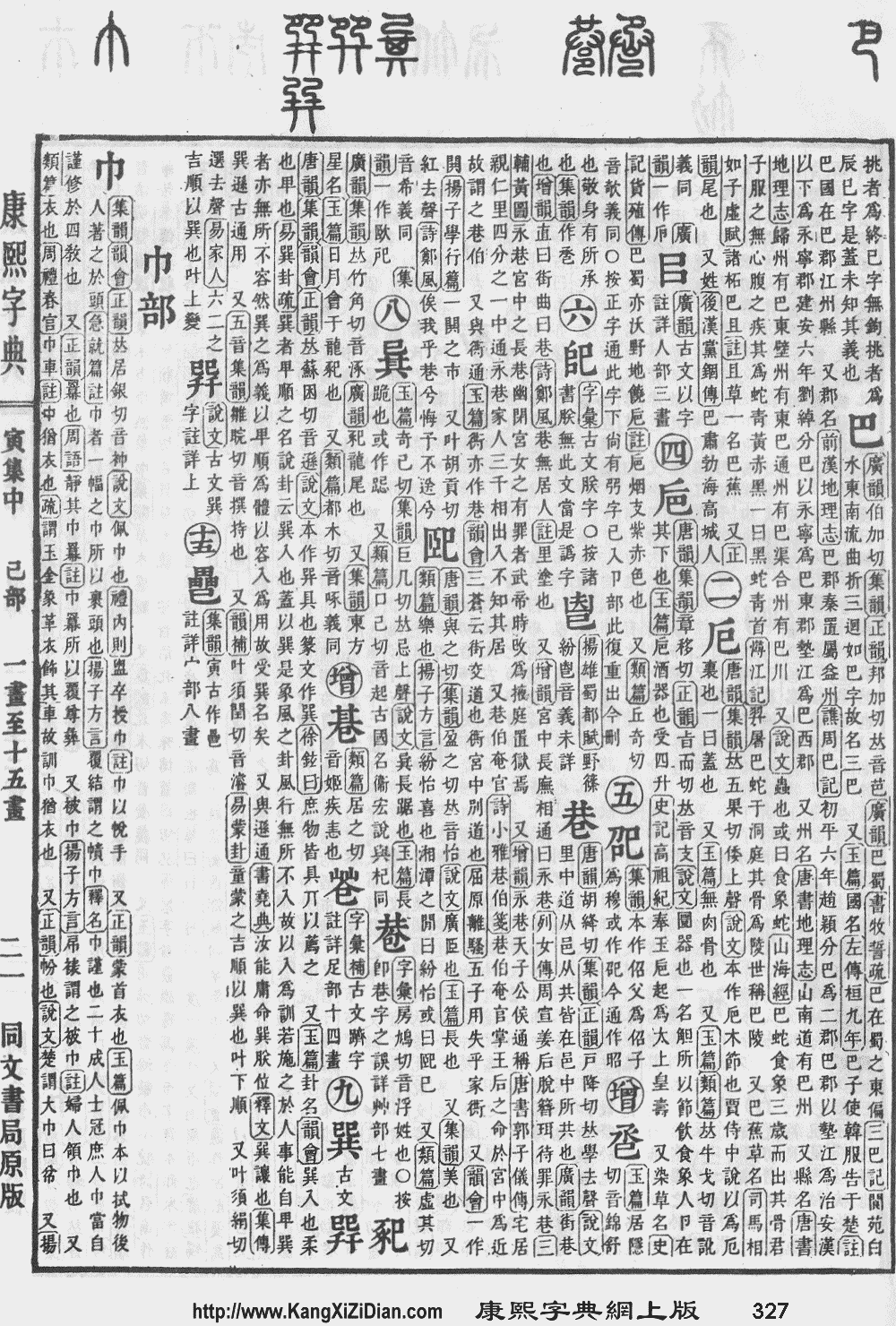
- Kangxi Dictionary: page 327, character 16
- Dai Kanwa Jiten: character 8765
- Dae Jaweon: page 631, character 18
- Hanyu Da Zidian (first edition): volume 2, page 987, character 5
- Unihan data for U+5DFD
- Unihan data for U+2F884
Chinese
Lua error in Module:utilities at line 142: attempt to perform arithmetic on local 'h' (a nil value)
Glyph origin
Characters in the same phonetic series (巽) (Zhengzhang, 2003)
Originally 巺, Ideogrammic compound (會意/会意) : 𠨎 (“people kneeling”) + 丌 (“table”) – "food, meal; to prepare/display food".
Jiajie (假借) - The character was subsequently borrowed for a near-homophone meaning "obedient; modest", and the original meaning came to be represented by 饌 (OC *sɡroːnʔ, *sɡrons), through the addition of a semantic component 飠 (“food; eating”).
Pronunciation
Japanese
| Shinjitai | 巽 | |
| Kyūjitai [1] |
巽 巽or 巽+ ︀? |
|
| 巽󠄀 巽+ 󠄀?(Adobe-Japan1) | ||
| 巽󠄃 巽+ 󠄃?(Hanyo-Denshi) (Moji_Joho) | ||
| The displayed kanji may be different from the image due to your environment. See here for details. | ||
Readings
Lua error in Module:utilities at line 142: attempt to perform arithmetic on local 'h' (a nil value)
Korean
Vietnamese
This article is issued from Wiktionary. The text is licensed under Creative Commons - Attribution - Sharealike. Additional terms may apply for the media files.