噂
| ||||||||
Translingual
Han character
噂 (Kangxi radical 30, 口+12, 15 strokes, cangjie input 口廿田戈 (RTWI), four-corner 68046, composition ⿰口尊)
References
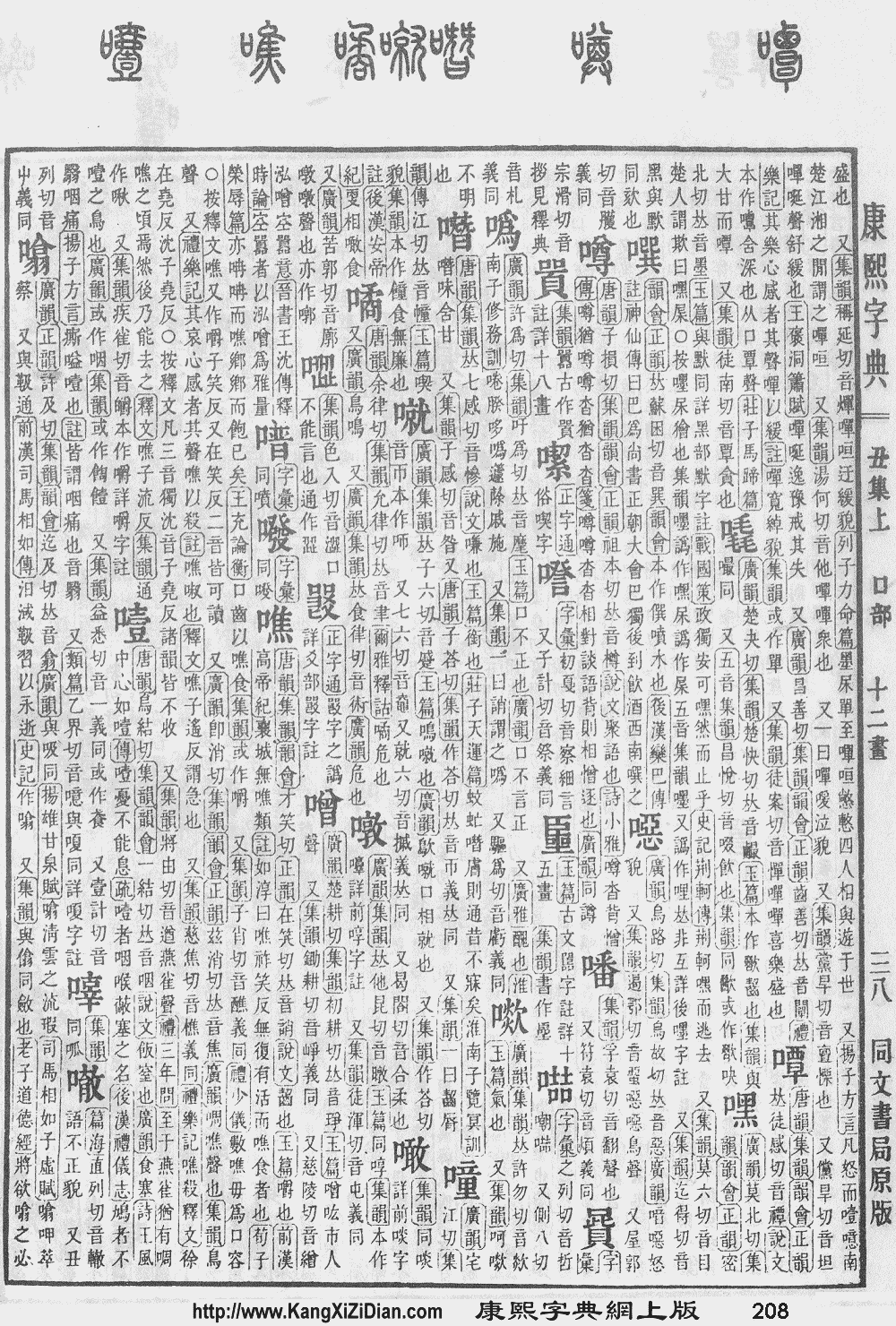
- Kangxi Dictionary: page 208, character 6
- Dai Kanwa Jiten: character 4286
- Dae Jaweon: page 431, character 3
- Hanyu Da Zidian (first edition): volume 1, page 686, character 5
- Unihan data for U+5642
Chinese
Lua error in Module:utilities at line 142: attempt to perform arithmetic on local 'h' (a nil value)
Glyph origin
Phono-semantic compound (形聲/形声, OC *ʔsuːnʔ) : semantic 口 (“mouth”) + phonetic 尊 (OC *ʔsuːn).
Pronunciation
Compounds
- 噂噆
- 噂噂
- 噂沓
- 噂議/噂议
Japanese
| Shinjitai (extended) |
Shinjitai (extended) |
噂󠄀 噂+ 󠄀?(Adobe-Japan1) |
 |
|
| 噂󠄂 噂+ 󠄂?(Hanyo-Denshi) (Moji_Joho) | ||||
| Kyūjitai | 噂 |  | ||
| The displayed kanji may be different from the image due to your environment. See here for details. | ||||
Readings
Lua error in Module:utilities at line 142: attempt to perform arithmetic on local 'h' (a nil value)
Etymology
| Kanji in this term |
|---|
| 噂 |
| うわさ Jinmeiyō |
| kun’yomi |
*/upasa/ → /ufasa/ → /uwasa/
May be from Old Japanese. Appears from at least The Tale of Genji from the early 1000s CE.
Considering that the meaning originally referred to private conversation about one's social superiors, possibly derived as a compound of 上 (ufa, “up, upward”, ancient reading of modern uwa, the combining form of modern ue; in reference to those of higher social standing) + さ (sa, “-ness”, suffix indicating state or degree).
Conjugation
| Katsuyōkei ("stem forms") | ||||
|---|---|---|---|---|
| Mizenkei ("imperfective") | 噂し | うわさし | uwasa shi | |
| Ren’yōkei ("continuative") | 噂し | うわさし | uwasa shi | |
| Shūshikei ("terminal") | 噂する | うわさする | uwasa suru | |
| Rentaikei ("attributive") | 噂する | うわさする | uwasa suru | |
| Kateikei ("hypothetical") | 噂すれ | うわさすれ | uwasa sure | |
| Meireikei ("imperative") | 噂せよ¹ 噂しろ² |
うわさせよ¹ うわさしろ² |
uwasa seyo¹ uwasa shiro² | |
| Key constructions | ||||
| Passive | 噂される | うわさされる | uwasa sareru | |
| Causative | 噂させる 噂さす |
うわささせる うわささす |
uwasa saseru uwasa sasu | |
| Potential | 噂できる | うわさできる | uwasa dekiru | |
| Volitional | 噂しよう | うわさしよう | uwasa shiyō | |
| Negative | 噂しない | うわさしない | uwasa shinai | |
| Negative continuative | 噂せず | うわさせず | uwasa sezu | |
| Formal | 噂します | うわさします | uwasa shimasu | |
| Perfective | 噂した | うわさした | uwasa shita | |
| Conjunctive | 噂して | うわさして | uwasa shite | |
| Hypothetical conditional | 噂すれば | うわさすれば | uwasa sureba | |
| ¹ Written imperative ² Spoken imperative | ||||
Idioms
- 噂をすれば (uwasa o sureba)
Korean
Hanja
噂 • (jun) (hangeul 준, revised jun, McCune–Reischauer chun)
- This term needs a translation to English. Please help out and add a translation, then remove the text
{{rfdef}}.