See also:
U+55A7, 喧
CJK UNIFIED IDEOGRAPH-55A7

[U+55A6]
CJK Unified Ideographs
[U+55A8]

Translingual

Han character

(Kangxi radical 30, +9, 12 strokes, cangjie input 口十一一 (RJMM), four-corner 63016, composition )

References

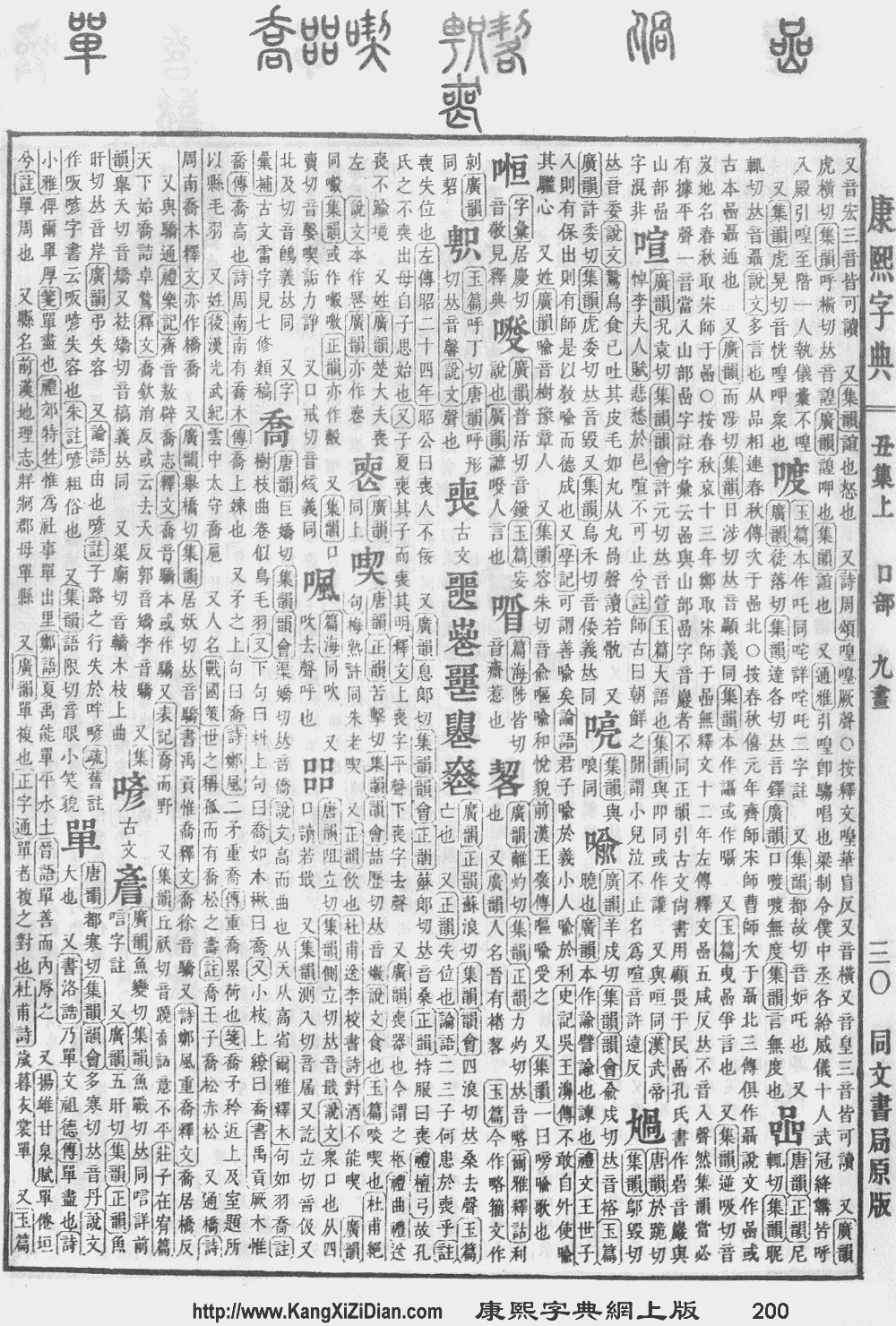
  • Kangxi Dictionary: page 200, character 3
  • Dai Kanwa Jiten: character 3976
  • Dae Jaweon: page 421, character 18
  • Hanyu Da Zidian (first edition): volume 1, page 662, character 2
  • Unihan data for U+55A7

Chinese

Lua error in Module:utilities at line 142: attempt to perform arithmetic on local 'h' (a nil value)

Glyph origin

Phono-semantic compound (形聲形声, OC *qʰʷan) : semantic + phonetic (OC *sqʰon).

Pronunciation


Rime
Character
Reading # 1/1
Initial () (32)
Final () (66)
Tone (調) Level (Ø)
Openness (開合) Closed
Division () III
Fanqie
Baxter xjwon
Reconstructions
Zhengzhang
Shangfang
/hʉɐn/
Pan
Wuyun
/hʷiɐn/
Shao
Rongfen
/xiuɐn/
Edwin
Pulleyblank
/huan/
Li
Rong
/xiuɐn/
Wang
Li
/xĭwɐn/
Bernard
Karlgren
/xi̯wɐn/
Expected
Mandarin
Reflex
xuān
Expected
Cantonese
Reflex
hyun1
BaxterSagart system 1.1 (2014)
Character
Reading # 1/1
Modern
Beijing
(Pinyin)
xuǎn
Middle
Chinese
‹ xjwon ›
Old
Chinese
/*qʷʰar/
English clamor, shout

Notes for Old Chinese notations in the Baxter–Sagart system:

* Parentheses "()" indicate uncertain presence;
* Square brackets "[]" indicate uncertain identity, e.g. *[t] as coda may in fact be *-t or *-p;
* Angle brackets "<>" indicate infix;
* Hyphen "-" indicates morpheme boundary;

* Period "." indicates syllable boundary.
Zhengzhang system (2003)
Character
Reading # 1/1
No. 14010
Phonetic
component
Rime
group
Rime
subdivision
1
Corresponding
MC rime
Old
Chinese
/*qʰʷan/
Notes

Definitions

  1. noisy; uproarious; clamouring

Compounds

  • 作喧
  • 喧叫 (xuānjiào)
  • 喧哄
  • 喧嘩喧哗 (xuānhuá)
  • 喧噪
  • 喧嚷 (xuānrǎng)
  • 喧囂喧嚣 (xuānxiāo)
  • 喧天 (xuāntiān)
  • 喧擾喧扰
  • 喧豗
  • 喧賓奪主喧宾夺主 (xuānbīnduózhǔ)
  • 喧赫
  • 喧闐喧阗 (xuāntián)
  • 喧騰喧腾
  • 喧鬧喧闹 (xuānnào)
  • 喧鬨喧哄
  • 弄喧
  • 弄喧搗鬼弄喧捣鬼
  • 煩囂喧鬧烦嚣喧闹
  • 紛喧纷喧
  • 蓋喧盖喧
  • 語笑喧呼语笑喧呼
  • 語笑喧譁语笑喧哗
  • 語笑喧闐语笑喧阗
  • 金鼓喧天 (jīngǔxuāntiān)
  • 鑼鼓喧天锣鼓喧天
  • 鼓樂喧天鼓乐喧天

Japanese

Kanji

(“Jinmeiyō” kanji used for names)

  1. noisy; uproarious; clamouring
  2. lively

Readings

Compounds

  • (けん)() (kenka) ((けん)())
  • (けん)(かい) (kenkai)
  • (けん)(かく) (kenkaku) ((けん)(かく), (けん)(かく))
  • (けん)(かつ) (kenkatsu)
  • (けん)(けん) (kenken)
  • (けん)() (kenko) ((けん)())
  • (けん)(ごう) (kengō) ((けん)(ごう))
  • (けん)(ごう) (kengō)
  • (けん)(しゅう) (kenshū)
  • (けん)(じょう) (kenjō)
  • (けん)(せい) (kensei)
  • (けん)(ぜん) (kenzen)
  • (けん)(そう) (kensō)
  • (けん)(そう) (kensō) ((けん)(そう), (けん)(そう))
  • (けん)(てん) (kenten)
  • (けん)(でん) (kenden) ((けん)(でん))
  • (けん)() (kendo)
  • (けん)(とう) (kentō)
  • (けん)(とう) (kentō) ((けん)(とう))
  • (けん)(どう) (kendō)
  • (けん)(ねつ) (kennetsu)
  • (けん)() (kenpi)
  • (けん)(ぷん) (kenpun)
  • (かく)(けん) (kakuken) ((かく)(けん), (かく)(けん))
  • (ごう)(けん) (gōken)
  • (しゅう)(けん) (shūken)
  • (ふん)(けん) (funken) ((ふん)(けん))

Korean

Hanja

• (hwon) (hangeul , revised hwon, McCuneReischauer hwŏn)

  1. This term needs a translation to English. Please help out and add a translation, then remove the text {{rfdef}}.

Vietnamese

Han character

: Hán Nôm readings: huyên

  1. This term needs a translation to English. Please help out and add a translation, then remove the text {{rfdef}}.
This article is issued from Wiktionary. The text is licensed under Creative Commons - Attribution - Sharealike. Additional terms may apply for the media files.