危
| ||||||||
Translingual
| Stroke order | |||
|---|---|---|---|
 | |||
Han character
危 (Kangxi radical 26, 卩+4, 6 strokes, cangjie input 弓一尸山 (NMSU), four-corner 27212, composition ⿸厃㔾)
Derived characters
References
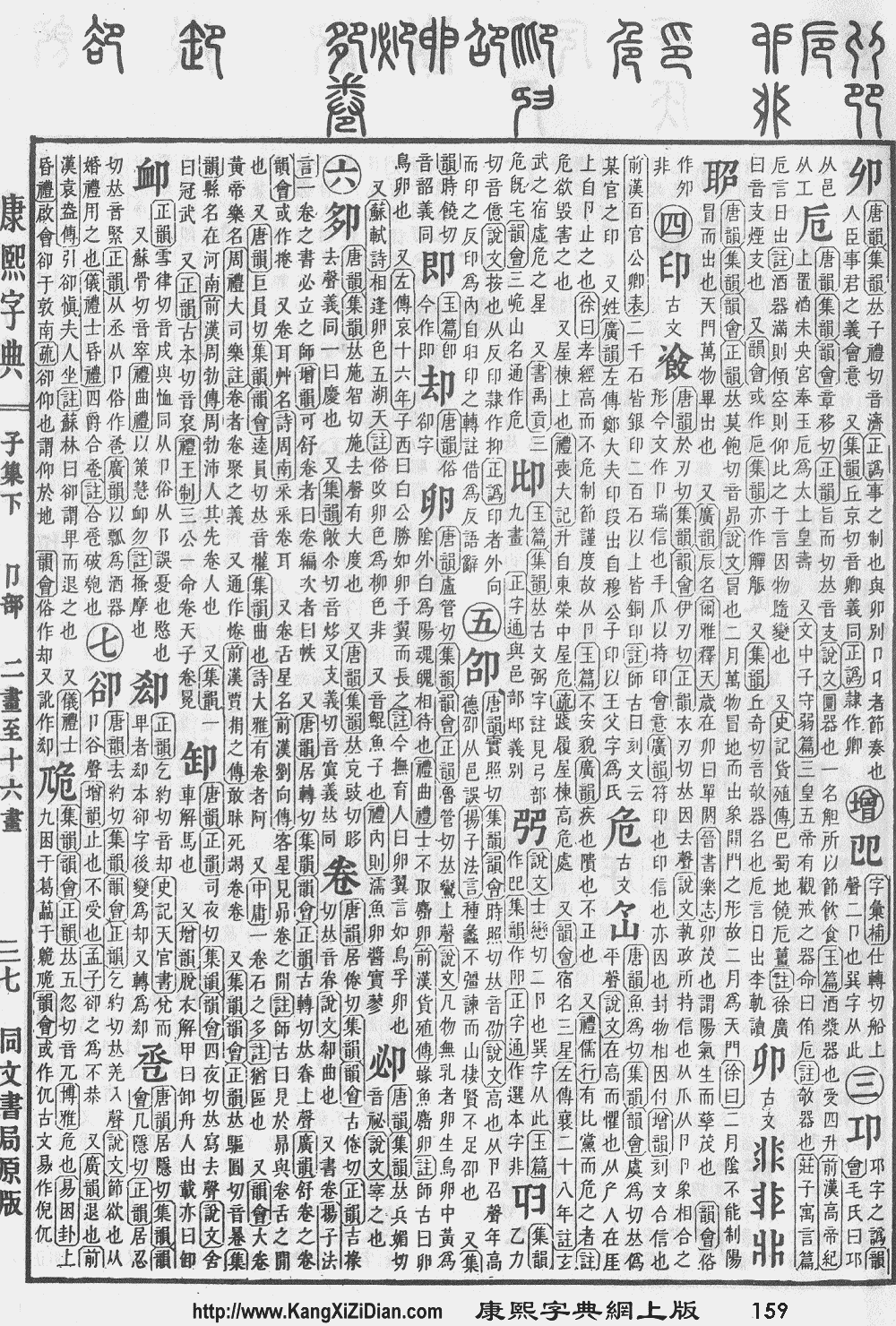
- Kangxi Dictionary: page 159, character 12
- Dai Kanwa Jiten: character 2849
- Dae Jaweon: page 364, character 1
- Hanyu Da Zidian (first edition): volume 1, page 312, character 3
- Unihan data for U+5371
Chinese
Lua error in Module:utilities at line 142: attempt to perform arithmetic on local 'h' (a nil value)
Glyph origin
| Historical forms of the character 危 | ||
|---|---|---|
| Shang | Shuowen Jiezi (compiled in Han) | Liushutong (compiled in Ming) |
| Oracle bone script | Small seal script | Transcribed ancient scripts |
 |
 |
 |
Ideogrammic compound (會意/会意) : 厃 (“person on a cliff or mountain”) + 卩 (“kneeling person”).
Written like 𡴲 during the Warring States period, an ideogrammic compound (會意/会意) : 人 (“person”) + 山 (“mountain”).
Etymology
Starostin reconstructs Proto-Sino-Tibetan *ŋō̆j (~-ō̆l) (“high, rise”) and compares 危 to Burmese ငွား (ngwa:, “be large, great, be high, to project prominently above and beyond others”), Jingpho [script needed] (ŋoi, “to rise, as a hill”); & possibly Proto-Kiranti *ŋo-.
Schuessler (2007) notes that Chinese and Written Burmese can be reconciled by assuming an ST final *-l; furthermore, 危 (OC *ŋoi) may be a vocalic variant of 巍 (OC *ŋui), which in turn is related to 魏 (OC *ŋuih).
Pronunciation 1
Definitions
危
- dangerous
- (literary) precarious; high
- 危峰 ― wēifēng ― towering peak
- dying
- (literary) upright; proper
- 正襟危坐 ― zhèngjīnwēizuò ― to sit straight solemnly
- to endanger; to put in danger
- 危及 ― wēijí ― to endanger
- to fear; to be uneasy
- 人人自危 ― rénrénzìwēi ― everyone feels insecure
- (literary) roof
- (~宿) (astronomy) the Roof, a Chinese constellation near Aquarius and Pegasus
- (Internet slang, ACG) Danger! (Used usually alone by one to warn or tell other participants or viewers of a video, video game, etc. that one or several persons or things are right in danger and dying for help. Originated from a video game.)
- a surname
Compounds
- 三危山 (Sānwēishān)
- 乘人之危 (chéngrénzhīwēi)
- 乘危
- 事危累卵
- 人人自危 (rénrénzìwēi)
- 人命危淺/人命危浅 (rénmìngwēiqiǎn)
- 人心惟危
- 倒懸之危/倒悬之危 (dàoxuánzhīwēi)
- 傾危/倾危 (qīngwēi)
- 危亡 (wēiwáng)
- 危及 (wēijí)
- 危在旦夕 (wēizàidànxī)
- 危坐
- 危城 (wēichéng)
- 危如累卵 (wēirúlěiluǎn)
- 危害 (wēihài)
- 危宿 (Wēixiù, Wéixiù)
- 危局 (wēijú)
- 危屋
- 危弱
- 危急 (wēijí)
- 危惙
- 危情 (wēiqíng)
- 危房 (wēifáng)
- 危於累卵/危于累卵
- 危樓/危楼 (wēilóu)
- 危機/危机 (wēijī, wéijī)
- 危機四伏/危机四伏 (wēijīsìfú)
- 危機意識/危机意识
- 危檣/危樯
- 危殆 (wēidài)
- 危竿
- 危篤/危笃 (wēidǔ)
- 危若朝露
- 危行
- 危言 (wēiyán)
- 危言危行
- 危言正色
- 危言聳聽/危言耸听 (wēiyánsǒngtīng)
- 危言讜論/危言谠论
- 危邦
- 危險/危险 (wēixiǎn)
- 危險分子/危险分子
- 危險性/危险性 (wēixiǎnxìng)
- 危險期/危险期
- 危險物/危险物
- 危難/危难 (wēinàn)
- 去危就安
- 古巴危機/古巴危机
- 國際危機/国际危机
- 垂危 (chuíwēi)
- 孤危
- 安不忘危 (ānbùwàngwēi)
- 安危 (ānwēi)
- 安必思危
- 居安思危 (jū'ānsīwēi)
- 居安慮危/居安虑危
- 居高思危
- 岌岌可危 (jíjíkěwēi)
- 忘戰必危/忘战必危
- 忘戰者危/忘战者危
- 慄慄危懼/栗栗危惧
- 扶危 (fúwēi)
- 扶危定亂/扶危定乱
- 扶危定傾/扶危定倾
- 扶危拯溺
- 扶危持顛/扶危持颠
- 扶危救困
- 扶危濟困/扶危济困
- 扶危翼傾/扶危翼倾
- 扶顛持危/扶颠持危
- 拯危扶溺
- 持危扶顛/持危扶颠
- 拯溺扶危
- 拯溺濟危/拯溺济危
- 排危
- 捨安就危/舍安就危
- 撥亂濟危/拨乱济危
- 救困扶危 (jiù kùn fúwēi)
- 整襟危坐
- 旦夕之危
- 桓殷危語/桓殷危语
- 正色危言
- 正襟危坐 (zhèngjīnwēizuò)
- 涉危履險/涉危履险
- 涉艱履危/涉艰履危
- 潛在危機/潜在危机
- 濟困扶危/济困扶危
- 濟弱扶危/济弱扶危
- 瀕危/濒危 (bīnwēi)
- 病危 (bìngwēi)
- 直言危行
- 知安忘危
- 石油危機/石油危机
- 破家危國/破家危国
- 累卵之危
- 經濟危機/经济危机 (jīngjì wēijī)
- 能源危機/能源危机
- 臨危/临危 (línwēi)
- 臨危下石/临危下石
- 臨危不亂/临危不乱 (línwēibùluàn)
- 臨危不懼/临危不惧
- 臨危不撓/临危不挠
- 臨危不顧/临危不顾
- 臨危受命/临危受命
- 臨危履冰/临危履冰
- 臨危授命/临危授命 (línwēishòumìng)
- 臨危效命/临危效命
- 臨危自悔/临危自悔
- 臨危自省/临危自省
- 臨危自計/临危自计
- 臨危致命/临危致命
- 自危
- 艱危/艰危 (jiānwēi)
- 處安思危/处安思危 (chǔ'ānsīwēi)
- 見危/见危
- 見危受命/见危受命
- 見危授命/见危授命
- 見危致命/见危致命
- 解危
- 變危為安/变危为安
- 趁人之危
- 轉危為安/转危为安 (zhuǎnwēiwéi'ān)
- 阽危 (diànwēi)
- 高而不危
- 齒危髮秀/齿危发秀
Pronunciation 2
Lua error in Module:utilities at line 142: attempt to perform arithmetic on local 'h' (a nil value)
References
- “危”, in 漢語多功能字庫 (Multi-function Chinese Character Database), 香港中文大學 (the Chinese University of Hong Kong), 2014–
Japanese
| Shinjitai | 危 | |
| Kyūjitai [1][2] |
危󠄁 危+ 󠄁?(Adobe-Japan1) |
 |
| 危󠄄 危+ 󠄄?(Hanyo-Denshi) (Moji_Joho) | ||
| The displayed kanji may be different from the image due to your environment. See here for details. | ||
Readings
- Go-on: ぎ (gi)←ぎ (gi, historical)←ぐゐ (gwi, ancient)
- Kan-on: ぎ (gi)←ぎ (gi, historical)←ぐゐ (gwi, ancient)
- Kan’yō-on: き (ki, Jōyō)
- Kun: あぶない (abunai, 危ない, Jōyō); あやうい (ayaui, 危うい, Jōyō)←あやふし (ayafusi, 危ふし, historical); あやぶむ (ayabumu, 危ぶむ, Jōyō); あやめる (ayameru, 危める); けわしい (kewashii, 危しい)←けはし (kefasi, 危し, historical)