匙
| ||||||||
Translingual
| Stroke order | |||
|---|---|---|---|
 | |||
Han character
匙 (Kangxi radical 21, 匕+9, 11 strokes, cangjie input 日人心 (AOP), four-corner 61801, composition ⿺是匕)
Derived characters
- 𣼮, 𨫞
References
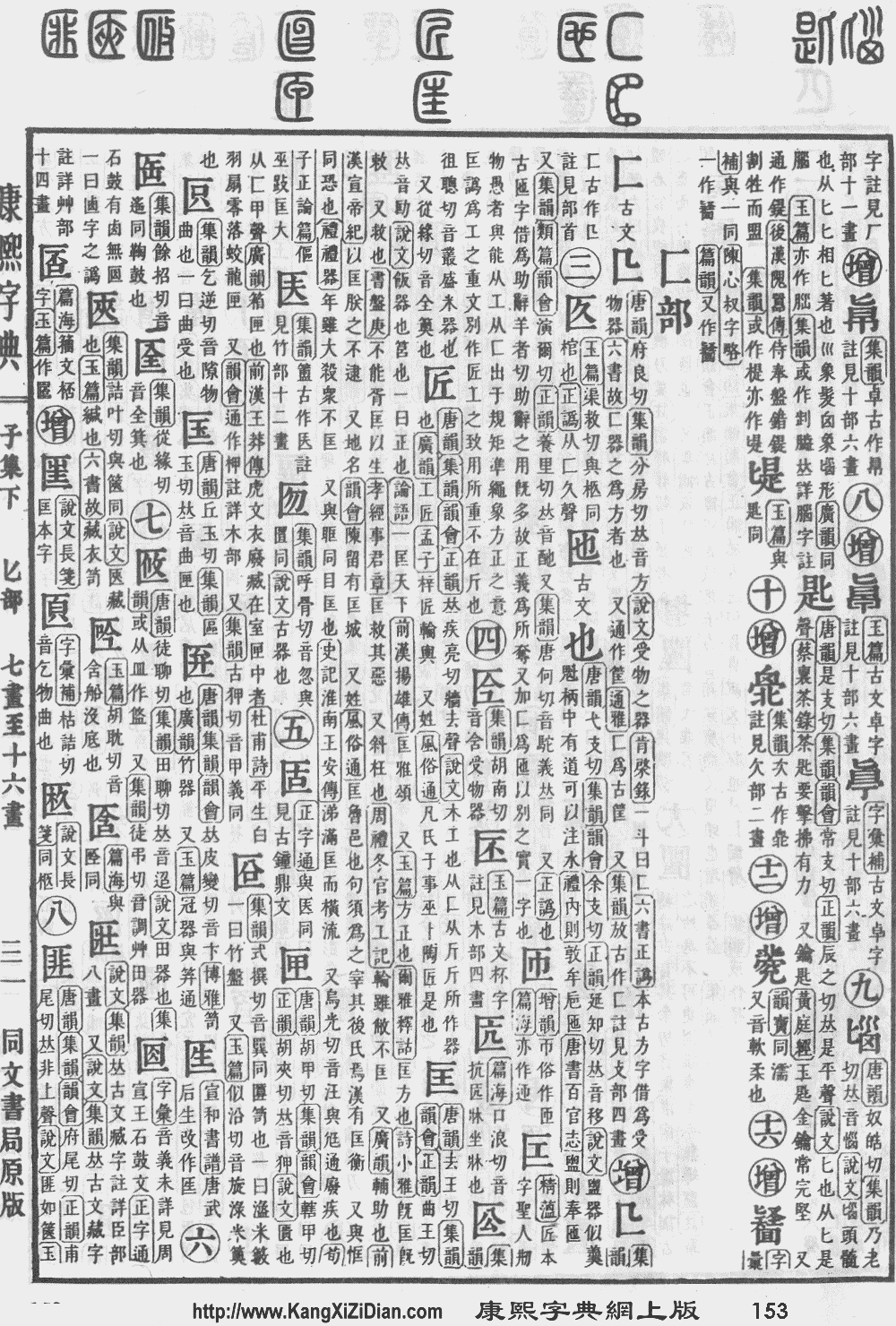
- Kangxi Dictionary: page 153, character 5
- Dai Kanwa Jiten: character 2590
- Dae Jaweon: page 344, character 20
- Hanyu Da Zidian (first edition): volume 1, page 263, character 2
- Unihan data for U+5319
Chinese
Lua error in Module:utilities at line 142: attempt to perform arithmetic on local 'h' (a nil value)
Glyph origin
| Historical forms of the character 匙 | |
|---|---|
| Shuowen Jiezi (compiled in Han) | Liushutong (compiled in Ming) |
| Small seal script | Transcribed ancient scripts |
 |
 |
| Old Chinese | |
|---|---|
| 鞮 | *teː |
| 隄 | *teː, *deː |
| 堤 | *teː, *teːʔ, *dje |
| 鍉 | *teː |
| 蝭 | *teːs, *deː |
| 醍 | *tʰeːʔ, *deː |
| 緹 | *tʰeːʔ, *deː |
| 提 | *deː, *dje |
| 瑅 | *deː |
| 題 | *deː, *deːs |
| 媞 | *deː, *deːʔ, *djeʔ |
| 褆 | *deː, *deʔ, *djeʔ |
| 禔 | *deː, *tje, *dje |
| 騠 | *deː |
| 趧 | *deː |
| 鯷 | *deː, *deːs, *djes |
| 踶 | *deːs, *deʔ |
| 徥 | *deʔ, *djeʔ |
| 匙 | *dje |
| 是 | *djeʔ |
| 諟 | *djeʔ |
| 翨 | *hljes, *kles |
| 睼 | *tʰeːns |
| 寔 | *djɯɡ |
| 湜 | *dɯɡ |
| 遈 | *djɯɡ |
Phono-semantic compound (形聲/形声, OC *dje) : phonetic 是 (OC *djeʔ) + semantic 匕 (“spoon”).
Pronunciation 1
Synonyms
Lua error in Module:utilities at line 142: attempt to perform arithmetic on local 'h' (a nil value)
Pronunciation 2
Definitions
匙
Synonyms
Lua error in Module:utilities at line 142: attempt to perform arithmetic on local 'h' (a nil value)
Compounds
Japanese
Kanji
Readings
Lua error in Module:utilities at line 142: attempt to perform arithmetic on local 'h' (a nil value)
Etymology 1
| Kanji in this term |
|---|
| 匙 |
| じ Hyōgaiji |
| on’yomi |
From Lua error in Module:utilities at line 142: attempt to perform arithmetic on local 'h' (a nil value). The goon, so likely the earliest borrowing from Middle Chinese.
Pronunciation
- IPA(key): [d͡ʑi]
Suffix
匙 • (-ji)
Usage notes
Only found in compounds.
Derived terms
- 香匙 (kyōji): a spoon or scoop used to scoop out incense
- 火匙 (koji): a pair of tongs or chopsticks (usually metal), used to handle live coals or burning incense
- Lua error in Module:utilities at line 142: attempt to perform arithmetic on local 'h' (a nil value): a spoon or scoop
- Lua error in Module:utilities at line 142: attempt to perform arithmetic on local 'h' (a nil value): a spoon or scoop
Etymology 2
| Kanji in this term |
|---|
| 匙 |
| し Hyōgaiji |
| on’yomi |
From Middle Chinese Lua error in Module:utilities at line 142: attempt to perform arithmetic on local 'h' (a nil value). The kan'on, so a later borrowing. Compare modern Lua error in Module:utilities at line 142: attempt to perform arithmetic on local 'h' (a nil value), Lua error in Module:utilities at line 142: attempt to perform arithmetic on local 'h' (a nil value).
Pronunciation
- IPA(key): [ɕi]
Suffix
匙 • (-shi)
Usage notes
Only found in compounds.
Derived terms
Etymology 3
| Kanji in this term |
|---|
| 匙 |
| ひ Hyōgaiji |
| on’yomi |
| Alternative spelling |
|---|
| 匕 |
Likely an alteration of the kan'on reading shi: /si/ → /hi/
Pronunciation
- IPA(key): [çi]
Affix
匙 • (hi)
Usage notes
Only found in compounds.
Derived terms
Etymology 4
| Kanji in this term |
|---|
| 匙 |
| かい Hyōgaiji |
| kun’yomi |
| Alternative spelling |
|---|
| 匕 |
/kapi1/ → /kapi/ → /kaɸi/ → /kahi/ → /kai/
From Old Japanese 貝 (kai, “shellfish, clam; clam shell”), from the way that clam shells were used as scoops.[1][2][3]
Pronunciation
- IPA(key): [ka̠i]
Noun
Derived terms
Etymology 5

| Kanji in this term |
|---|
| 匙 |
| さじ Hyōgaiji |
| kun’yomi |
| Alternative spelling |
|---|
| 匕 |
Originally a compound of Lua error in Module:utilities at line 142: attempt to perform arithmetic on local 'h' (a nil value).[1][2][3] This on'yomi reading for a two-character term was then applied to the single-character 匙 spelling, and re-interpreted as kun'yomi.
Pronunciation
Noun
匙 • (saji)
- spoon, scoop used for food
- 私たちは匙でスープを飲む。
- Watashitachi wa saji de sūpu o nomu.
- We eat soup with a spoon.
- 私たちは匙でスープを飲む。
- more specifically, a spoon or scoop used for compounding medicine
- by extension, medicine
- by further extension, a doctor
Usage notes
In modern Japanese, the term スプーン (supūn) is used to refer to spoons in general, including spoons as found in the Western world. The term saji generally refers more to the broad, usually flat-bottomed Asian-style spoon shown at right.
The saji reading is the most common in modern Japanese when using this term as a standalone noun. The kanji spelling (匙) is rarely encountered; it is usually written in hiragana alone (さじ).
Derived terms
- 石匙 (ishi saji): (neolithic) a stone spoon or scoop
- 大匙 (ōsaji): a large spoon or scoop, a ladle; a tablespoon, a unit of measure of 15ml
- 御匙 (o-saji): a spoon (polite speech); a doctor (especially one tending to a high-ranking samurai family)
- 御匙医師 (o-saji ishi): a doctor (especially one tending to a high-ranking samurai family)
- 香匙 (kō saji): an incense scoop
- 小匙 (kosaji): a small spoon or scoop; a teaspoon, a unit of measure of 5ml
- 匙沢瀉, 匙面高 (sajiomodaka): a perennial flowering plant, Alisma plantago-aquatica var. orientale (common water plantain, mad-dog weed)
- 匙加減 (sajikagen): literally, “spoon moderation”: the degree of skill in compounding medicine; a doctor's method of treatment; the balance of flavors in a dish; knack or finesse in doing something
- 匙が回る (saji ga mawaru): (idiom): “the spoon goes around” → to be skillful at compounding medicine
- 匙先 (sajisaki): literally, “spoon tip”: the degree of skill in compounding medicine; a doctor's skill in treatment
- 匙を投げる (saji o nageru): (idiom): “throw the spoon” → throw in the towel
- 茶匙 (cha saji): a teaspoon (a spoon used for tea); a teaspoon, a unit of measure of 5ml
- 角匙 (tsuno saji): a spoon made from horn, such as a cow's horn, used historically when working with medicines
- 灰匙 (hai saji): a spoon or scoop used to scoop out ashes from the brazier used for tea ceremony
- 浜匙 (hamasaji): a perennial plant, Limonium tetragonum (autumn statice or square-stem statice)
- 一匙飯 (hitosaji meshi): a single scoop of cooked rice (viewed as inadequate and bad luck to eat just this amount, with some superstitions that eating just this would cause one to become a stepmother or stepchild)
Idioms
- 匙の先より口の先 (saji no saki yori kuchi no saki): “not so much the tip of their spoon, as the tip of their tongue” → a pejorative comment about a doctor, stating that they are better at flattery and speaking nicely, than they are at actual medical treatment
- 匙を投げる (saji o nageru): “to throw the [medicine] spoon” → to throw in the towel, to give up
Synonyms
Etymology 6
| Kanji in this term |
|---|
| 匙 |
| しゃじ Hyōgaiji |
| kun’yomi |
Appears to be an alteration of saji above: [sad͡ʑi] → [ɕad͡ʑi][1][2][3]
Pronunciation
Noun
匙 • (shaji)
Usage notes
This reading does not appear to be as common as the saji reading above. May be dialectal.
Etymology 7
| Kanji in this term |
|---|
| 匙 |
| すくい Hyōgaiji |
| kun’yomi |
Alternative spelling of 掬い (sukui, “scoop”), the 連用形 (ren'yōkei, “continuative or stem form”) of verb 掬う (sukuu, “to scoop”).[1]
Rare. Only found in compounds.
Pronunciation
- IPA(key): [sɨᵝkɯ̟ᵝi]
Noun
- (rare) a scoop
Usage notes
Although the general term 掬い (sukui) can serve as a standalone noun, this particular 匙 spelling for sukui is only found in compounds.
Derived terms
References
- 1988, 国語大辞典(新装版) (Kokugo Dai Jiten, Revised Edition) (in Japanese), Tōkyō: Shogakukan
- 2006, 大辞林 (Daijirin), Third Edition (in Japanese), Tōkyō: Sanseidō, →ISBN
- 1995, 大辞泉 (Daijisen) (in Japanese), Tōkyō: Shogakukan, →ISBN
Korean
Hanja
匙 (eum 시 (si))
- This term needs a translation to English. Please help out and add a translation, then remove the text
{{rfdef}}.
Vietnamese
Han character
匙: Hán Nôm readings: thi, thìa, thì, chủy/chuỷ
- This term needs a translation to English. Please help out and add a translation, then remove the text
{{rfdef}}.