冥
| ||||||||
Translingual
Han character
冥 (Kangxi radical 14, 冖+8, 10 strokes, cangjie input 月日卜金 (BAYC), four-corner 37800, composition ⿱冖昗 or ⿱𠕾六)
References
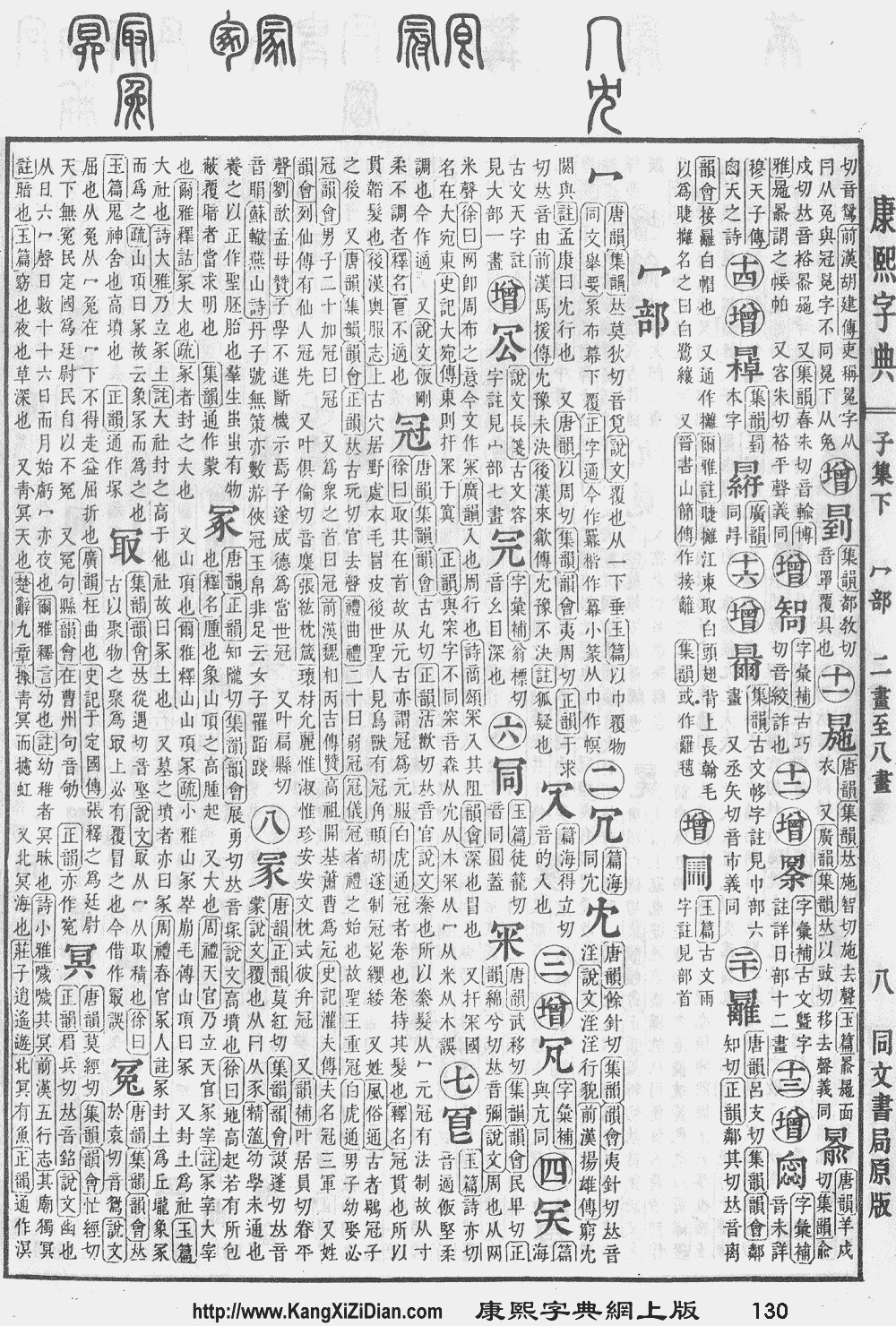
- Kangxi Dictionary: page 130, character 28
- Dai Kanwa Jiten: character 1588
- Dae Jaweon: page 293, character 8
- Hanyu Da Zidian (first edition): volume 1, page 304, character 10
- Unihan data for U+51A5
Chinese
| simp. and trad. |
冥 | |
|---|---|---|
| alternative forms | 𠖇 㝠 暝 | |
Glyph origin
Characters in the same phonetic series (冥) (Zhengzhang, 2003)
Originally ideogrammic compound (會意/会意) : 冖 (“cloth cover”) + 日 (“sun”) + 廾 (“two hands”). The 廾 was later corrupted to 六.
May also be a phono-semantic compound (形聲/形声, OC *meːŋ) : phonetic 冖 (OC *meːɡ) + semantic 日 + semantic 廾 (Shuowen Jiezi).
Etymology
An area word for "night"; Compare Proto-Hmong-Mien *ʰməŋH (“night”), Proto-Bahnaric *maŋ (“night”), Burmese မည်း (many:, “dark; black”) (Schuessler, 2007).
STEDT compares it to Proto-Sino-Tibetan *muːŋ ~ r/s-muːk (“foggy; dark; sullen; menacing; thunder”).
Pronunciation 1
Definitions
冥
Compounds
- 冥佑
- 冥具
- 冥冥 (míngmíng)
- 冥冥中
- 冥冥之中
- 冥加
- 冥司
- 冥器 (míngqì)
- 冥土
- 冥報/冥报
- 冥壽/冥寿
- 冥契
- 冥奧/冥奥
- 冥婚 (mínghūn)
- 冥子裡/冥子里
- 冥寂
- 冥寶/冥宝
- 冥府 (míngfǔ)
- 冥思 (míngsī)
- 冥思苦想 (míngsīkǔxiǎng)
- 冥思苦索 (míngsīkǔsuǒ)
- 冥想 (míngxiǎng)
- 冥搜
- 冥數/冥数
- 冥昧
- 冥會/冥会
- 冥河
- 冥漠
- 冥漠君
- 冥濛/冥蒙
- 冥王 (míngwáng)
- 冥王星 (Míngwángxīng)
- 冥界
- 冥福
- 冥童
- 冥籍
- 冥紙/冥纸
- 冥茫
- 冥蒙
- 冥行
- 冥行擿埴
- 冥衣 (míngyī)
- 冥誕/冥诞 (míngdàn)
- 冥資/冥资
- 冥途 (míngtú)
- 冥鈔/冥钞 (míngchāo)
- 冥錢/冥钱
- 冥鏹/冥镪
- 冥靈/冥灵
- 冥頑/冥顽 (míngwán)
- 冥頑不靈/冥顽不灵 (míngwánbùlíng)
- 冥鴻/冥鸿
- 冥默
- 北冥
- 幽冥 (yōumíng)
- 幽冥地府
- 幽冥戒
- 悄冥冥
- 悄悄冥冥
- 晦冥 (huìmíng)
- 杳冥
- 沉冥
- 混冥
- 渺渺冥冥
- 玄冥
- 穹冥
- 窅冥
- 窈冥
- 窈窈冥冥
- 西冥
- 邈冥冥
- 青冥
- 風雨晦冥/风雨晦冥
- 鴻飛冥冥/鸿飞冥冥
Pronunciation 2
Definitions
冥
- Only used in 顛冥/颠冥.
Pronunciation 3
Definitions
冥
- Only used in 冥眴.
References
- “冥”, in 漢語多功能字庫 (Multi-function Chinese Character Database), 香港中文大學 (the Chinese University of Hong Kong), 2014–
Japanese
Readings
Compounds
dark
- 冥冥 (myōmyō) (溟溟)
- 冥暗, 冥闇 (meian)
- 冥海 (meikai) (溟海)
- 冥晦 (meikai)
- 冥頑 (meigan)
- 冥愚 (meigu)
- 冥契 (meikei)
- 冥鴻 (meikō)
- 冥合 (meigō)
- 冥色 (meishoku) (瞑色)
- 冥棲 (meisei)
- 冥想 (meisō) (瞑想)
- 冥捜 (meisō) (瞑捜)
- 冥漠, 冥邈 (meibaku)
- 冥茫, 冥芒 (meibō)
- 冥昧 (meimai)
- 冥冥 (meimei) (溟溟)
- 冥蒙, 冥濛 (meimō)
- 冥黙 (meimoku)
- 暗冥 (anmei)
- 晦冥 (kaimei) (晦暝)
- 空冥 (kūmei)
- 玄冥 (genmei)
- 高冥 (kōmei)
- 混冥 (konmei) (混溟)
- 紫冥 (shimei)
- 邃冥 (suimei)
- 西冥 (seimei) (西溟)
- 宕冥 (tōmei)
- 南冥 (nanmei) (南溟)
- 北冥 (hokumei) (北溟)
- 幽冥 (yūmei)
- 杳冥 (yōmei)
- 窅冥 (yōmei)
- 窈冥 (yōmei)
world of dead people
other meaning
- 冥応 (myōō)
- 冥恩 (myōon)
- 冥加 (myōga)
- 冥感 (myōkan)
- 冥鑑 (myōkan)
- 冥譴 (myōkan)
- 冥護 (myōgo)
- 冥助 (myōjo)
- 冥利 (myōri)
- 冥慮 (myōryo)
- 冥応 (meiō)
- 冥感 (meikan)
- 冥佑, 冥祐 (meiyū)
- 冥慮 (meiryo)
- 青冥 (seimei)
- 蒼冥 (sōmei)
- 沈冥 (chinmei)
Korean
Vietnamese
This article is issued from Wiktionary. The text is licensed under Creative Commons - Attribution - Sharealike. Additional terms may apply for the media files.