冊
| ||||||||
Translingual
Han character
冊 (Kangxi radical 13, 冂+3, 5 strokes, cangjie input 月廿 (BT) or X月廿 (XBT), four-corner 77440, composition ⿻冂卄 or ⿻𦉫一)
- Shuowen Jiezi radical №44
Derived characters
Related characters
- 册 (Variant form used in simplified Chinese and Vietnamese Nom)
References
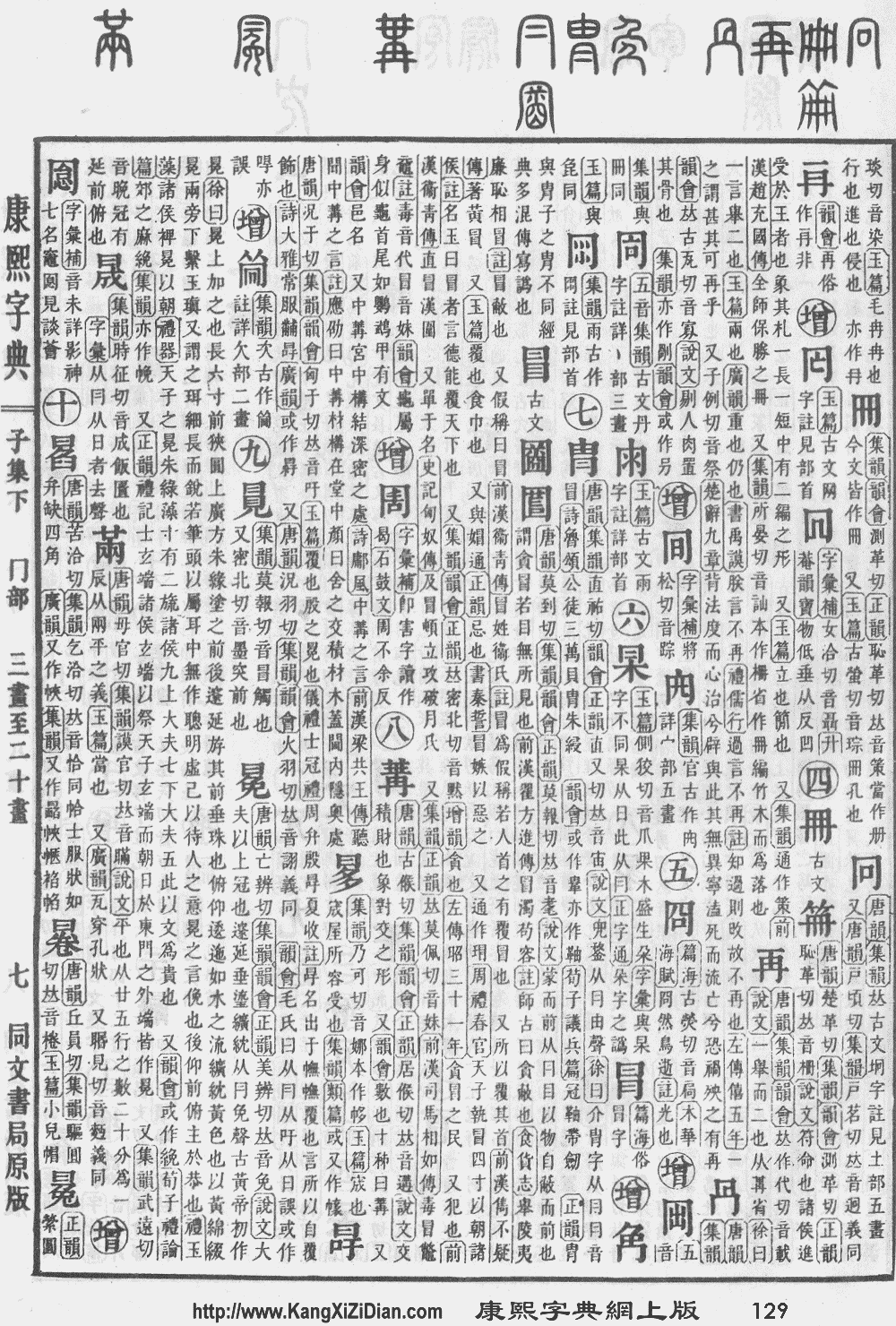
- Kangxi Dictionary: page 129, character 1
- Dai Kanwa Jiten: character 1515
- Dae Jaweon: page 289, character 20
- Hanyu Da Zidian (first edition): volume 1, page 99, character 5
- Unihan data for U+518A
Chinese
Lua error in Module:utilities at line 142: attempt to perform arithmetic on local 'h' (a nil value)
Glyph origin
| Historical forms of the character 冊 | ||||||||||||||||||||||||||||||||||||||||||||||||||||||||||||||||||||||||||||||||||||
|---|---|---|---|---|---|---|---|---|---|---|---|---|---|---|---|---|---|---|---|---|---|---|---|---|---|---|---|---|---|---|---|---|---|---|---|---|---|---|---|---|---|---|---|---|---|---|---|---|---|---|---|---|---|---|---|---|---|---|---|---|---|---|---|---|---|---|---|---|---|---|---|---|---|---|---|---|---|---|---|---|---|---|---|---|
| Shang | Western Zhou | Shuowen Jiezi (compiled in Han) | ||||||||||||||||||||||||||||||||||||||||||||||||||||||||||||||||||||||||||||||||||
| Oracle bone script | Bronze inscriptions | Small seal script | ||||||||||||||||||||||||||||||||||||||||||||||||||||||||||||||||||||||||||||||||||
 |
 |
 | ||||||||||||||||||||||||||||||||||||||||||||||||||||||||||||||||||||||||||||||||||
||
|
References: Mostly from Richard Sears' Chinese Etymology site (authorisation),
| ||||||||||||||||||||||||||||||||||||||||||||||||||||||||||||||||||||||||||||||||||||


Pictogram (象形) – bamboo slips strung together.

Pronunciation
Definitions
冊
Synonyms
Lua error in Module:utilities at line 142: attempt to perform arithmetic on local 'h' (a nil value)
Compounds
- 丁口冊/丁口册
- 人手一冊/人手一册
- 兔園冊/兔园册
- 冊命/册命
- 冊子/册子 (cèzi)
- 冊封/册封 (cèfēng)
- 冊府/册府
- 冊府元龜/册府元龟
- 冊書/册书
- 冊正/册正
- 冊立/册立 (cèlì)
- 冊籍/册籍
- 冊葉/册叶 (cèyè)
- 冊頁/册页 (cèyè)
- 分冊/分册 (fēncè)
- 列冊/列册
- 副冊/副册
- 參考冊/参考册 (chham-khó-chheh) (Min Nan)
- 史冊/史册 (shǐcè)
- 古冊/古册 (kó͘-chheh) (Min Nan)
- 名冊/名册 (míngcè)
- 哀冊/哀册
- 四柱冊/四柱册
- 圖冊/图册 (túcè)
- 小冊子/小册子 (xiǎocèzi)
- 尪仔冊/尪仔册 (ang-á-chheh) (Min Nan)
- 帳冊/帐册
- 底冊/底册
- 手冊/手册 (shǒucè)
- 捐冊/捐册
- 教冊/教册 (kà-chheh) (Min Nan)
- 方冊/方册 (fāngcè)
- 旅遊手冊/旅游手册
- 書冊/书册 (shūcè)
- 樣冊子/样册子
- 檔冊/档册
- 清冊/清册
- 照冊/照册 (Zhàocè)
- 留言冊/留言册
- 畫冊/画册 (huàcè)
- 符冊/符册 (fúcè)
- 簡冊/简册 (jiǎncè)
- 簿冊/簿册 (bùcè)
- 紀念冊/纪念册 (jìniàncè)
- 羊冊/羊册 (Yángcè)
- 花名冊/花名册 (huāmíngcè)
- 註冊/注册 (zhùcè)
- 註冊商標/注册商标 (zhùcè shāngbiāo)
- 讀冊/读册 (tha̍k-chheh) (Min Nan)
- 長冊/长册
- 高文典冊/高文典册
- 高文大冊/高文大册
- 魚鱗圖冊/鱼鳞图册
- 黃冊/黄册
- 點名冊/点名册
Further reading
- “Entry #1322”, in 臺灣閩南語常用詞辭典 [Dictionary of Frequently-Used Taiwan Minnan] (in Chinese and Min Nan), Ministry of Education, R.O.C., 2023.
- “冊”, in 漢語多功能字庫 (Multi-function Chinese Character Database), 香港中文大學 (the Chinese University of Hong Kong), 2014–
Japanese
| Lua error in Module:utilities at line 142: attempt to perform arithmetic on local 'h' (a nil value) | |
| 册 |
Readings
Lua error in Module:utilities at line 142: attempt to perform arithmetic on local 'h' (a nil value)
References
- “冊”, in 漢字ぺディア (Kanjipedia) (in Japanese), 日本漢字能力検定協会, 2015–2024
Korean
Etymology
From Middle Chinese 冊 (MC tsrheak).
| Historical Readings | ||
|---|---|---|
| Dongguk Jeongun Reading | ||
| Dongguk Jeongun, 1448 | ᄎᆡᆨ〮 (Yale: chóyk) | |
| Middle Korean | ||
| Text | Eumhun | |
| Gloss (hun) | Reading | |
| Hunmong Jahoe, 1527 | ᄎᆡᆨ〮 (Yale: chóyk) | ᄎᆡᆨ〮 (Yale: chóyk) |
Pronunciation
- (SK Standard/Seoul) IPA(key): [t͡ɕʰɛk̚] ~ [t͡ɕʰe̞k̚]
- Phonetic hangul: [책/첵]