See also:
U+50B4, 傴
CJK UNIFIED IDEOGRAPH-50B4

[U+50B3]
CJK Unified Ideographs
[U+50B5]

Translingual

Han character

(Kangxi radical 9, +11, 13 strokes, cangjie input 人尸口口 (OSRR), four-corner 21216, composition )

References

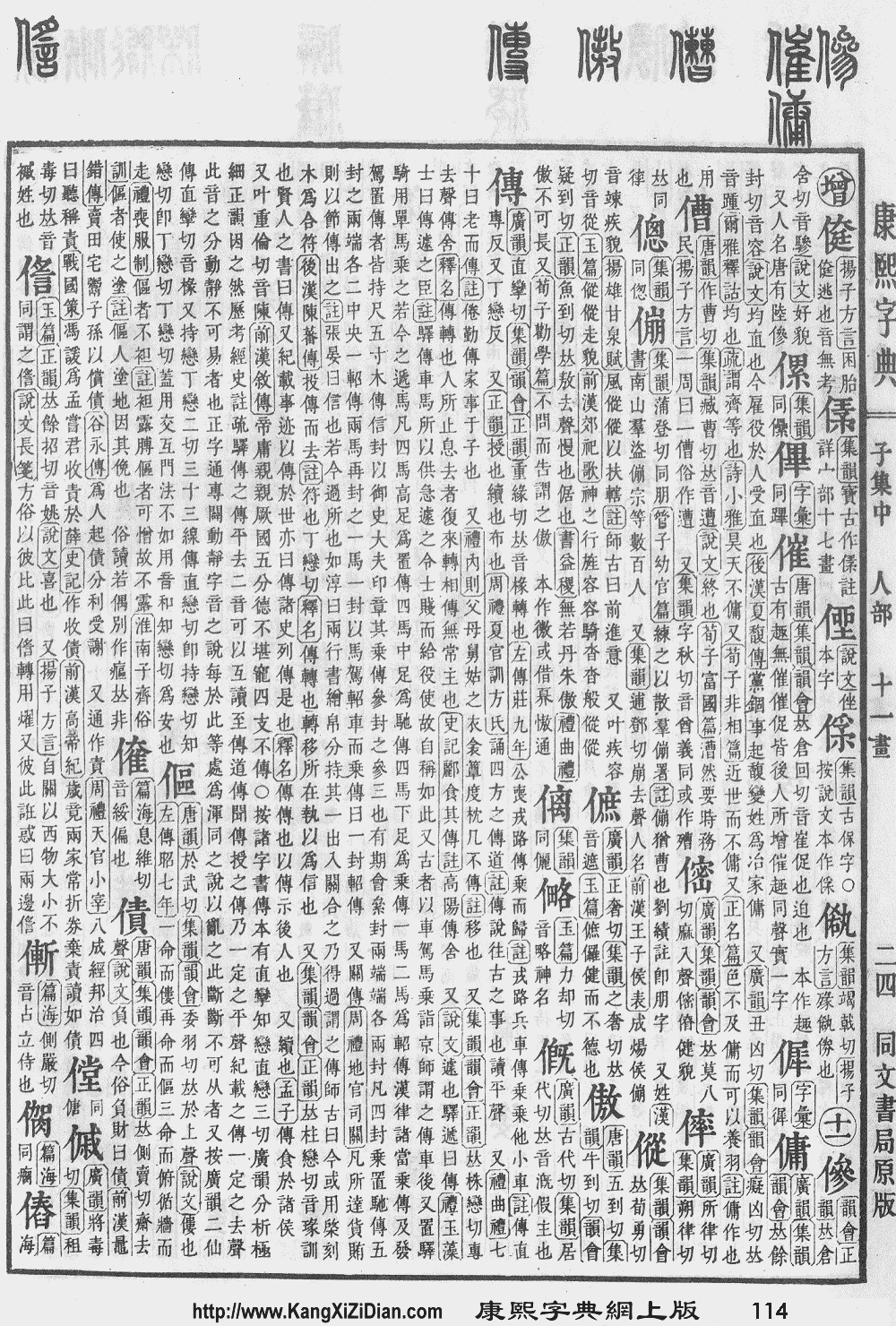
  • Kangxi Dictionary: page 114, character 24
  • Dai Kanwa Jiten: character 1020
  • Dae Jaweon: page 244, character 1
  • Hanyu Da Zidian (first edition): volume 1, page 209, character 4
  • Unihan data for U+50B4

Chinese

Lua error in Module:utilities at line 142: attempt to perform arithmetic on local 'h' (a nil value)

Glyph origin

Historical forms of the character
Shuowen Jiezi (compiled in Han) Liushutong (compiled in Ming)
Small seal script Transcribed ancient scripts


References:

Mostly from Richard Sears' Chinese Etymology site (authorisation),
which in turn draws data from various collections of ancient forms of Chinese characters, including:

  • Shuowen Jiezi (small seal),
  • Jinwen Bian (bronze inscriptions),
  • Liushutong (Liushutong characters) and
  • Yinxu Jiaguwen Bian (oracle bone script).

Pronunciation


Rime
Character
Reading # 1/1
Initial () (34)
Final () (24)
Tone (調) Rising (X)
Openness (開合) Closed
Division () III
Fanqie
Baxter 'juX
Reconstructions
Zhengzhang
Shangfang
/ʔɨoX/
Pan
Wuyun
/ʔioX/
Shao
Rongfen
/ʔioX/
Edwin
Pulleyblank
/ʔuə̆X/
Li
Rong
/ʔioX/
Wang
Li
/ĭuX/
Bernard
Karlgren
/ʔi̯uX/
Expected
Mandarin
Reflex
Expected
Cantonese
Reflex
jyu2
BaxterSagart system 1.1 (2014)
Character
Reading # 1/1
Modern
Beijing
(Pinyin)
Middle
Chinese
‹ ʔjuX ›
Old
Chinese
/*q(r)oʔ/
English humpback

Notes for Old Chinese notations in the Baxter–Sagart system:

* Parentheses "()" indicate uncertain presence;
* Square brackets "[]" indicate uncertain identity, e.g. *[t] as coda may in fact be *-t or *-p;
* Angle brackets "<>" indicate infix;
* Hyphen "-" indicates morpheme boundary;

* Period "." indicates syllable boundary.
Zhengzhang system (2003)
Character
Reading # 1/1
No. 10614
Phonetic
component
Rime
group
Rime
subdivision
0
Corresponding
MC rime
Old
Chinese
/*qoʔ/

Definitions

  1. humpback
  2. to stoop; to bend down

Compounds

  • 傴傴伛伛
  • 傴僂伛偻 (yǔlǚ)
  • 傴兜伛兜
  • 傴拊伛拊
  • 蹇傴蹇伛

Japanese

Kanji

(uncommon “Hyōgai” kanji)

  1. to stoop, to bow

Readings

  • Lua error in Module:utilities at line 142: attempt to perform arithmetic on local 'h' (a nil value)

Korean

Hanja

• (gu) (hangeul , revised gu, McCuneReischauer ku)

  1. This term needs a translation to English. Please help out and add a translation, then remove the text {{rfdef}}.
This article is issued from Wiktionary. The text is licensed under Creative Commons - Attribution - Sharealike. Additional terms may apply for the media files.