amẽaçar
See also: ameaçar
Old Galician-Portuguese
Etymology
From a- + mẽaça (“threat”) + -ar, or from a hypothetical Vulgar Latin *admināciāre (“to threaten”) < *mināciāre (“threaten”), from minācia (“threat”), from Latin mināx, mināciae.
Pronunciation
- IPA(key): /a.mẽ.a.ˈt͡saɾ/
Verb
amẽaçar
- to threaten
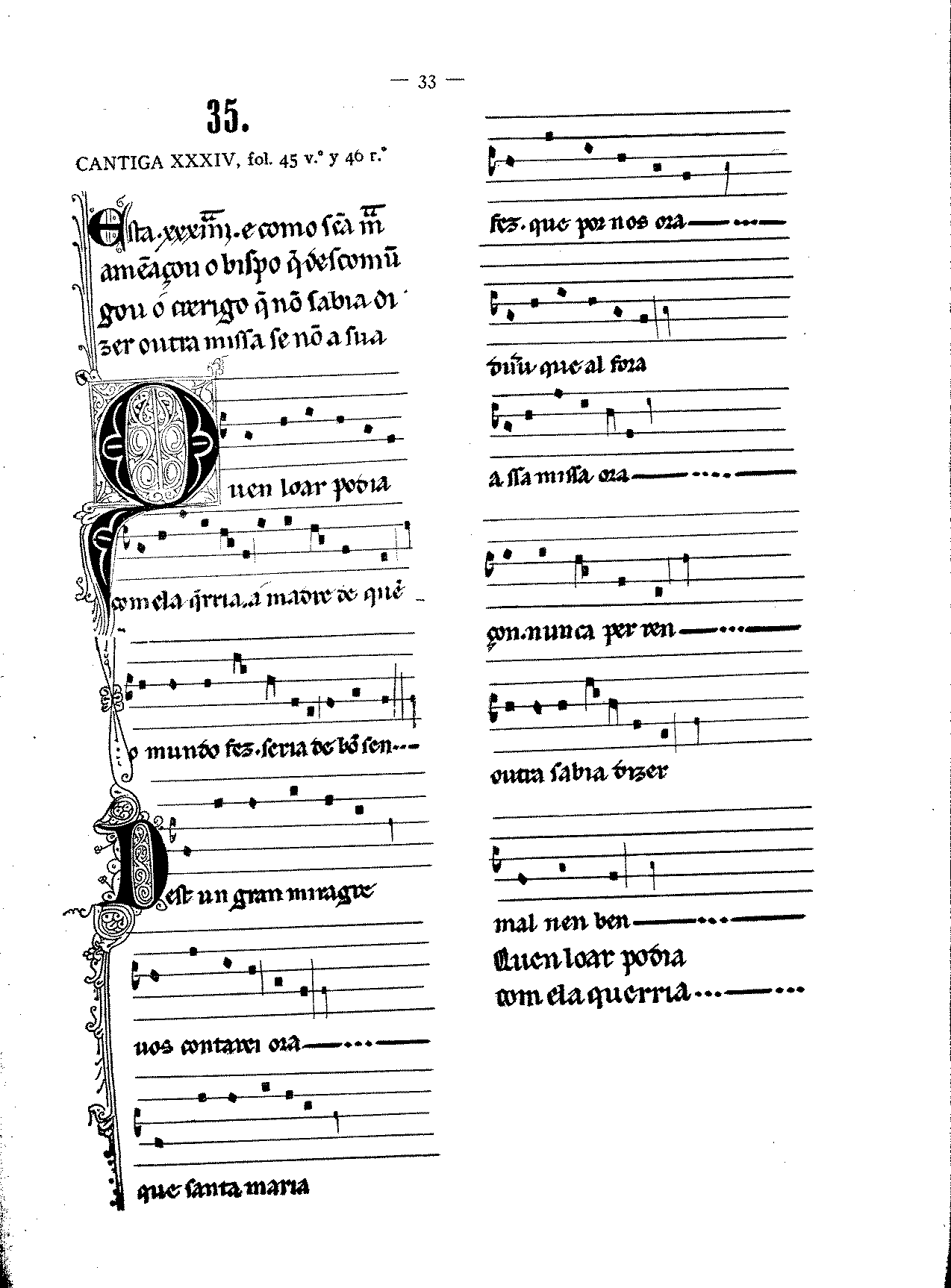
- 13th century CE, Alfonso X of Castile, Cantigas de Santa Maria, To codex, cantiga 32 (facsimile):
- Eſta xxxiiijª. e como ſ(ant)a m(aria) amẽaçou o biſpo que deſcomũgou ó crerigo
- This thirty-fourth song tells how Saint Mary threatened the bishop who excommunicated the priest
Conjugation
Conjugation of amẽaçar
Note: Forms marked with an asterisk (*), if any, are unattested forms that are presumed to have existed verbally and were conjugated according to the Old Galician-Portuguese conjugation system. | |||||||||
| infinitive | amẽaçar | ||||||||
|---|---|---|---|---|---|---|---|---|---|
| gerund | amẽaçando | ||||||||
| past participle | singular | plural | |||||||
| masculine | amẽaçado | amẽaçada | |||||||
| feminine | amẽaçados | amẽaçadas | |||||||
| person | singular | plural | |||||||
| first | second | third | first | second | third | ||||
| indicative mood | eu | tu | el~ele ela vossa mercee |
nós nós outros nós outras |
vós vós outros vós outras |
eles elas | |||
| simple tenses |
present | amẽaço | amẽaças | amẽaça | amẽaçamos | amẽaçades | amẽaçam1, amẽaçan2 | ||
| imperfect | amẽaçava | amẽaçavas | amẽaçava | amẽaçavamos | amẽaçavades | amẽaçavam1, amẽaçavan2 | |||
| preterite | amẽacei | amẽaçaste1, amẽaçasche2 | amẽaçou | amẽaçamos | amẽaçastes | amẽaçarom1, amẽaçaron2 | |||
| pluperfect | amẽaçara | amẽaçaras | amẽaçara | amẽaçaramos | amẽaçarades | amẽaçaram1, amẽaçaran2 | |||
| future | amẽaçarei | amẽaçarás | amẽaçará | amẽaçaremos | amẽaçaredes | amẽaçarám1, amẽaçarán2 | |||
| conditional | amẽaçaría | amẽaçarías | amẽaçaría | amẽaçariamos | amẽaçariades | amẽaçaríam1, amẽaçarían2 | |||
| compound tenses |
present perfect | present of haver3 or tẽer4 + past participle | |||||||
| present imperfect | imperfect of haver3 or tẽer4 + past participle | ||||||||
| past anterior | preterite of haver3 or tẽer4 + past participle | ||||||||
| pluperfect | simple pluperfect of haver3 or tẽer4 + past participle | ||||||||
| future perfect | future of haver3 or tẽer4 + past participle | ||||||||
| conditional perfect | conditional of haver3 or tẽer4 + past participle | ||||||||
| subjunctive mood | eu | tu | el~ele ela vossa mercee |
nós nós outros nós outras |
vós vós outros vós outras |
eles elas | |||
| simple tenses |
present | amẽace | amẽaces | amẽace | amẽacemos | amẽacedes | amẽacem1, amẽacen2 | ||
| preterite | amẽaçasse | amẽaçasses | amẽaçasse | amẽaçassemos | amẽaçassedes | amẽaçassem1, amẽaçassen2 | |||
| future | Lua error in Module:utilities at line 142: attempt to perform arithmetic on local 'h' (a nil value) | amẽaçares | Lua error in Module:utilities at line 142: attempt to perform arithmetic on local 'h' (a nil value) | amẽaçarmos | amẽaçardes | amẽaçarem1, amẽaçaren2 | |||
| compound tenses |
present perfect | present subjunctive of haver3 or tẽer4 + past participle | |||||||
| pluperfect | preterite subjunctive of haver3 or tẽer4 + past participle | ||||||||
| perfect future | future subjunctive of haver3 or tẽer4 + past participle | ||||||||
| imperative mood | — | tu | vossa mercee | nós nós outros nós outras |
vós vós outros vós outras |
— | |||
| affirmative | — | amẽaça | amẽace | amẽacemos | amẽaçade | — | |||
| negative | — | nunca non amẽaces | nunca non amẽace | nunca non amẽacemos | nunca non amẽacedes | — | |||
| personal infinitive | eu | tu | el~ele ela vossa mercee |
nós nós outros nós outras |
vós vós outros vós outras |
eles elas | |||
| Lua error in Module:utilities at line 142: attempt to perform arithmetic on local 'h' (a nil value) | amẽaçares | Lua error in Module:utilities at line 142: attempt to perform arithmetic on local 'h' (a nil value) | amẽaçarmos | amẽaçardes | amẽacarem1, amẽacaren2 | ||||
|
1 Less common in Galicia 2 Less common in Portugal 3 Its alternative form aver can be used as well. 4 Teer and ter were used too, though all 3 were less common than forms of "haver". | |||||||||
This article is issued from Wiktionary. The text is licensed under Creative Commons - Attribution - Sharealike. Additional terms may apply for the media files.