鸛
| ||||||||
Translingual
Han character
鸛 (Kangxi radical 196, 鳥+18, 29 strokes, cangjie input 廿土竹日火 (TGHAF), four-corner 47227, composition ⿰雚鳥)
References
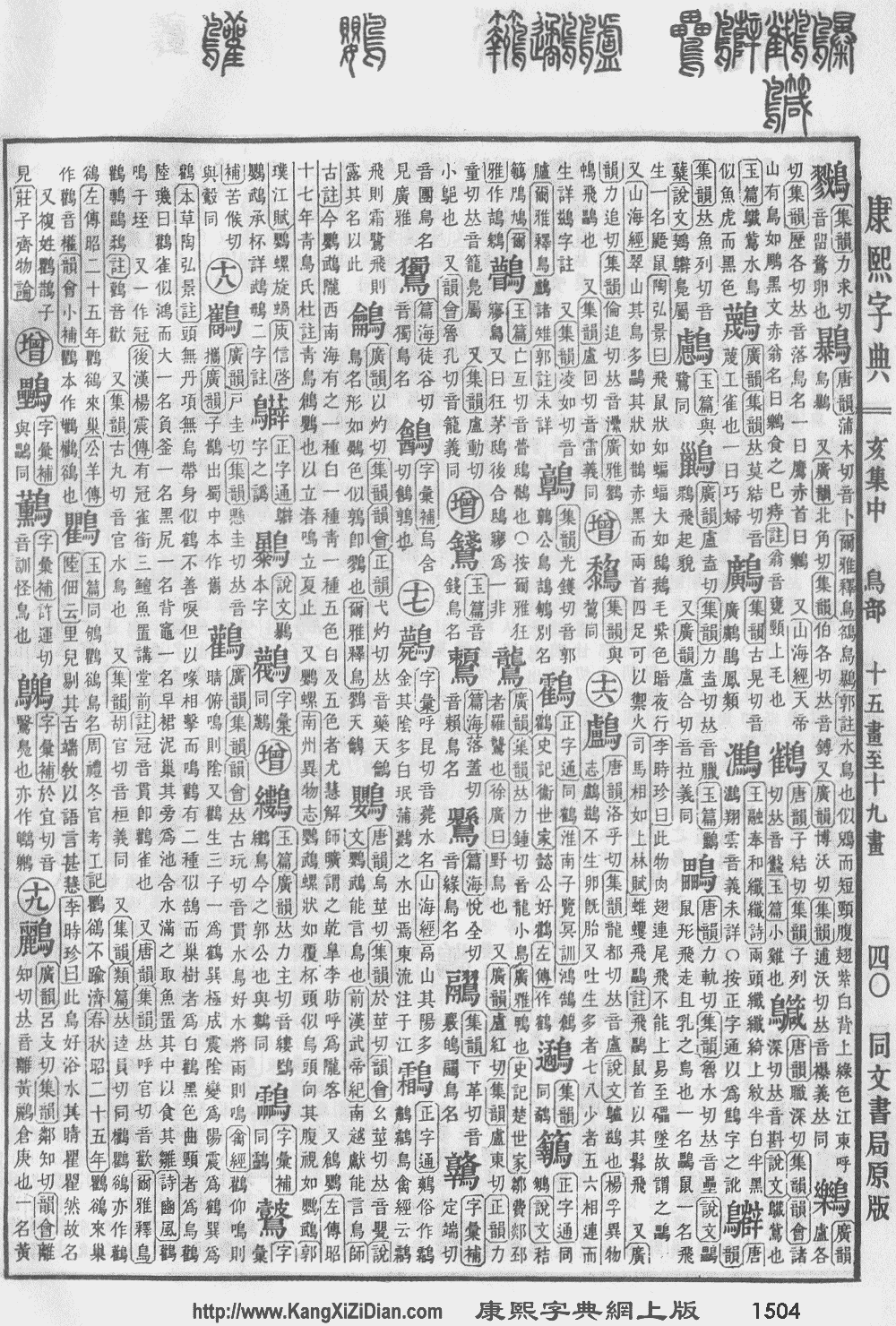
- Kangxi Dictionary: page 1504, character 39
- Dai Kanwa Jiten: character 47500
- Dae Jaweon: page 2034, character 11
- Hanyu Da Zidian (first edition): volume 7, page 4670, character 22
- Unihan data for U+9E1B
Chinese
Lua error in Module:utilities at line 142: attempt to perform arithmetic on local 'h' (a nil value)
Glyph origin
Phono-semantic compound (形聲/形声, OC *koːns) : phonetic 雚 (OC *koːns, “stork”) + semantic 鳥 (“bird”). Originally written 雚.
Pronunciation
Japanese
Readings
Lua error in Module:utilities at line 142: attempt to perform arithmetic on local 'h' (a nil value)
Etymology 1

| Kanji in this term |
|---|
| 鸛 |
| こうのとり Hyōgaiji |
| kun’yomi |
Compound of Lua error in Module:utilities at line 142: attempt to perform arithmetic on local 'h' (a nil value).
Pronunciation
Noun
鸛 • (kōnotori) ←こふのとり (kofunotori)?
- the Oriental stork, Ciconia boyciana
- Synonym: 鸛鶴 (kōzuru)
- (by extension) any stork
Usage notes
As with many terms that name organisms, this term is often spelled in katakana, especially in biological contexts (where katakana is customary), as コウノトリ.
Noun
As with many terms that name organisms, this term is often spelled in katakana, especially in biological contexts (where katakana is customary), as コウ.
Derived terms
- 鸛鶴 (kōzuru)
- 青嘴鸛 (aohashikō, “white-bellied stork”)
- 朱嘴鸛 (akahashikō)
- 燕尾鸛 (enbikō, “maguari stork”)
- 鞍嘴鸛 (kurahashikō)
- 朱嘴鸛 (shubashikō, “white stork”)
- 白襟鸛 (shiroerikō, “wooy-necked stork”)
- 朱鷺鸛 (tokikō)
- 鍋鸛 (nabekō, “black stork”)
- 禿鸛 (hagekō)
- 嘴広鸛 (hashibirokō, “shoebill”)