鶲
| ||||||||
Translingual
Han character
鶲 (Kangxi radical 196, 鳥+10, 21 strokes, cangjie input 金一竹日火 (CMHAF), four-corner 87127, composition ⿰翁鳥)
References
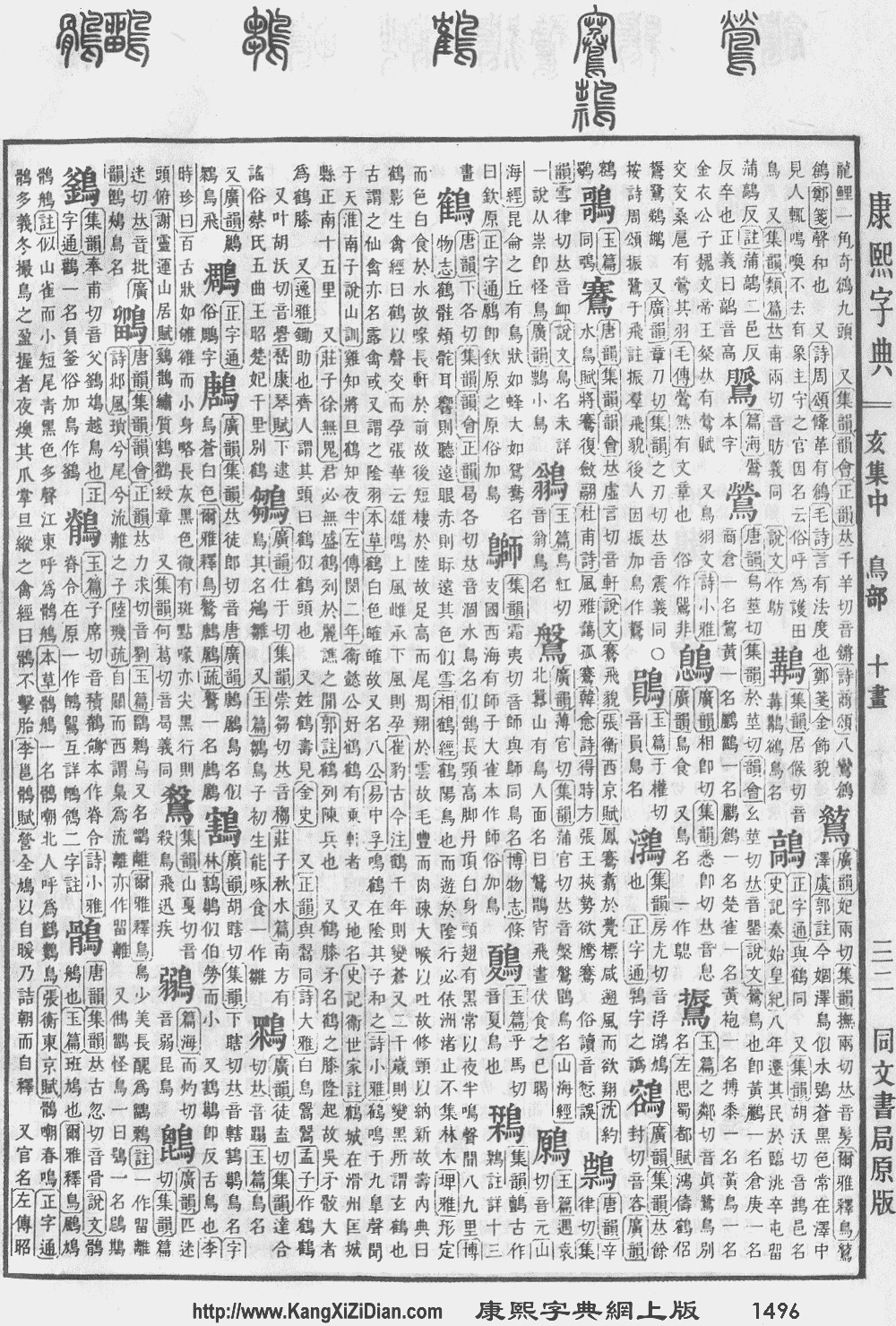
- Kangxi Dictionary: page 1496, character 14
- Dai Kanwa Jiten: character 47179
- Dae Jaweon: page 2026, character 7
- Hanyu Da Zidian (first edition): volume 7, page 4652, character 2
- Unihan data for U+9DB2
Chinese
Lua error in Module:utilities at line 142: attempt to perform arithmetic on local 'h' (a nil value)
Glyph origin
Phono-semantic compound (形聲/形声) : phonetic 翁 (OC *qloːŋ) + semantic 鳥
Pronunciation
Japanese
Alternative forms
- 火焼
Readings
Lua error in Module:utilities at line 142: attempt to perform arithmetic on local 'h' (a nil value)
Etymology
| Kanji in this term |
|---|
| 鶲 |
| ひたき Hyōgaiji |
| kun’yomi |
Referred originally just to the 尉鶲 (jō bitaki, “Phoenicurus auroreus or Daurian redstart”), later came to refer to a number of visually similar species.
Likely a shift from 火焚き (hitaki, “lighting a fire”), from the characteristic call of the bird, which resembles the sound of striking a flint against a firestarter.[1][2][3]
Usage notes
As with many terms that name organisms, this term is often spelled in katakana, especially in biological contexts (where katakana is customary), as ヒタキ.
References
- 2006, 大辞林 (Daijirin), Third Edition (in Japanese), Tōkyō: Sanseidō, →ISBN
- 1995, 大辞泉 (Daijisen) (in Japanese), Tōkyō: Shogakukan, →ISBN
- 1988, 国語大辞典(新装版) (Kokugo Dai Jiten, Revised Edition) (in Japanese), Tōkyō: Shogakukan