鰯
| ||||||||
Translingual
| Stroke order | |||
|---|---|---|---|
 | |||
Han character
鰯 (Kangxi radical 195, 魚+10, 21 strokes, cangjie input 弓火弓一一 (NFNMM), composition ⿰魚弱)
References
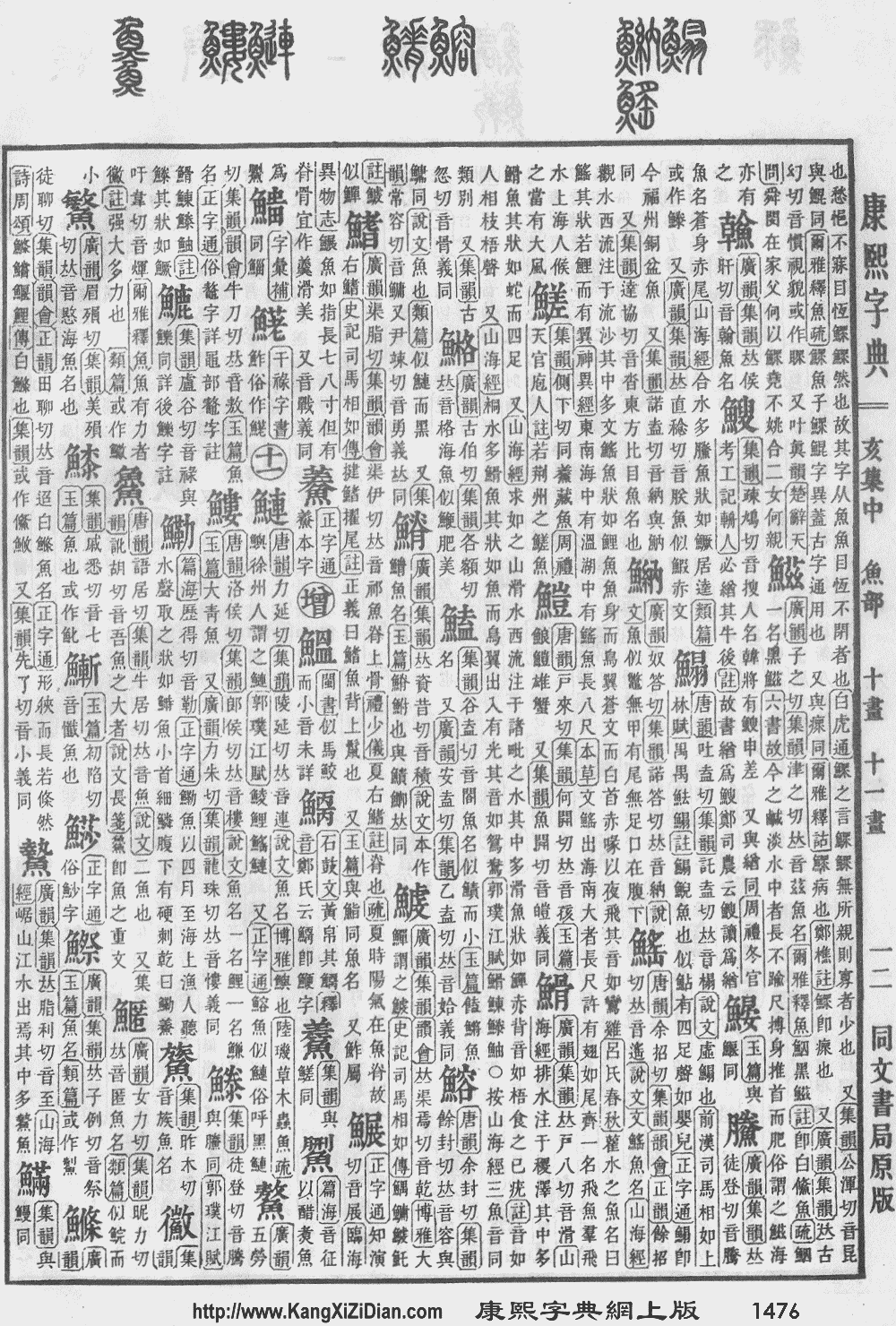
- Kangxi Dictionary: not present, would follow page 1476, character 25
- Dai Kanwa Jiten: character 46413
- Hanyu Da Zidian (first edition): volume 7, page 4708, character 9
- Unihan data for U+9C2F
Chinese
| trad. | 鰯 | |
|---|---|---|
| simp. | 𱈍 | |
Glyph origin
魚 (“fish”) + 弱 – sardine, A Japanese kokuji coined phono-semanically (弱し yowashi) in the Nara period.
Pronunciation
References
Japanese

Etymology
From Old Japanese.[1] Attested in a mokkan dated around 756.[1]
Seemingly connected to 弱し (yowashi, “weak”, modern 弱い (yowai)), from the way that the fish quickly dies.[1] However, the pitch accents mismatch; the Heian period accent for iwashi is <HHH>,[1] contradicting to the accent of yowashi, which has <LLF> in the Heian period.[2]
Noun
鰯 • (iwashi)
- [from 756] a pilchard (especially a Japanese pilchard) (Sardinops melanostictus)
- 1648, Minamoto no Shitagō, Wamyō Ruijushō, volume 8:
- 鰯 楊氏漢語抄云鰯〈伊和之 今案本文未詳〉
- Pilchard: [Part of the] Willow Family. 鰯 is [also] in the Kangoshō. ([read] iwasi; currently, records of it's origin are unknown)
- [unknown] Japanese sardine
- [from 1747] an uncut sword
- [from c. 1310] on the night of the Setsubun, a pilchard is placed at the entrance along with a 柊 (hīragi, “Osmanthus heterophyllus”) to ward off evil spirits
- [from 1892] (slang, used by criminals) a prison guard
Descendants
- Russian: иваси́ f (ivasí)
References
- “いわし 【鰯・鰮】”, in 日本国語大辞典 (Nihon Kokugo Daijiten, “Nihon Kokugo Daijiten”)
 (in Japanese), 2nd edition, Tōkyō: Shogakukan, 2000, released online 2007, →ISBN, concise edition entry available here (Note: Dialectal meanings, etymological theories, pronunciation including modern, dialectal, and historical information, Jōdai Tokushu Kanazukai, historical dictionaries containing this word, and the kanji spellings in those dictionaries have been omitted.)
 - “よわ・い 【弱】”, in 日本国語大辞典 (Nihon Kokugo Daijiten, “Nihon Kokugo Daijiten”) (in Japanese), 2nd edition, Tōkyō: Shogakukan, 2000, released online 2007, →ISBN, concise edition entry available here (Note: Dialectal meanings, etymological theories, pronunciation including modern, dialectal, and historical information, Jōdai Tokushu Kanazukai, historical dictionaries containing this word, and the kanji spellings in those dictionaries have been omitted.)
- 2006, 大辞林 (Daijirin), Third Edition (in Japanese), Tōkyō: Sanseidō, →ISBN
- 1974, 新明解国語辞典 (Shin Meikai Kokugo Jiten), Second Edition (in Japanese), Tōkyō: Sanseidō
- 1998, NHK日本語発音アクセント辞典 (NHK Japanese Pronunciation Accent Dictionary) (in Japanese), Tōkyō: NHK, →ISBN
Korean
Hanja
鰯 • (yak) (hangeul 약, revised yak, McCune–Reischauer yak, Yale yak)
- This term needs a translation to English. Please help out and add a translation, then remove the text
{{rfdef}}.
Northern Amami-Oshima
Pronunciation
- IPA(key): [ʔiwaɕi]
References
- Osada, Suma; Suyama, Nahoko (1977) 奄美方言分類辞典上巻 [Dictionary of Amami Dialect on Semantic Principles: Volume 1], Tokyo: Kasama Shoin, page 857
- Osada, Suma; Suyama, Nahoko; Fujii, Misako (1980) 奄美方言分類辞典下巻 [Dictionary of Amami Dialect on Semantic Principles: Volume 2], Tokyo: Kasama Shoin
Old Japanese
Etymology
Seemingly connected to 弱し (yo1wasi, “weak”), from the way that the fish quickly dies.[1] However, the pitch accents mismatch; the Heian period accent for iwashi is <HHH>,[1] contradicting to the accent of yowashi, which has <LLF> in the Heian period.[2]
References
- “いわし 【鰯・鰮】”, in 日本国語大辞典 (Nihon Kokugo Daijiten, “Nihon Kokugo Daijiten”) (in Japanese), 2nd edition, Tōkyō: Shogakukan, 2000, released online 2007, →ISBN, concise edition entry available here (Note: Dialectal meanings, etymological theories, pronunciation including modern, dialectal, and historical information, Jōdai Tokushu Kanazukai, historical dictionaries containing this word, and the kanji spellings in those dictionaries have been omitted.)
- “よわ・い 【弱】”, in 日本国語大辞典 (Nihon Kokugo Daijiten, “Nihon Kokugo Daijiten”) (in Japanese), 2nd edition, Tōkyō: Shogakukan, 2000, released online 2007, →ISBN, concise edition entry available here (Note: Dialectal meanings, etymological theories, pronunciation including modern, dialectal, and historical information, Jōdai Tokushu Kanazukai, historical dictionaries containing this word, and the kanji spellings in those dictionaries have been omitted.)