静
See also: 靜
| ||||||||
Translingual
| Stroke order | |||
|---|---|---|---|
 | |||
Han character
静 (Kangxi radical 174, 靑+6, 14 strokes, cangjie input 手月弓尸木 (QBNSD), composition ⿰青争)
Derived characters
References
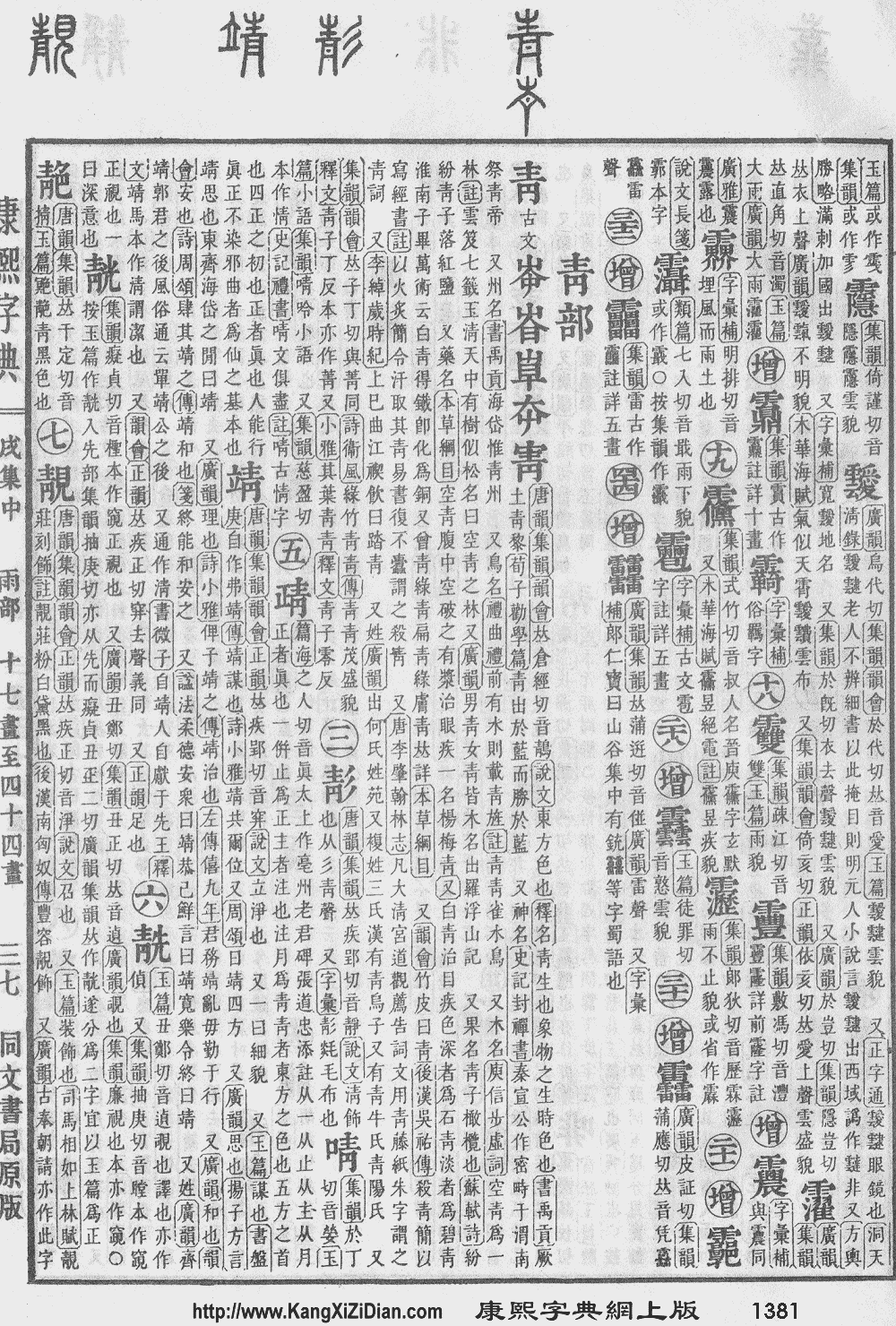
- Kangxi Dictionary: not present, would follow page 1381, character 31
- Dai Kanwa Jiten: character 42574
- Dae Jaweon: page 1893, character 9
- Hanyu Da Zidian (first edition): volume 6, page 4047, character 3
- Unihan data for U+9759
Chinese
Lua error in Module:utilities at line 142: attempt to perform arithmetic on local 'h' (a nil value)
Japanese
| Lua error in Module:utilities at line 142: attempt to perform arithmetic on local 'h' (a nil value) | |
| 靜 |
Readings
Lua error in Module:utilities at line 142: attempt to perform arithmetic on local 'h' (a nil value)
Compounds
Etymology 1
| Kanji in this term |
|---|
| 静 |
| せい Grade: 4 |
| kan’on |
| Alternative spelling |
|---|
| 靜 (kyūjitai) |
From Middle Chinese 靜 (MC dzjengX). The kan'on, so a later borrowing than the jō reading.
First attested as a standalone noun in a text from 1648.[1]
Derived terms
Etymology 2
| Kanji in this term |
|---|
| 静 |
| じょう Grade: 4 |
| goon |
| Alternative spelling |
|---|
| 靜 (kyūjitai) |
/d͡ʑʲau/ → /d͡ʑɔː/ → /d͡ʑoː/
From Middle Chinese 靜 (MC dzjengX). The goon, so an earlier borrowing than the sei reading.
First attested as a standalone noun in a text from roughly 1216.[1]
Pronunciation
- IPA(key): [d͡ʑo̞ː]
Noun
- [from roughly 1216] (Buddhism) equanimity, upekkhā, a state untroubled by attachment or aversion
References
- “静”, in 日本国語大辞典 (Nihon Kokugo Daijiten, “Nihon Kokugo Daijiten”) (in Japanese), concise edition, Tōkyō: Shogakukan, 2000
- 2006, 大辞林 (Daijirin), Third Edition (in Japanese), Tōkyō: Sanseidō, →ISBN
This article is issued from Wiktionary. The text is licensed under Creative Commons - Attribution - Sharealike. Additional terms may apply for the media files.