鑄
| ||||||||
Translingual
| Traditional | Lua error in Module:utilities at line 142: attempt to perform arithmetic on local 'h' (a nil value) |
|---|---|
| Shinjitai | 鋳 |
| Simplified | 铸 |
Han character
鑄 (Kangxi radical 167, 金+14, 22 strokes, cangjie input 金土弓戈 (CGNI), four-corner 84141, composition ⿰釒壽)
References
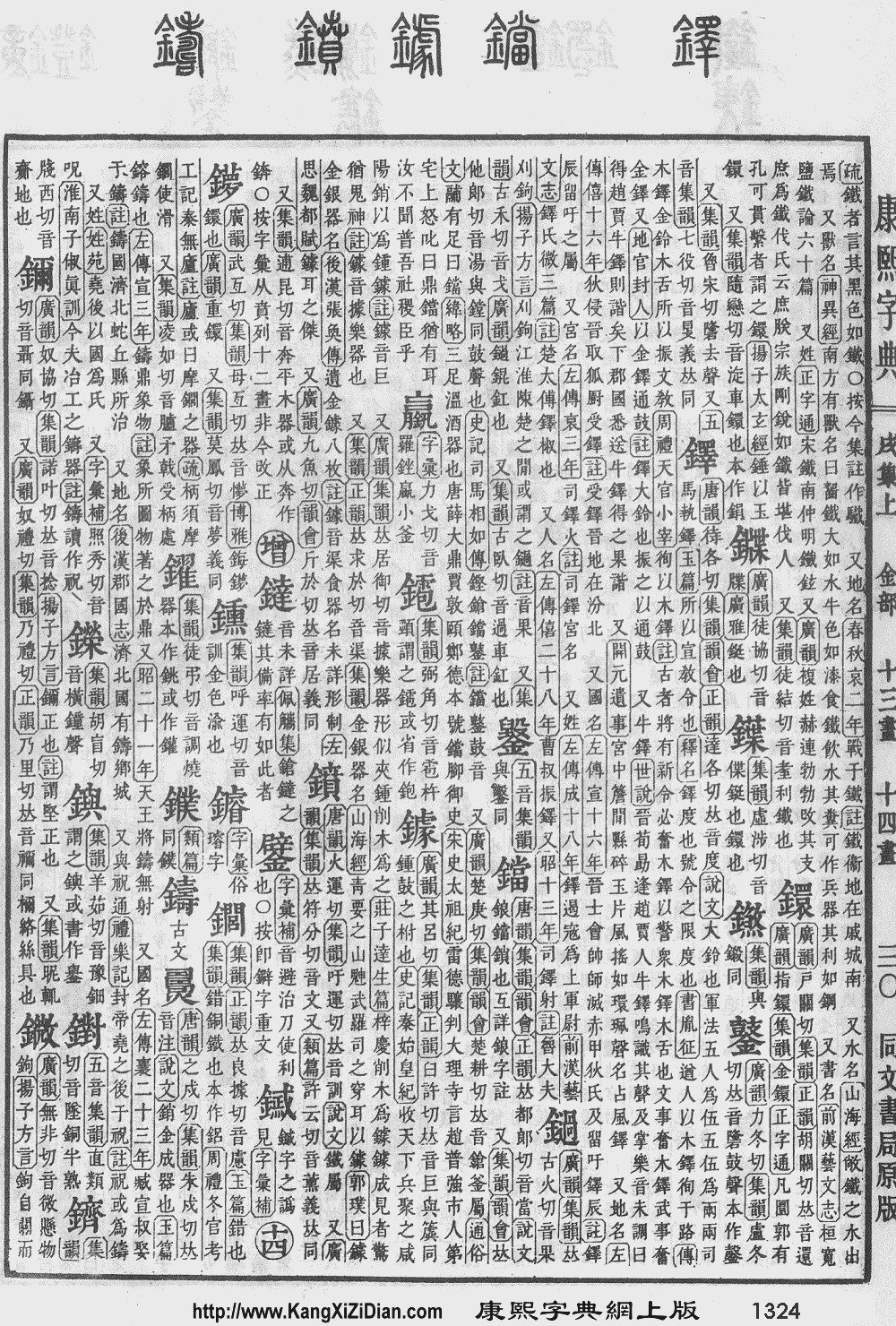
- Kangxi Dictionary: page 1324, character 23
- Dai Kanwa Jiten: character 40972
- Dae Jaweon: page 1825, character 23
- Hanyu Da Zidian (first edition): volume 6, page 4266, character 7
- Unihan data for U+9444
Chinese
Lua error in Module:utilities at line 142: attempt to perform arithmetic on local 'h' (a nil value)
Glyph origin
| Historical forms of the character 鑄 | ||
|---|---|---|
| Western Zhou | Spring and Autumn | Warring States |
| Bronze inscriptions | Bronze inscriptions | Qin slip script |
 |
 |
 |
Phono-semantic compound (形聲/形声, OC *tjos) : semantic 金 (“metal”) + phonetic 壽 (OC *djuʔ, *djus). Historically, the glyph forms for this character used to be highly composite, with combinations of various ideogrammic (會意/会意) components, including 皿 (“container, crucible, or mould”), 火 (“fire”), 寸 (“hand”), or 𦦡 = 𦥑 (“two hands”) + 鬲 (“cauldron, container”), etc., indicating metal-casting. The phonetic value were signified by the optional component 𠃬, which also appeared in 壽 (OC *djuʔ, *djus).
Pronunciation
Definitions
鑄
Japanese
| 鋳 | |
| Lua error in Module:utilities at line 142: attempt to perform arithmetic on local 'h' (a nil value) |
Kanji
(“Jinmeiyō” kanji used for names, kyūjitai kanji, shinjitai form 鋳)
- This term needs a translation to English. Please help out and add a translation, then remove the text
{{rfdef}}.
Korean
Hanja
鑄 • (ju) (hangeul 주)
- This term needs a translation to English. Please help out and add a translation, then remove the text
{{rfdef}}.