藤
See also: 籐
| ||||||||
Translingual
Han character
藤 (Kangxi radical 140, 艸+15, 19 strokes in traditional Chinese and Korean, 18 strokes in mainland China and Japanese, cangjie input 廿月火水 (TBFE), four-corner 44232, composition ⿱艹滕)
References
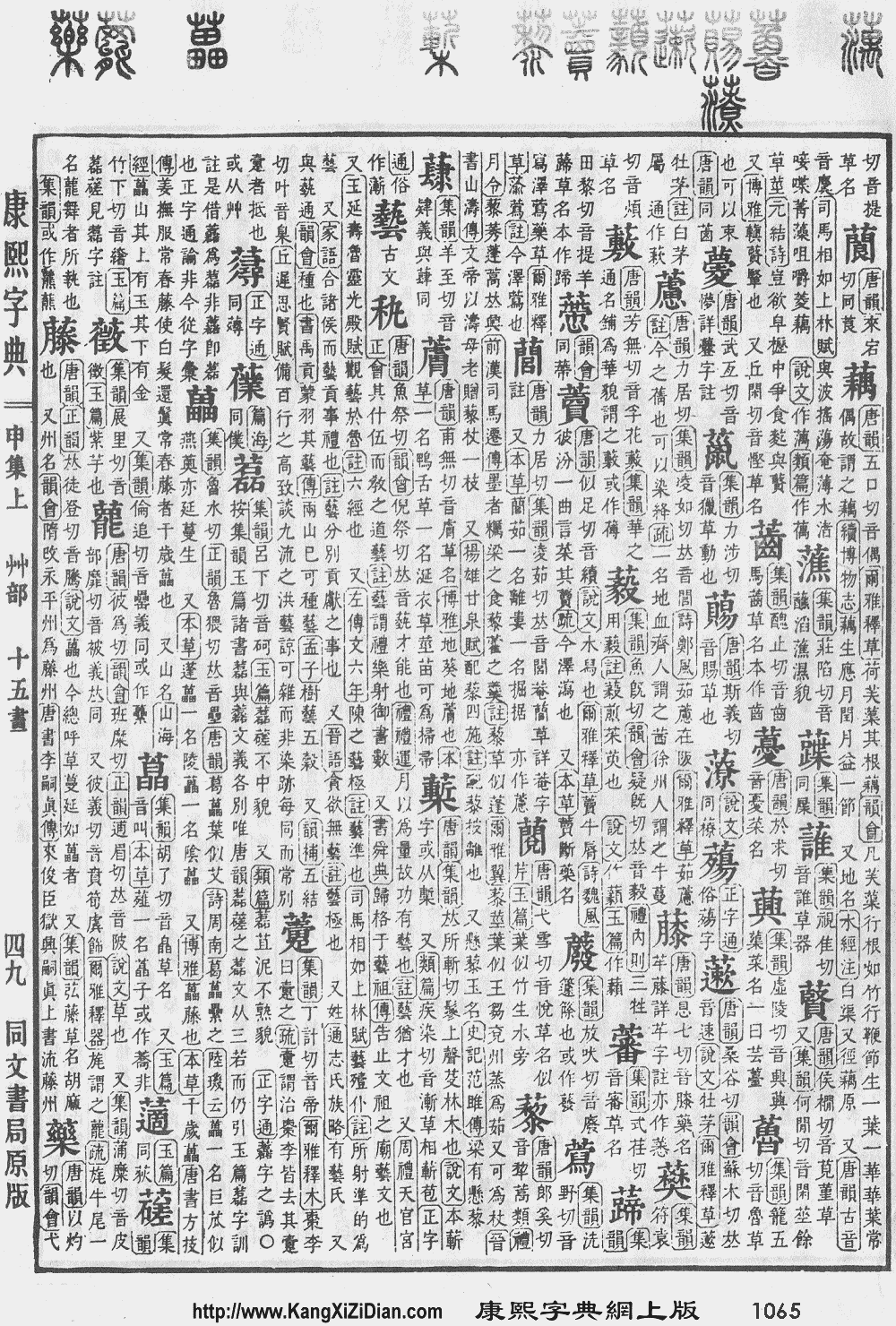
- Kangxi Dictionary: page 1065, character 46
- Dai Kanwa Jiten: character 32340
- Dae Jaweon: page 1531, character 5
- Hanyu Da Zidian (first edition): volume 5, page 3321, character 5
- Unihan data for U+85E4
Chinese
| trad. | 藤/籐 | |
|---|---|---|
| simp. | 藤 | |
| 2nd round simp. | ⿱龹小 | |
| alternative forms | 𣳾 2nd round simp. (1981) | |
Glyph origin
Characters in the same phonetic series (朕) (Zhengzhang, 2003)
Phono-semantic compound (形聲/形声, OC *l'ɯːŋ) : semantic 艸 (“grass”) + phonetic 滕 (OC *l'ɯːŋ) – a type of plant.
Pronunciation
Compounds
- 一枝藤
- 一條藤兒/一条藤儿
- 丁公藤
- 交藤
- 剡溪藤
- 剡藤
- 壽藤/寿藤
- 寒藤
- 常春藤 (chángchūnténg)
- 引藤
- 扳藤附葛
- 抽藤條/抽藤条
- 攀藤攬葛/攀藤揽葛
- 攀藤附葛
- 斑珠藤
- 月支藤
- 朱藤
- 朱藤杖
- 枯藤
- 枯藤杖
- 桃柳藤
- 榼藤
- 死藤 (sǐténg)
- 死藤水 (sǐténgshuǐ)
- 毦藤
- 沒根藤/没根藤
- 溪藤
- 烏藤/乌藤
- 牋藤/笺藤
- 牽絲扳藤/牵丝扳藤
- 牽絲攀藤/牵丝攀藤
- 瓔珞藤/璎珞藤
- 瓜藤 (guāténg)
- 白藤 (báiténg)
- 科藤
- 簡子藤/简子藤
- 紅葡萄藤/红葡萄藤
- 紅藤/红藤 (hóngténg)
- 紫藤 (zǐténg)
- 胡孫藤/胡孙藤
- 胡蔓藤
- 草藤
- 萪藤
- 葛藤 (géténg)
- 蔞藤/蒌藤
- 蔓藤 (mànténg)
- 藤壺/藤壶 (ténghú)
- 藤子
- 藤實杯/藤实杯
- 藤攀葛繞/藤攀葛绕
- 藤本植物
- 藤杖
- 藤杯
- 藤架
- 藤校 (téngxiào)
- 藤條/藤条 (téngtiáo)
- 藤椅 (téngyǐ)
- 藤牌 (téngpái)
- 藤球 (téngqiú)
- 藤球運動/藤球运动
- 藤田 (Téngtián)
- 藤紙/藤纸
- 藤縣/藤县 (Téngxiàn)
- 藤纏/藤缠
- 藤菜 (téngcài)
- 藤蔓
- 藤蘿/藤萝 (téngluó)
- 藤角紙/藤角纸
- 藤輪/藤轮
- 藤黃/藤黄
- 蚺蛇藤
- 蟠藤親眷/蟠藤亲眷
- 蠻藤/蛮藤
- 詭負葛藤/诡负葛藤
- 諾藤/诺藤
- 豆藤
- 赤藤
- 越藤
- 通關藤/通关藤
- 酒杯藤
- 酸藤
- 釣藤/钓藤
- 鉤藤/钩藤 (gōuténg)
- 鍾藤/钟藤
- 陰藤/阴藤
- 雞屎藤/鸡屎藤
- 雪藤
- 雷公藤
- 順藤摸瓜/顺藤摸瓜 (shùnténgmōguā)
- 馬鞍藤/马鞍藤
- 魚藤/鱼藤
- 鴛鴦藤/鸳鸯藤
- 鷺鷥藤/鹭鸶藤
- 黃藤/黄藤
Japanese
| Shinjitai | 藤 | |
| Kyūjitai [1][2] |
藤󠄃 藤+ 󠄃?(Hanyo-Denshi) (Moji_Joho) |
 |
| 藤󠄇 藤+ 󠄇?(Hanyo-Denshi) |
 | |
| The displayed kanji may be different from the image due to your environment. See here for details. | ||
Readings
Compounds
- 藤栄 (Tōei)
- 藤八拳 (Tōhakken)
- 藤兵衛 (Tōbē)
Etymology 1
| Kanji in this term |
|---|
| 藤 |
| ふじ Grade: S |
| kun’yomi |

藤 (fuji): Japanese wisteria trees near Daizen-ji Temple in Murayama, Fukushima
⟨pudi⟩ → */puⁿdi/ → /ɸud͡ʑi/ → /ɸuʑi/
From Old Japanese 藤 (pudi), from Proto-Japonic *punti.
Noun
- a wisteria, especially the Japanese wisteria, Wisteria floribunda
- Short for 藤色 (fujiiro): a light lavender color, akin to wisteria flowers
- a type of 襲の色目 (kasane no irome, “garment-layering color combination”) with the front a light purple, and the back blue
- a 家紋 (kamon, “family crest”) with designs of Japanese wisteria flowers, leaves, and/or branches
- (card games) the suit of Japanese wisteria in a hanafuda deck, representing the month of April
Usage notes
As with many terms that name organisms, this term is often spelled in katakana, especially in biological contexts (where katakana is customary), as フジ.
Derived terms
Derived terms
- 藤井 (Fujī)
- 藤色 (fuji-iro)
- 藤夫 (Fujio)
- 藤岡 (Fujioka)
- 藤笠 (fujigasa)
- 藤襲 (fujigasane)
- 藤葛 (fujikazura)
- 藤衣 (fujigoromo)
- 藤沢 (Fujisawa)
- 藤島 (Fujishima)
- 藤城 (Fujishiro)
- 藤瀬 (Fujise)
- 藤棚 (fujidana)
- 藤壺 (fujitsubo)
- 藤菜 (fujina)
- 藤布 (fujinuno)
- 藤裏葉 (Fuji no Uraba)
- 藤の袂 (fuji no tamoto)
- 藤灰 (fujibai)
- 藤袴 (fujibakama)
- 藤原 (Fujihara)
- 藤本 (Fujimoto)
- 藤原 (Fujiwara)
- 上がり藤 (agarifuji)
- 箙藤 (ebirafuji)
- 下がり藤 (sagarifuji)
- 白藤 (shirafuji)
- 土用藤 (doyō fuji)
- 夏藤 (natsufuji)
- 野田藤 (Noda fuji)
- 八藤 (yatsufuji)
- 山藤 (yamafuji)
Idioms
- 二鼠藤を噛む (niso fuji o kamu)
Etymology 3
| Kanji in this term |
|---|
| 藤 |
| かつら Grade: S |
| nanori |
Possibly from 桂 (katsura, “katsura tree, Cercidiphyllum japonicum”).
References
- 1914, 漢和大辭書 (Kanwa Dai Jisho, “The Great Kanji-Japanese Dictionary”) (in Japanese), page 1864 (paper), page 984 (digital), Tōkyō: 興文社 (Kōbunsha)
- 1927, 新漢和辭典 (Shin Kanwa Jiten, “The New Kanji-Japanese Dictionary”) (in Japanese), page 1057 (paper), page 541 (digital), Ōsaka: 松雲堂 (Shōundō)
- 2006, 大辞林 (Daijirin), Third Edition (in Japanese), Tōkyō: Sanseidō, →ISBN
Korean
Etymology
From Middle Chinese 藤 (MC dong). Recorded as Middle Korean 드ᇰ (tung) (Yale: tung) in Hunmong Jahoe (訓蒙字會 / 훈몽자회), 1527.
Old Japanese
Etymology
From Proto-Japonic *punti.
Derived terms
Descendants
- Japanese: 藤 (fuji)
Vietnamese
This article is issued from Wiktionary. The text is licensed under Creative Commons - Attribution - Sharealike. Additional terms may apply for the media files.