汐
| ||||||||
Translingual
Han character
| Stroke order | |||
|---|---|---|---|
 | |||
汐 (Kangxi radical 85, 水+3, 6 strokes, cangjie input 水弓戈 (ENI), four-corner 37120, composition ⿰氵夕)
- night tides
- evening ebb tide
Derived characters
- 𡋆
References
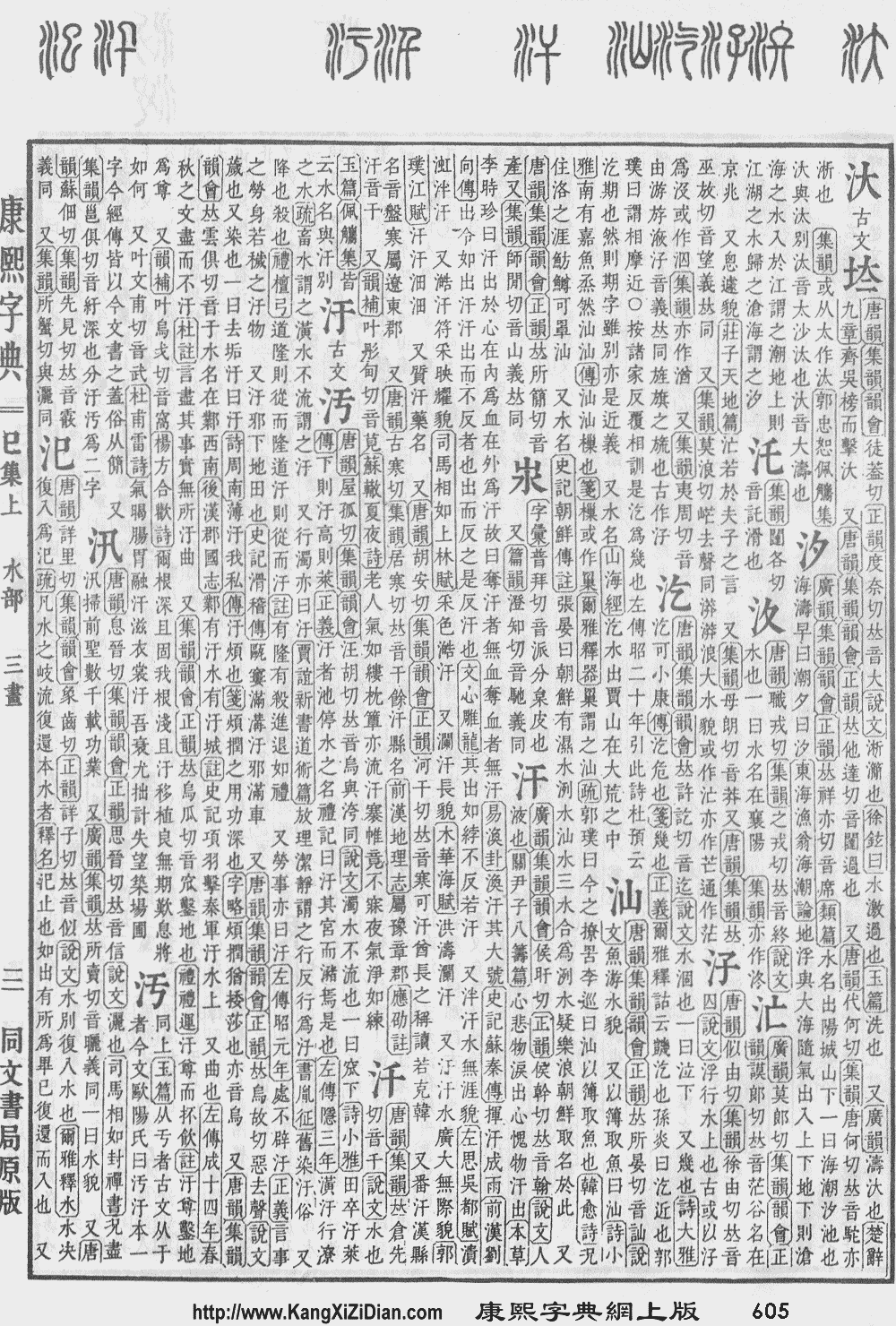
- Kangxi Dictionary: page 605, character 3
- Dai Kanwa Jiten: character 17122
- Dae Jaweon: page 998, character 12
- Hanyu Da Zidian (first edition): volume 3, page 1554, character 2
- Unihan data for U+6C50
Chinese
Lua error in Module:utilities at line 142: attempt to perform arithmetic on local 'h' (a nil value)
Glyph origin
Characters in the same phonetic series (夕) (Zhengzhang, 2003)
Phono-semantic compound (形聲/形声, OC *ljaːɡ) : semantic 氵 (“water”) + phonetic 夕 (OC *ljaːɡ).
Pronunciation
Japanese
Readings
Lua error in Module:utilities at line 142: attempt to perform arithmetic on local 'h' (a nil value)
Usage notes
- Both Lua error in Module:utilities at line 142: attempt to perform arithmetic on local 'h' (a nil value) and 潮 have the kun-readings of shio and ushio. Archaically, 夕汐 (yūshio) was used to mean tides during the night, and 朝潮 (asashio) was used for tides in the morning. For tides at any time of day, the compound chōseki may be used, below.
Korean
Etymology
From Middle Chinese 汐 (MC zjek). Recorded as Middle Korean 셕〮 (syék) (Yale: syek) in Hunmong Jahoe (訓蒙字會 / 훈몽자회), 1527.
Vietnamese
Han character
汐: Hán Nôm readings: tách, tịch
- This term needs a translation to English. Please help out and add a translation, then remove the text
{{rfdef}}.
References
- Thiều Chửu : Hán Việt Tự Điển Hà Nội 1942
- Trần Văn Chánh: Từ Điển Hán Việt NXB Trẻ, Ho Chi Minh Ville, 1999
- Vũ Văn Kính: Đại Tự Điển Chữ Nôm, NXB Văn Nghệ, Ho Chi Minh Ville
This article is issued from Wiktionary. The text is licensed under Creative Commons - Attribution - Sharealike. Additional terms may apply for the media files.