榎
| ||||||||
Translingual
Han character
榎 (Kangxi radical 75, 木+10, 14 strokes, cangjie input 木一山水 (DMUE), four-corner 41947, composition ⿰木夏)
References
- Kangxi Dictionary: page 542, character 21
- Dai Kanwa Jiten: character 15219
- Dae Jaweon: page 930, character 28
- Hanyu Da Zidian (first edition): volume 2, page 1263, character 2
- Unihan data for U+698E
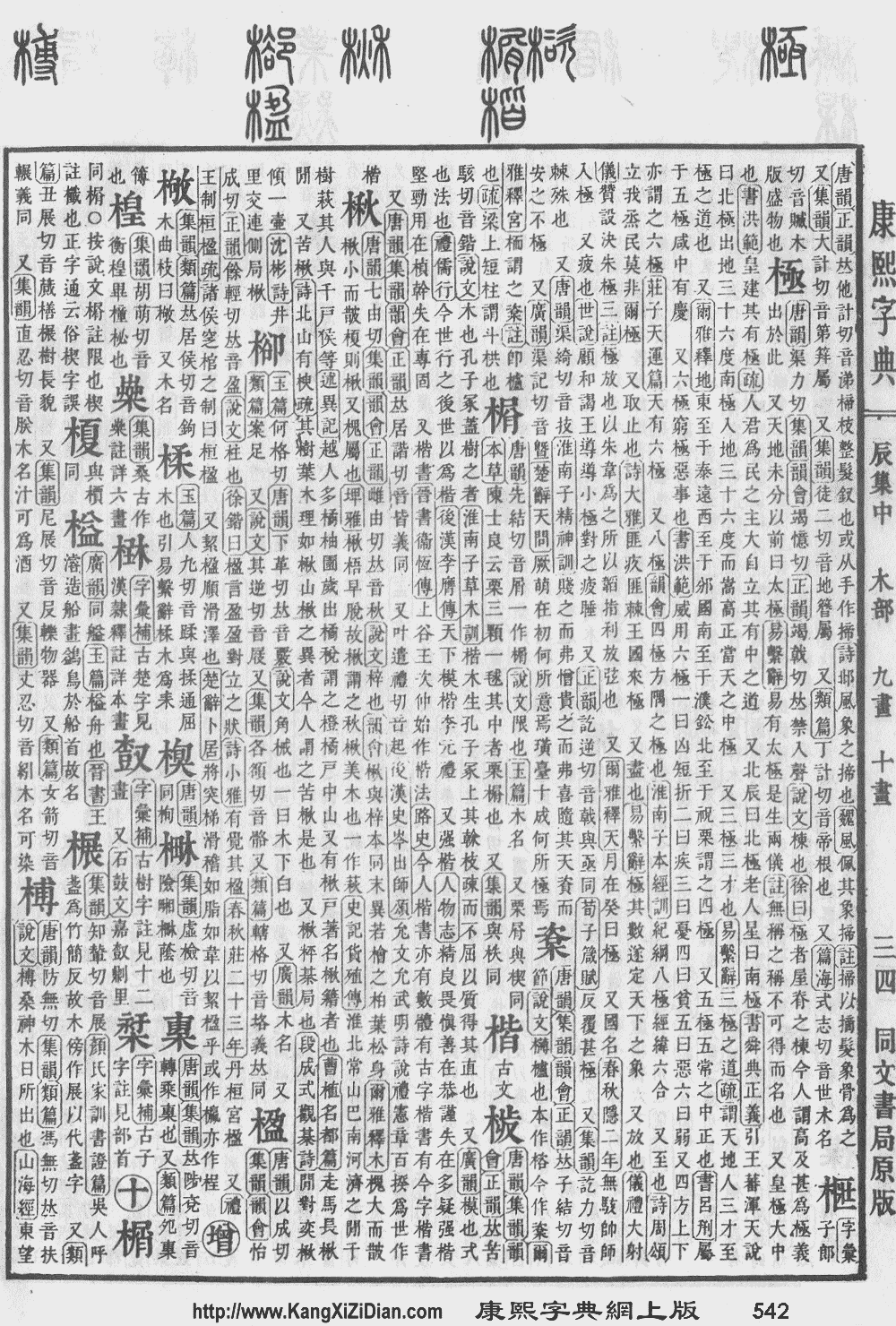
Chinese
Lua error in Module:utilities at line 142: attempt to perform arithmetic on local 'h' (a nil value)

Glyph origin
Pronunciation
Japanese
Readings
Lua error in Module:utilities at line 142: attempt to perform arithmetic on local 'h' (a nil value)
Compounds
Etymology 1

| Kanji in this term |
|---|
| 榎 |
| え Jinmeiyō |
| kun’yomi |
From Old Japanese. Found in the Man'yōshū, completed some time after 759 CE.[1]
There are various theories regarding the ultimate derivation of this e. Some of these include:
Pronunciation
- IPA(key): [e̞]
Noun
榎 • (e)
- Celtis sinensis, the Chinese hackberry tree
- Lua error in Module:utilities at line 142: attempt to perform arithmetic on local 'h' (a nil value)
- (rare) the Chinese hackberry fruit
- Synonym: 榎の実 (e no mi, enoki no mi)
Usage notes
This reading is generally not used in isolation in modern Japanese.
Etymology 2
| Kanji in this term |
|---|
| 榎 |
| えのき Jinmeiyō |
| kun’yomi |
Compound of Lua error in Module:utilities at line 142: attempt to perform arithmetic on local 'h' (a nil value). Compare the similar formation of various other tree names, such as 楠 (kusu, “camphor; camphor tree”) and 楠 (kusunoki, “camphor tree”).
Usage notes
As with many terms that name organisms, this term is often spelled in katakana, especially in biological contexts (where katakana is customary), as エノキ.
References
Further reading
Etymology at Nihonjiten (in Japanese)
Korean
Hanja
榎 • (ga) (hangeul 가, revised ga, McCune–Reischauer ka, Yale ka)
- This term needs a translation to English. Please help out and add a translation, then remove the text
{{rfdef}}.