榊
| ||||||||
Translingual
Han character
榊 (Kangxi radical 75, 木+10, 14 strokes, cangjie input 木戈火中 (DIFL), composition ⿰木神)
References
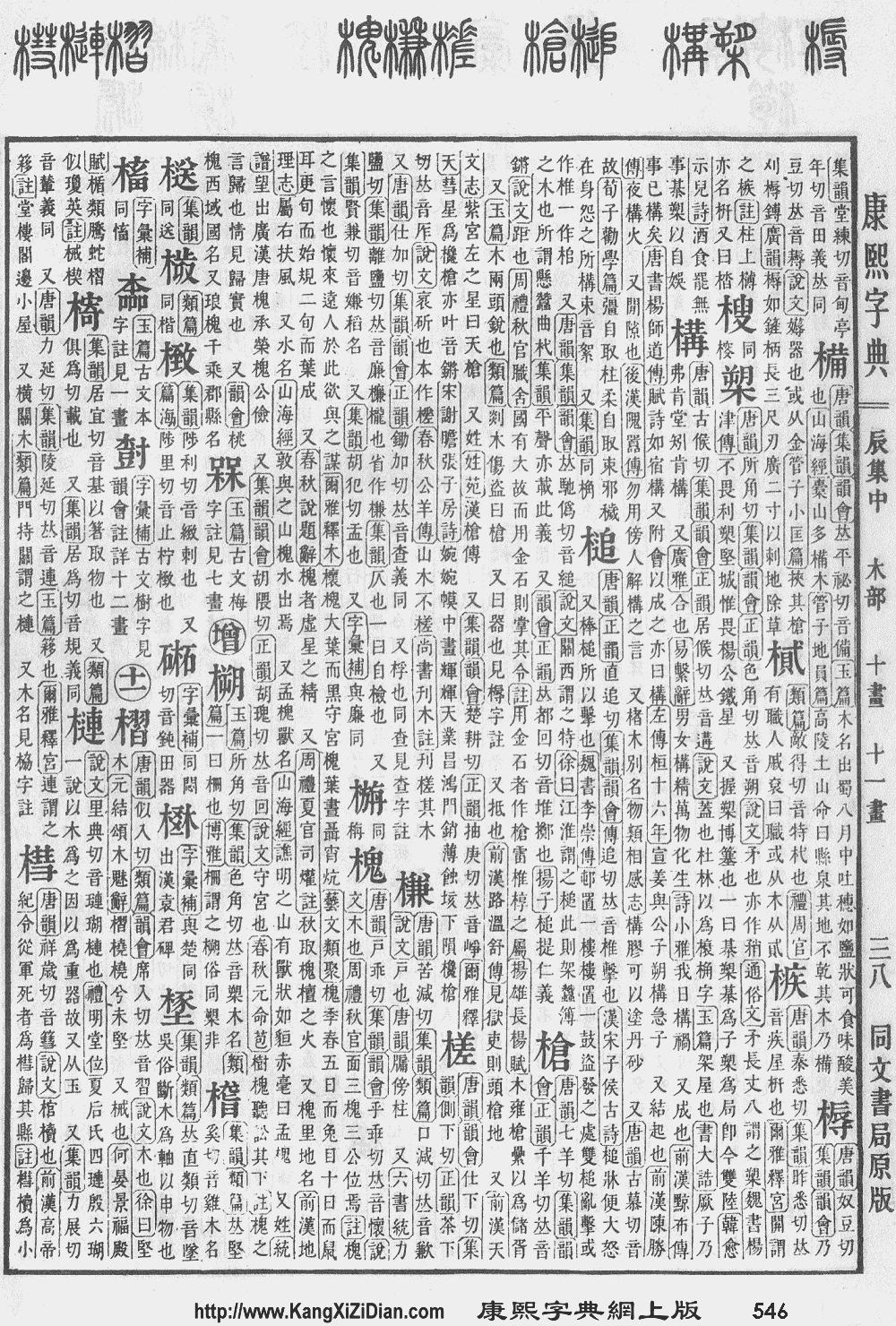
- Kangxi Dictionary: not present, would follow page 546, character 25
- Hanyu Da Zidian (first edition): not present, would follow volume 2, page 1256, character 6
- Unihan data for U+698A
Chinese
Lua error in Module:utilities at line 142: attempt to perform arithmetic on local 'h' (a nil value)
Glyph origin
Lua error in Module:utilities at line 142: attempt to perform arithmetic on local 'h' (a nil value).
Etymology
Spelling pronunciation, as 神 (shén).
Pronunciation
Japanese
| Shinjitai (extended) |
Shinjitai (extended) |
榊󠄀 榊+ 󠄀?(Adobe-Japan1) |
 |
|
| 榊󠄂 榊+ 󠄂?(Hanyo-Denshi) (Moji_Joho) | ||||
| Kyūjitai | 榊 |  | ||
| The displayed kanji may be different from the image due to your environment. See here for details. | ||||
Readings
Lua error in Module:utilities at line 142: attempt to perform arithmetic on local 'h' (a nil value)
Etymology
| Kanji in this term |
|---|
| 榊 |
| さかき Jinmeiyō |
| kun’yomi |
| Alternative spelling |
|---|
| 賢木 |
The initial saka is cognate with verb 栄える (sakaeru, “to prosper, thrive”), while the final ki is definitely 木 (ki, “tree”).
Noun
榊 • (sakaki)
Derived terms
This article is issued from Wiktionary. The text is licensed under Creative Commons - Attribution - Sharealike. Additional terms may apply for the media files.