杉
| ||||||||
Translingual
Han character
杉 (Kangxi radical 75, 木+3, 7 strokes, cangjie input 木竹竹竹 (DHHH), four-corner 42922, composition ⿰木彡)
References
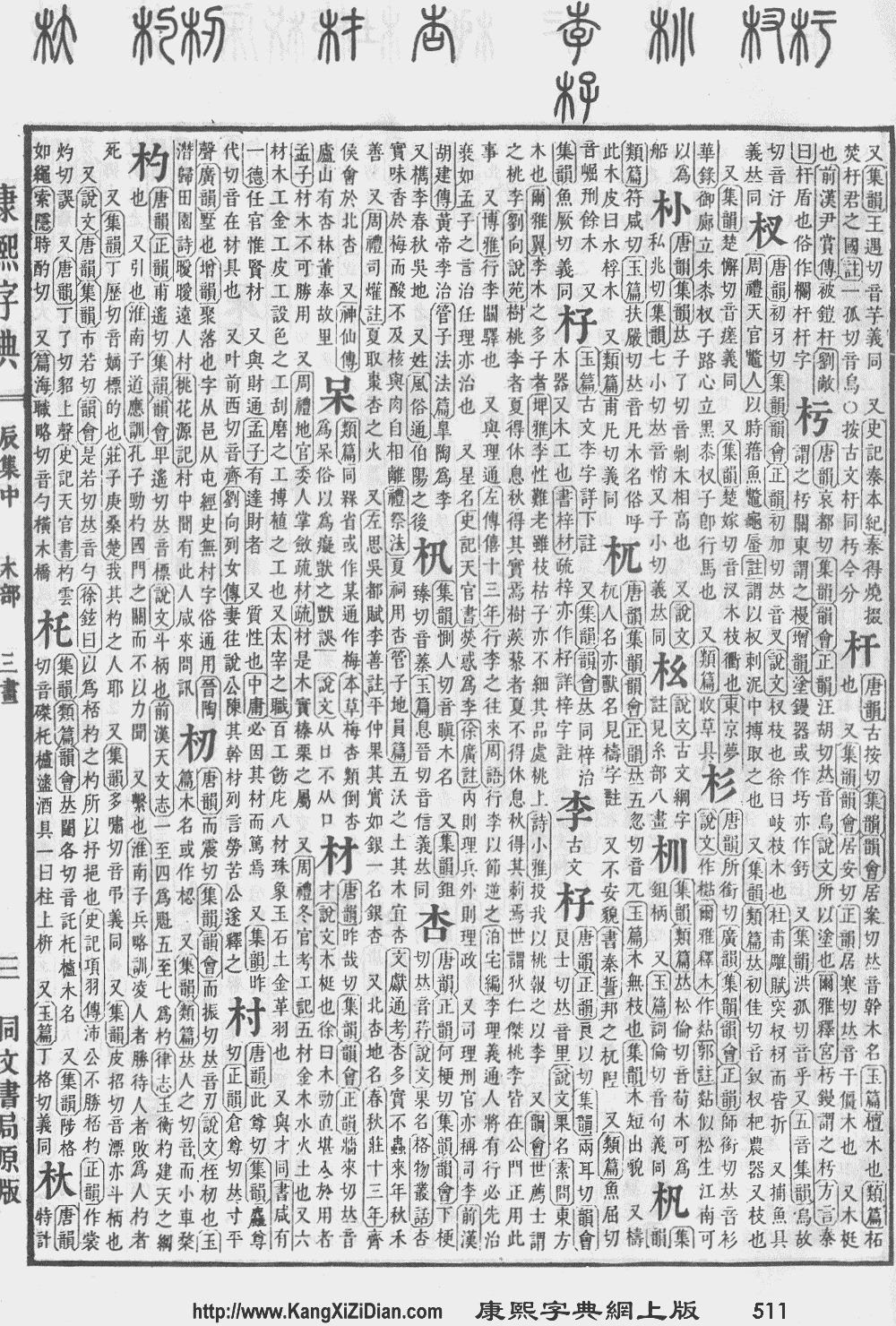
- Kangxi Dictionary: page 511, character 4
- Dai Kanwa Jiten: character 14452
- Dae Jaweon: page 895, character 3
- Hanyu Da Zidian (first edition): volume 2, page 1161, character 2
- Unihan data for U+6749
Chinese
Lua error in Module:utilities at line 142: attempt to perform arithmetic on local 'h' (a nil value)
Glyph origin
Phono-semantic compound (形聲/形声, OC *sreːm) : semantic 木 (“tree”) + phonetic 彡 (OC *sroːm, *slom).
Pronunciation
Definitions
杉
- fir (various species of conifers)
- 杉木 ― shānmù ― Cunninghamia lanceolata (China fir)
- 冷杉 ― lěngshān ― Abies (firs)
- 南洋杉 ― nányángshān ― Araucaria cunninghamii (hoop pine)
- Used in transliterations.
Japanese
Readings
Lua error in Module:utilities at line 142: attempt to perform arithmetic on local 'h' (a nil value)
Etymology
From Lua error in Module:utilities at line 142: attempt to perform arithmetic on local 'h' (a nil value), which Miyake (1997) (apud Schuessler, 2007) associates with Old Chinese 松 (OC *sɢloŋ). Ultimately comes from reconstructed Proto-Japonic *sunkOy.[1]
Korean
Hanja
杉 • (sam) (hangeul 삼, revised sam, McCune–Reischauer sam, Yale sam)
- (삼나무): Japanese cedar (cryptomeria)
Vietnamese
Han character
杉: Hán Nôm readings: sam, trinh
- This term needs a translation to English. Please help out and add a translation, then remove the text
{{rfdef}}.