晩
 | ||||||||
Translingual
| Japanese | 晩 |
|---|---|
| Simplified | 晚 |
| Traditional | 晚 |
Han character
晩 (Kangxi radical 72, 日+8, 12 strokes, cangjie input 日弓日山 (ANAU) or XX日弓日 (XXANA), composition ⿰日免)
Usage notes
Note that this is a Japanese shinjitai character. In this character, the bottom left handed stroke ㇓ of 免 is written as two separate components (𫩏+儿).
References
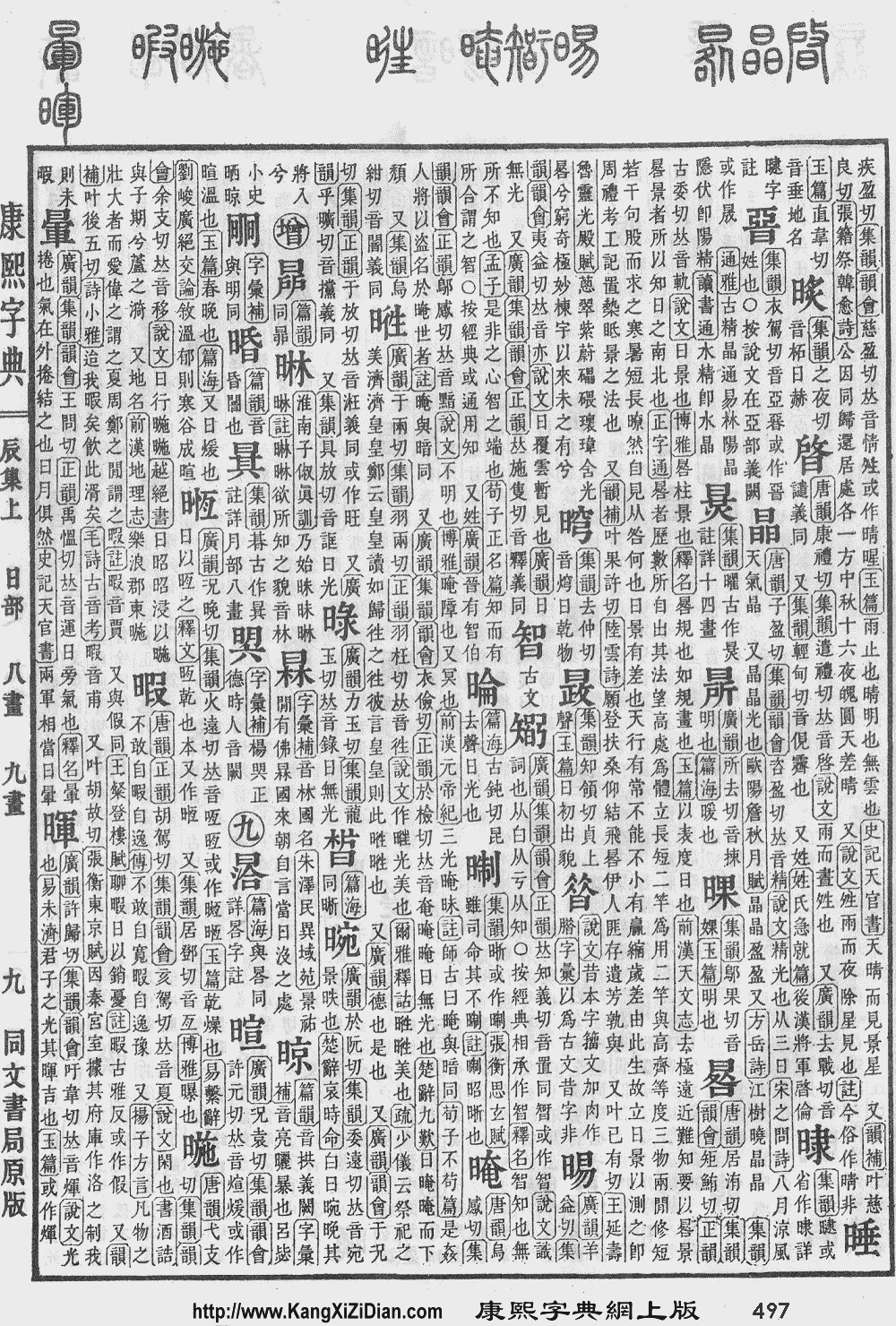
- Kangxi Dictionary: not present, would follow page 497, character 31
- Dai Kanwa Jiten: character 14030
- Dae Jaweon: page 861, character 21
- Hanyu Da Zidian (first edition): volume 2, page 1514, character 4
- Unihan data for U+6669
Chinese
| For pronunciation and definitions of 晩 – see 晚 (“evening; night; late; etc.”). (This character, 晩, is a variant form of 晚.) |
Korean
Hanja
晩 • (man) (hangeul 만, revised man, McCune–Reischauer man, Yale man)
- This term needs a translation to English. Please help out and add a translation, then remove the text
{{rfdef}}.
This article is issued from Wiktionary. The text is licensed under Creative Commons - Attribution - Sharealike. Additional terms may apply for the media files.