斥
| ||||||||
Translingual
Han character
Lua error in Module:utilities at line 142: attempt to perform arithmetic on local 'h' (a nil value)
See also
References
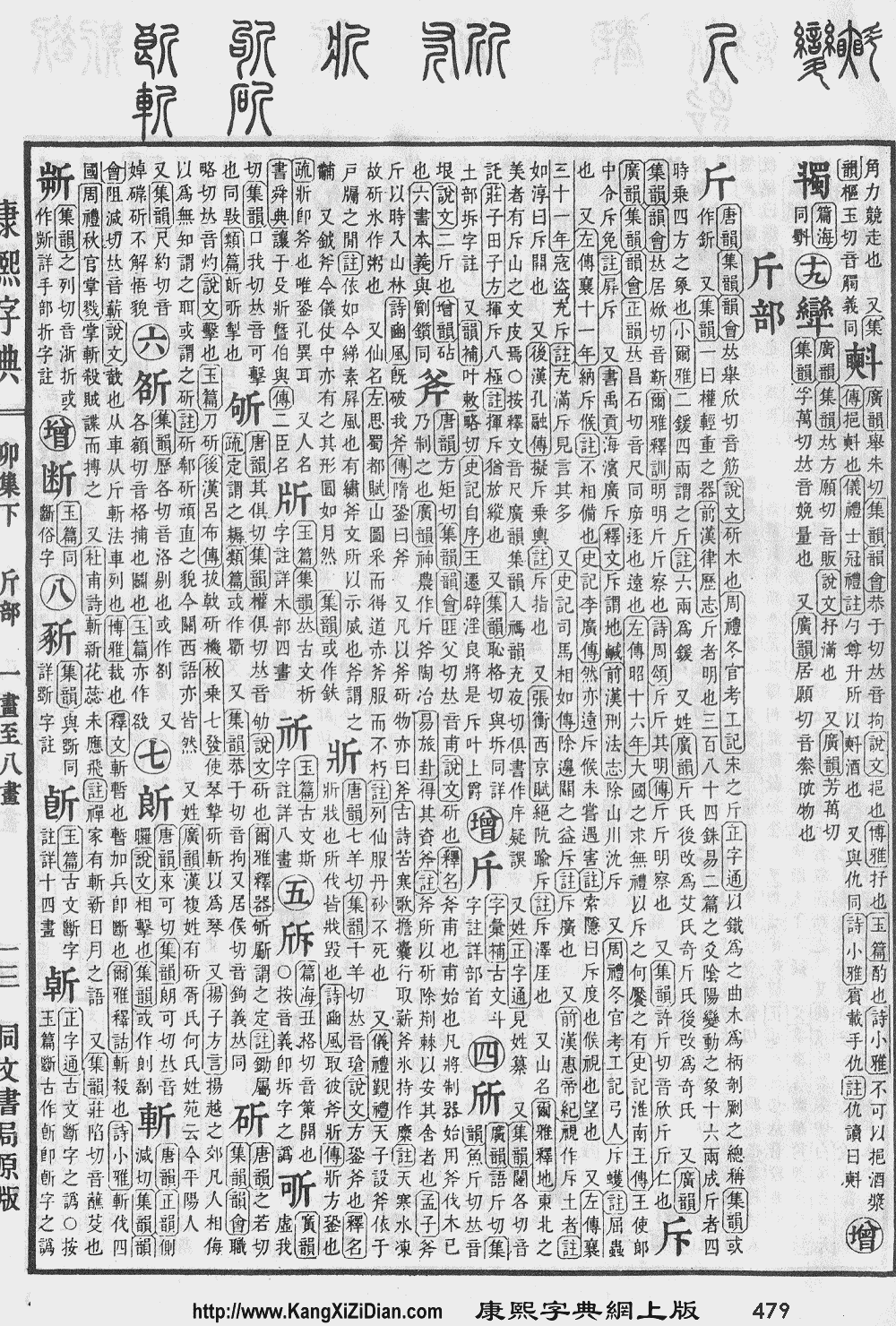
- Kangxi Dictionary: page 479, character 5
- Dai Kanwa Jiten: character 13535
- Dae Jaweon: page 837, character 24
- Hanyu Da Zidian (first edition): volume 3, page 2022, character 3
- Unihan data for U+65A5
Chinese
Lua error in Module:utilities at line 142: attempt to perform arithmetic on local 'h' (a nil value)
Glyph origin
| Historical forms of the character 斥 | ||
|---|---|---|
| Western Zhou | Shuowen Jiezi (compiled in Han) | Liushutong (compiled in Ming) |
| Bronze inscriptions | Small seal script | Transcribed ancient scripts |
 |
 |
 |
| Old Chinese | |
|---|---|
| 斥 | *ŋ̊ʰjaːɡs, *ŋ̊ʰjaːɡ |
| 訴 | *sŋaːɡs |
| 泝 | *sŋaːɡs |
| 愬 | *sŋaːɡs, *sŋreːɡ |
| 遡 | *sŋaːɡs |
| 塑 | *sŋaːɡs |
| 溯 | *sŋaːɡs |
| 遻 | *ŋaːɡs |
| 柝 | *tŋ̊ʰaːɡ |
| 鶚 | *ŋaːɡ |
| 諤 | *ŋaːɡ |
| 齶 | *ŋaːɡ |
| 鍔 | *ŋaːɡ |
| 遌 | *ŋaːɡ |
| 崿 | *ŋaːɡ |
| 偔 | *ŋaːɡ |
| 堮 | *ŋaːɡ |
| 湂 | *ŋaːɡ |
| 鱷 | *ŋaːɡ |
| 噩 | *ŋaːɡ |
| 咢 | *ŋaːɡ |
| 鑩 | *ŋaːɡ |
| 鄂 | *ŋaːɡ |
| 鰐 | *ŋaːɡ |
| 萼 | *ŋaːɡ |
| 愕 | *ŋaːɡ |
| 顎 | *ŋaːɡ |
| 朔 | *sŋraːɡ |
| 槊 | *sraːwɢ |
| 蒴 | *sraːwɢ |
| 坼 | *tŋ̊ʰraːɡ |
| 拆 | *tŋ̊ʰraːɡ |
| 逆 | *ŋraɡ |
| 屰 | *ŋraɡ |
| 縌 | *ŋraɡ |
| 蝷 | *reːɡ |
Originally written 㡿, a phono-semantic compound (形聲/形声, OC *ŋ̊ʰjaːɡs, *ŋ̊ʰjaːɡ) : semantic 广 (“building”) + phonetic 屰 (OC *ŋraɡ).
The 屰 later came to be written 干, and the 广 was sometimes written as 厂, eventually leading to the modern form of the character.
Alternatively, may be derived from 宅.
Pronunciation 1
Definitions
Lua error in Module:utilities at line 142: attempt to perform arithmetic on local 'h' (a nil value)
Compounds
- 充斥 (chōngchì)
- 呵斥 (hēchì)
- 喝斥
- 嚴斥/严斥
- 屏斥
- 怒斥 (nùchì)
- 拒斥
- 指斥 (zhǐchì)
- 排斥 (páichì)
- 排斥命題/排斥命题
- 排斥異己/排斥异己
- 揮斥/挥斥
- 擯斥/摈斥 (bìnchì)
- 斥候 (chìhòu)
- 斥力 (chìlì)
- 斥喝
- 斥土
- 斥地 (chìdì)
- 斥埴
- 斥堠
- 斥大
- 斥斥
- 斥罵/斥骂 (chìmà)
- 斥罷/斥罢
- 斥責/斥责 (chìzé)
- 斥資/斥资 (chìzī)
- 斥賣/斥卖
- 斥退
- 斥逐
- 斥革
- 斥騎/斥骑
- 斥鷃/斥𮭨
- 斥鹵/斥卤
- 申斥 (shēnchì)
- 痛斥 (tòngchì)
- 直斥 (zhíchì)
- 罷斥/罢斥
- 訓斥/训斥 (xùnchì)
- 訶斥/诃斥
- 貶斥/贬斥 (biǎnchì)
- 遷斥/迁斥
- 鄙斥
- 駁斥/驳斥 (bóchì)
Pronunciation 2
Definitions
Lua error in Module:utilities at line 142: attempt to perform arithmetic on local 'h' (a nil value)
- Only used in 斥山.
References
- “斥”, in 漢語多功能字庫 (Multi-function Chinese Character Database), 香港中文大學 (the Chinese University of Hong Kong), 2014–
Japanese
Korean
Hanja
Lua error in Module:utilities at line 142: attempt to perform arithmetic on local 'h' (a nil value) (hangeul 척, revised cheok, McCune–Reischauer ch'ŏk, Yale chek)
- This term needs a translation to English. Please help out and add a translation, then remove the text
{{rfdef}}.