抛
See also: 拋
| ||||||||
Translingual
Han character
抛 (Kangxi radical 64, 手+4, 7 strokes, cangjie input 手大弓尸 (QKNS), four-corner 54012, composition ⿰扌𠠵)
Derived characters
Related characters
- 拋 (Orthodox form in Traditional Chinese)
Further reading
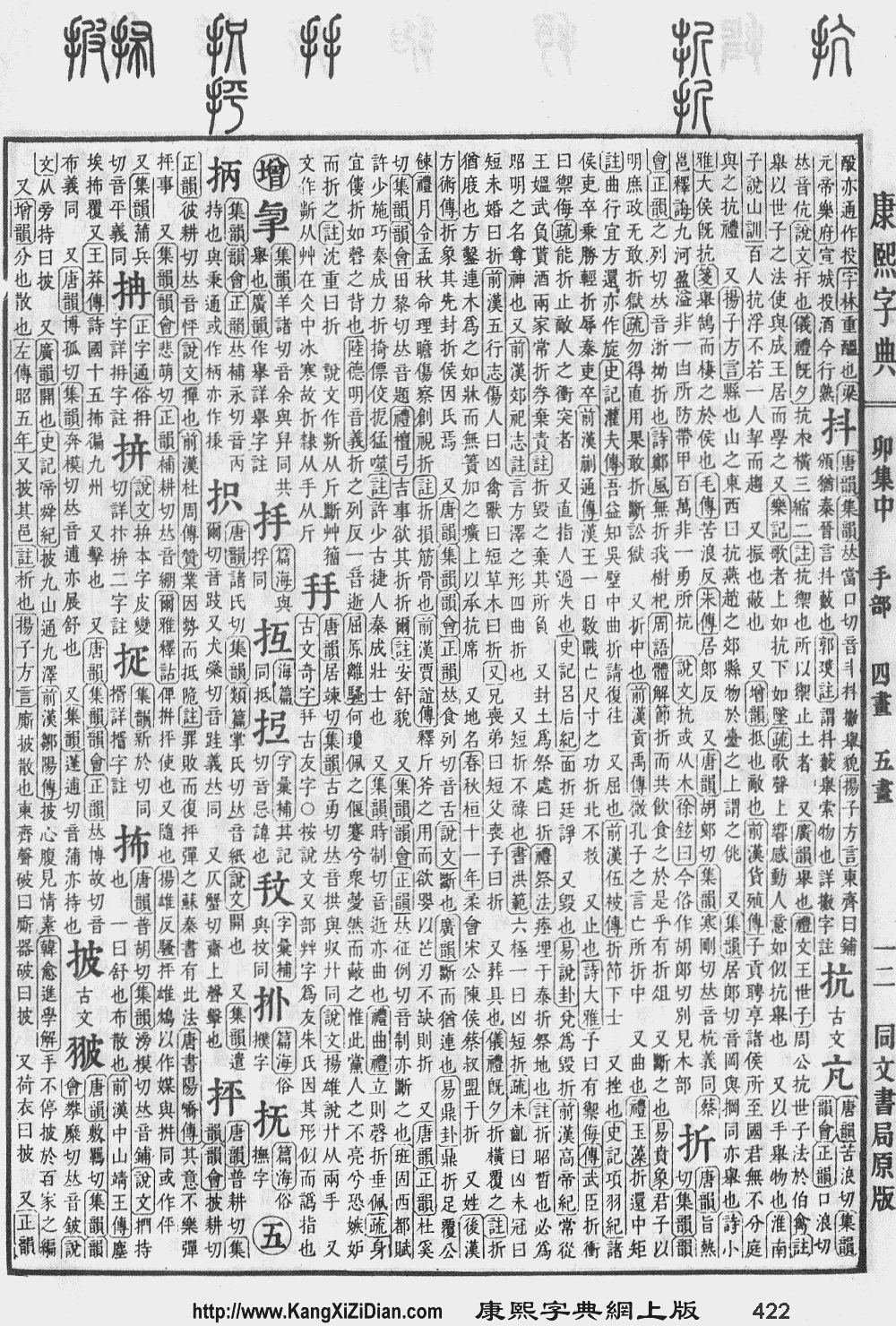
- Kangxi Dictionary: not present, would follow page 422, character 12
- Dai Kanwa Jiten: character 11901
- Hanyu Da Zidian (first edition): volume 3, page 1842, character 2
- Unihan data for U+629B
Chinese
Lua error in Module:utilities at line 142: attempt to perform arithmetic on local 'h' (a nil value)
Japanese
Readings
Pronunciation
- IPA(key): [ho̞ː]
Usage notes
In modern Japanese, 抛 is mostly replaced by 放, due to the deprecation of non-tōyō kanji caused by the Japanese script reform.
Derived terms
(replaced by 放 in modern orthography):
- 抛棄 (hōki, “abandonment, giving up; renunciation”)
- 抛却 (hōkyaku, “neglect”)
- 抛擲 (hōteki, “throwing away; ignoring, neglect”)
- 抛る (hōru, “to throw”)
- 抛物線 (hōbutsusen, “parabola”)
- 抛物面 (hōbutsumen, “paraboloid, a 3D surface in the shape of a parabola”)
- 抛物線面 (hōbutsusen-men, “paraboloid, a 3D surface in the shape of a parabola”)
- 抛物面鏡 (hōbutsumen-kyō, “parabolic mirror”)
Korean
References
- Supreme Court of the Republic of Korea (대한민국 대법원, Daehanmin'guk Daebeobwon) (2018). Table of hanja for personal names (인명용 한자표 / 人名用漢字表, Inmyeong-yong hanja-pyo), page 47.
Vietnamese
Han character
抛: Hán Việt readings: phao (
抛: Nôm readings: phau[1][2][3][6][4][5][7], phào[1][2][3][6][4], phao[1][3][4][5][7]
References
- Nguyễn (2014).
- Nguyễn et al. (2009).
- Trần (2004).
- Bonet (1899).
- Génibrel (1898).
- Hồ (1976).
- Taberd & Pigneau de Béhaine (1838).
This article is issued from Wiktionary. The text is licensed under Creative Commons - Attribution - Sharealike. Additional terms may apply for the media files.