崗
| ||||||||
Translingual
Han character
崗 (Kangxi radical 46, 山+8, 11 strokes, cangjie input 山月廿山 (UBTU), four-corner 22227, composition ⿱山岡)
Derived characters
- 𣙋, 𬬀
Related characters
References
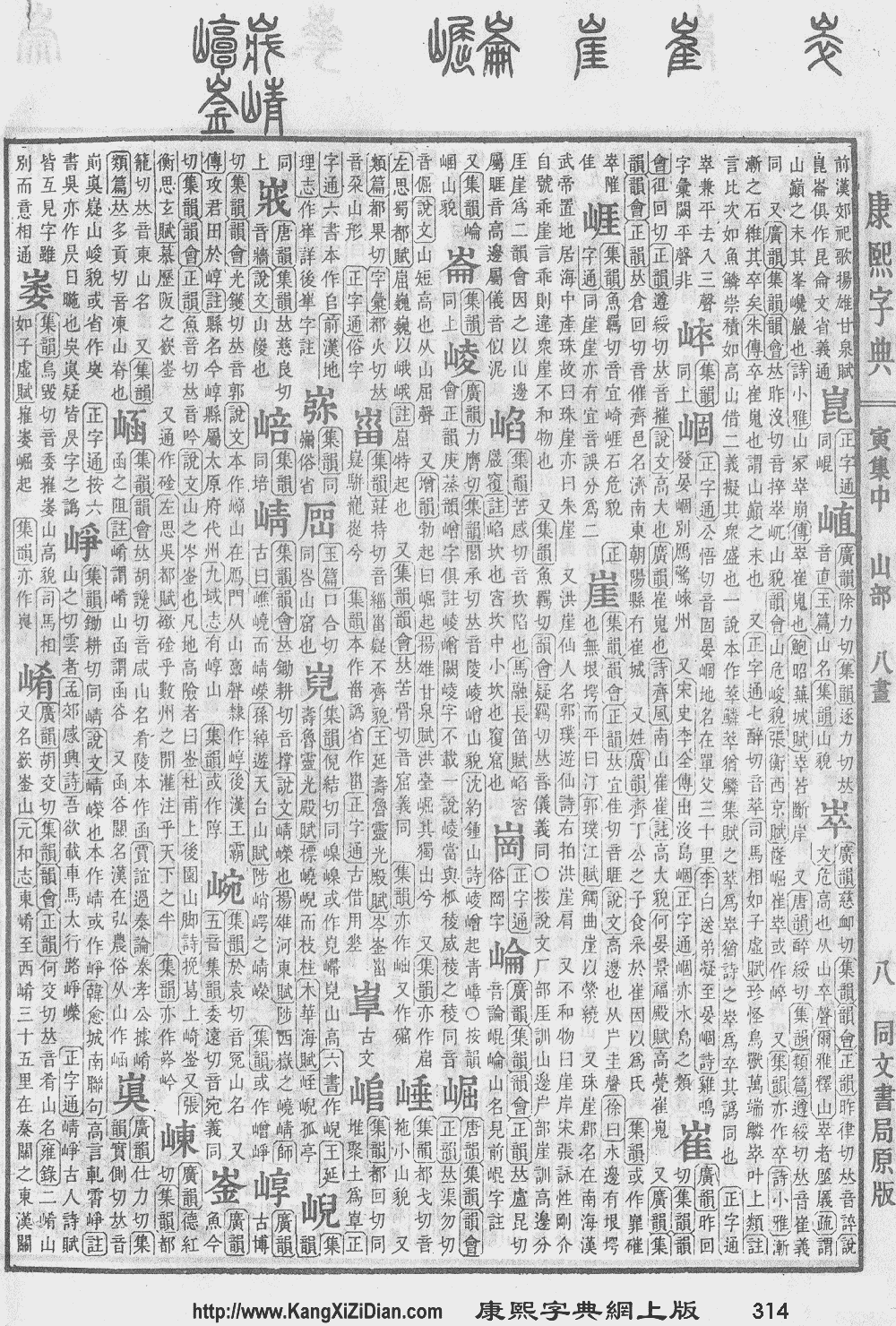
- Kangxi Dictionary: page 314, character 10
- Dai Kanwa Jiten: character 8221
- Dae Jaweon: page 616, character 6
- Hanyu Da Zidian (first edition): volume 1, page 780, character 7
- Unihan data for U+5D17
Chinese
Lua error in Module:utilities at line 142: attempt to perform arithmetic on local 'h' (a nil value)
Glyph origin
Characters in the same phonetic series (岡) (Zhengzhang, 2003)
Phono-semantic compound (形聲/形声, OC *klaːŋ) : semantic 山 (“mountain”) + phonetic 岡 (OC *klaːŋ).
Pronunciation 1
Definitions
崗
Compounds
- 下崗/下岗 (xiàgǎng)
- 上崗/上岗 (shànggǎng)
- 三里崗/三里岗
- 串崗/串岗
- 亂墳崗/乱坟岗 (luànfèngǎng)
- 亂葬崗/乱葬岗 (luànzànggǎng)
- 在崗/在岗
- 增崗/增岗
- 崗亭/岗亭 (gǎngtíng)
- 崗位/岗位 (gǎngwèi)
- 崗卡/岗卡
- 崗哨/岗哨 (gǎngshào)
- 崗地/岗地
- 崗子/岗子 (gǎngzi)
- 崗樓/岗楼 (gǎnglóu)
- 崗警/岗警
- 待崗/待岗
- 復崗/复岗
- 換崗/换岗
- 查崗/查岗 (chágǎng)
- 監督崗/监督岗
- 站崗/站岗 (zhàngǎng)
- 童子崗/童子岗
- 競崗/竞岗
- 競爭上崗/竞争上岗
- 罷崗/罢岗
- 脫崗/脱岗
- 落聘待崗/落聘待岗
- 設崗定責/设岗定责
- 試崗/试岗
- 認崗定責/认岗定责
- 輪崗/轮岗
- 轉崗/转岗
- 返崗/返岗 (fǎngǎng)
- 釘子崗/钉子岗
- 長崗/长岗
- 門崗/门岗 (méngǎng)
- 陡崗/陡岗
- 離崗/离岗
- 頂崗/顶岗
- 領崗定責/领岗定责
- 顧崗/顾岗
Pronunciation 2
Usage notes
In 花崗石/花岗石 (huāgāngshí, “granite”) and 花崗岩/花岗岩 (huāgāngyán, “granite”), 崗/岗 (gǎng) is generally used instead of 岡/冈 (gāng). In other cases, 岡/冈 (gāng) is recommended.
Pronunciation 3
Japanese
Kanji
崗
- This term needs a translation to English. Please help out and add a translation, then remove the text
{{rfdef}}.
Readings
Lua error in Module:utilities at line 142: attempt to perform arithmetic on local 'h' (a nil value)
Korean
References
- Supreme Court of the Republic of Korea (대한민국 대법원, Daehanmin'guk Daebeobwon) (2018). Table of hanja for personal names (인명용 한자표 / 人名用漢字表, Inmyeong-yong hanja-pyo), page 1.
Vietnamese
This article is issued from Wiktionary. The text is licensed under Creative Commons - Attribution - Sharealike. Additional terms may apply for the media files.